When we see people for what we need them to be, rather than who they are, we elevate their position in our lives through no fault of their own.
When they fail to meet the expectations that we created because of that unrealistic perspective that we had of them, we feel betrayed and then blame them for hurting us.
This is yet another sign of a deficient self-worth.
Our need to be associated with something or someone of a favourable standing often leads to us exaggerating the good or the virtue in them, or it.
This is because when we believe that we’re not enough to earn the respect or social standing that we desire, then we find ways to appear more than who we are through associating with what others will respect or admire.
The irony is that our efforts to place others on pedestals is because we want company for placing ourselves on those pedestals so that we don’t appear arrogant or vain in claiming such standing for ourselves.
A healthy self-worth means that praise or support will be authentic, rather than opportunistic or insincere.
Sometimes we justify the insincerity by convincing ourselves that we just want others to feel good.
But when we shower praises on one who we believe isn’t truly praiseworthy, we’re doing it to feel good about being seen as generous and kind in spirit, and not because we want them to feel good.
We also deny them the opportunity to be better by instilling a false sense of confidence about who they are or what they’ve achieved.
Thus, the pedestals are built and destroyed the moment the lack of authenticity in our motives are exposed, or when they reveal, in an undeniable way, that they are not who we held them up to be.
Sincerity on our part, in such moments, will be reflected in how we understand and support them to be who we believe they’re capable of being, rather than judging them for letting us down.
It always starts with you.
#hope #expectation #sincerity #selfworth #selfawareness #mentalhealth #mentalhealthawareness #lifecoaching #zaidismail #loveyourself #lifegoals #motivation #optimism #selfloathing
Tag: hope
-

Whose pedestal is it?
-

Maybe tomorrow…
Just like tomorrow is not guaranteed, neither is our next breath.
Each moment taken for granted is a moment lost.
Each loved one taken for granted is a heartache earned.
Each abandoned resolution made after tasting loss or visiting death’s door is food for the seeds of hypocrisy and self-loathing within.
The victim mindset turns supporters into enemies, and significant others into options, until what we once cherished is lost, and what we’re left with intensifies our yearning for the past, or for death.
When the pain of the past overshadows our joy in the present, the future loses its lightness, and our souls succumb to the darkness.
The shame of admitting failure prevents us from making right what we got wrong.
All because we were distracted by the harsh criticisms echoed in our narrative in our mind.
A narrative that convinces us that sincere advisors are criticising our efforts, and those who celebrate the shadow of what we’re capable of are in fact our friends.
We find what we seek. Shame in the past, purpose in the present, or hope in the future.
Sadly, most lose themselves to the past, while protecting themselves from embracing the promise that the footie holds, in the process discarding the ones who love them most.
Who are you discarding because they believe in you more than you believe in yourself?
Own Your Life.
#hope #expectation #sincerity #selfworth #selfawareness #mentalhealth #mentalhealthawareness #lifecoaching #zaidismail #loveyourself #lifegoals #selfloathing #ownyourlife -
Keep up, if you can
Like they say, love is not two people looking at each other, it’s two people looking in the same direction.
What happens when the one is looking ahead, while the other is looking behind?
One common failing in relationships is that while one partner views growth as the amazing things that they can achieve together, the other sees it as a statement of their partner not being happy with what they have.
One focuses on protecting what they have while the other focuses on improving it.
One focuses on reaching their full potential, while the other is still waiting to feel validated for what they’ve achieved. And so it goes…
And when these differences of perspective are not understood, it’s easy to assume that the conflict of priorities is a rejection of who we are or what’s important to us.
There is no easy fix to this because at the root of it is the fact that the one who is invested in growth has a healthier self-worth than the one who is invested in staying where they are.
Self-worth is based on how much gratitude we have for who we are.
And gratitude is something that we cannot instil in another. We can point out all the reasons why someone should be grateful, but the choice to be grateful is always theirs to make.
Self-pity or self-loathing, which is simply the opposite of self-worth, is what gets in the way of healthy emotional bonds in a relationship.
Understanding and accepting your ability to influence your partner in this regard could be the difference between courting insanity and choosing peace.
Choose carefully.
Own Your Life
#hope #expectation #sincerity #selfworth #selfawareness #mentalhealth #mentalhealthawareness #lifecoaching #zaidismail #loveyourself #lifegoals #relationshipgoals #foreverincomplete -
Internal struggle, outward joy
The martyr within, breathes life into the angel without.
A rare few live their lives outwardly, as they feel inwardly about themselves.
The need to hide our shame from the world is born from feeling ashamed of who we are, and not because of what others think of us.
The opinions of others only matter in two ways.
It hits a tender spot because it threatens to expose what we already judge harshly about ourselves.
Or it offers us perspective in our efforts to be better than we were the day before.
Most focus on the judgement because their relationship with themselves is so harsh.
That’s why so much effort is put into presenting ourselves to the world in a way that will gain favour or distract attention away from how we feel about ourselves, because we carry too much shame within about who we are.
Understanding where that harsh self-judgement comes from is the beginning of the journey towards reclaiming ourselves, and our joy in life.
When last did you feel the way you looked when you showed up in the spaces of others?
If you can’t recall, we need to talk.
Own Your Life.
It always starts with you.
#hope #expectation #sincerity #selfworth #selfawareness #mentalhealth #mentalhealthawareness #lifecoaching #zaidismail #loveyourself #lifegoals #motivation #optimism #purpose #companionship #relationshipgoals #selfloathing -
The shame within
Good advice sometimes feels like a threat because it prompts us to acknowledge a flaw that we feel ashamed of.
It’s like putting in your best effort to create a piece of art, and then having someone come along and innocently suggest that you should’ve tried this or that to enhance it further.
No matter how much merit there is in their suggestion, if you’re already feeling insecure about your artistic talents, you’ll find reason to justify taking offence, or to dismiss why you don’t think that will work with what you’re trying to achieve.
That’s what happens when we assume that the motive behind good advice is to highlight our shortcomings, or to emphasise the superiority of our advisor. Or worse still, we assume that the other person deliberately wants to make us feel inadequate.
All it is, is a sense of shame that we carry within us about who we are, or how we’re lacking in our efforts to earn the significance or validation of those we love.
That threat to our significance is what feels like an attack that we respond to with anger, or passive aggression, because anger is a demand for significance.
Being mindful about our opinion of ourselves is one of the hardest things to do.
It means that we must be aware of whether we’re judging ourselves based on what we think others will approve of, or are we viewing ourselves with understanding based on who we aspire to be.
The former is destructive.
The latter is what creates the inspiration to continuously build and improve on who you are and what you wish to leave as your legacy.
It always starts with you.
Own Your Life.
#hope #expectation #sincerity #selfworth #selfawareness #mentalhealth #mentalhealthawareness #lifecoaching #zaidismail #loveyourself #lifegoals #motivation #optimism #purpose #mindfulness #angermanagement -
Who’s doing you in?
This is a phenomenon that I encountered regularly in the corporate world.
When your performance appraisal is reviewed against your targets only, but all mitigating circumstances are dismissed, understand that they’re not interested in rating your performance, they’re interested in finding someone to blame for their lack of competence, or lack of support.
If, however, you find yourself in the same situation repeatedly, then you need to consider if you’re communicating effectively with the people who need to support you with the right tools and resources to achieve your targets, or if you’re always avoiding accountability for outcomes the moment you don’t have the ideal environment in which to achieve your targets.
The latter is a result of a victim mindset, because it’s focused on protecting yourself from being wrong, rather than focusing on taking reasonable risks and initiative to accomplish your goals.
If you’re convinced that others are simply out to get you, then you need to question yourself for sticking around to repeatedly give them such opportunity.
If you truly believe in your ability to contribute positively towards your career goals, you’ll make an effort to find an organisation or a team that appreciates the value that you bring to the table.
If you lack confidence in yourself, you’ll go through life waiting for others to create the perfect circumstances for you to thrive, while blaming the world for not doing enough for you.
That’s when the burden of stupidity that accompanies the absence of appreciation for context becomes your self-defeating behaviour, while you focus on what everyone else is not doing enough of to help you to be successful.
Just a random thought I felt like sharing today.
Own Your Life.
#hope #expectation #mentalhealth #mentalhealthawareness #lifecoaching #zaidismail #careergoals #judgingothers #justsaying #corporatepolitics #selfdefeatingbehaviour #selfsabotage -
Dream a little dream…
In a world of cynics, it’s easy to lose sight of the power that you have to turn your dreams into reality.
Your efforts become more daunting when faced with an endless barrage of naysayers who only see your potential through their own fears.
Sincere advisors are often driven by fear, and thus focus on protecting you from their fears of what failure may bring.
So you slowly give up on your dream as a fantasy, while using its promise as fuel to cope with your reality.
When you maintain clear boundaries between the two, you convince yourself that dreaming is an irresponsible indulgence of youth, while reality is for adulting.
Without meaning to, you adopted the fears of those around you, and measured your success by how much you could exceed their expectations within the frame of fear that they painted for you.
Beauty is lost, endearments become fickle expressions of lightness, and death becomes the morbid milestone by which you gauge how much capacity you will need to keep going.
All this because you believed others when they disbelieved in you.
Your dreams are yours to abandon, or yours to claim.
But if you’re trying to claim a dream that is intricately woven around the presence of another, brace yourself for the anguish that accompanies a lifetime of trying to convince them that achieving your dream is possible, when the events of their life convinced them not to try.
Dream with abandon, and live with courage.
If you don’t, the regret will be yours to court, and dreaming will become a cynical taunt that feels like a nightmare.
#hope #expectation #sincerity #selfworth #selfawareness #mentalhealth #mentalhealthawareness #lifecoaching #zaidismail #loveyourself #lifegoals #relationshipgoals #foreverincomplete #anincompletelovestory -
Dream killers
Do you find yourself waiting in the shadows, wondering when will it be safe to emerge and take that risk on something that you’ve always dreamt of achieving?
Are you waiting for the perfect moment to ensure that you get it just right?
Or do you find yourself mentioning it to any person that shows an interest in what you’re passionate about, always lighting up with excitement when you talk about it, but also ensuring that you have a good argument as to why you can’t do it just yet?
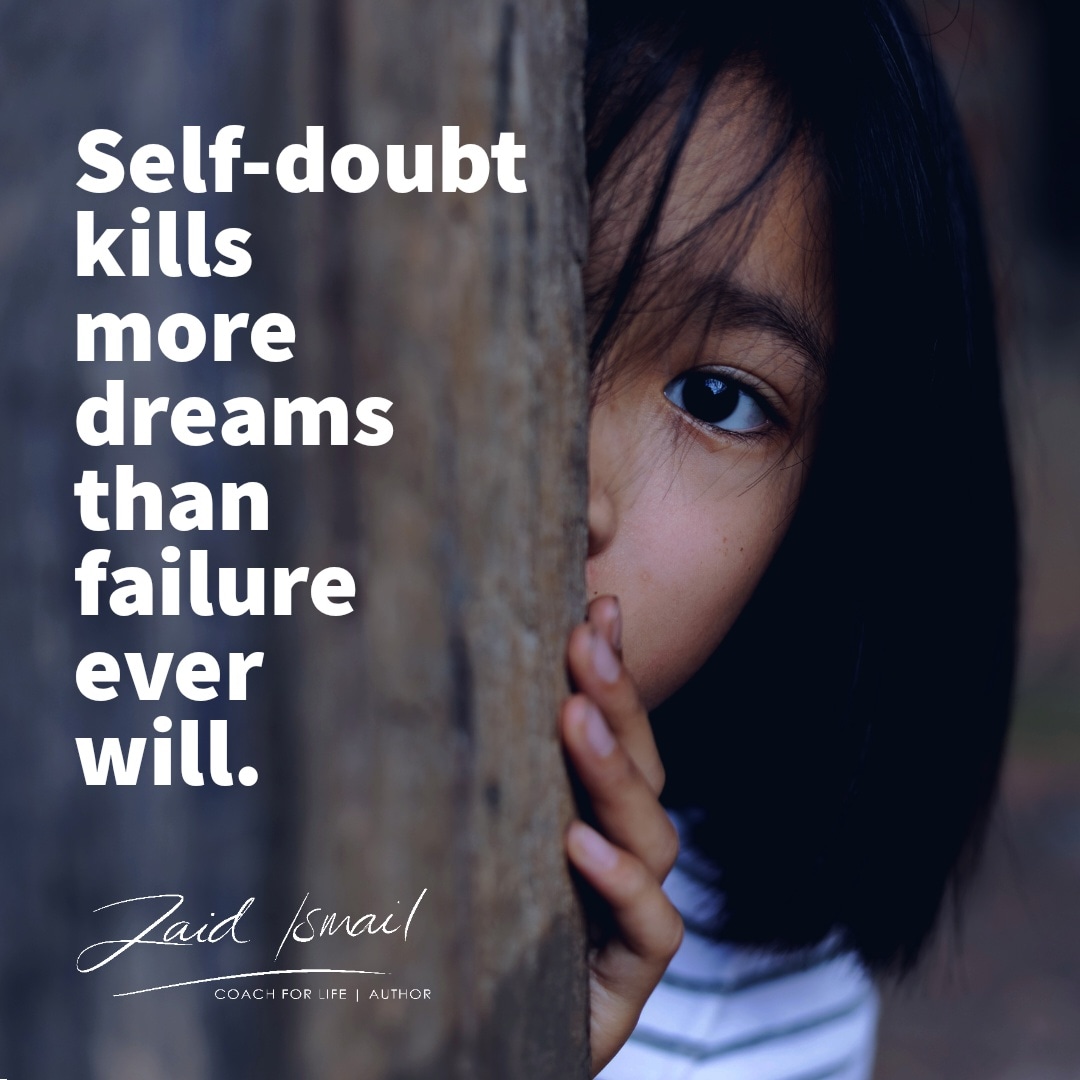
All the above is most often driven by self-doubt rather than the due diligence needed to ensure that you understand the dynamics to be successful at your passion project.
Due diligence has its place. But only in good measure. Otherwise it ceases to be due diligence and results in analysis-paralysis.
Analysis-paralysis is when we exhaust ourselves in research and understanding to the point of fatigue, so that we accumulate enough information about what may go wrong, while ignoring or downplaying the probabilities of what may go right.
It’s driven by a need for perfection that is a defence mechanism to protect ourselves from appearing incompetent in front of others.
The fear of failure destroys more hope than failure itself.
That’s why it’s important to choose your confidante carefully when wanting a sounding board about a project or venture that you’re passionate about.
Share it with naysayers, and they’ll convince you that your dreams are too big for your social standing.
Share it with visionaries, and they’ll inspire you to overcome the odds while focusing purposefully on the path that you need to navigate to achieve your dreams.
Wanting to run the race means nothing if you don’t get out of the starting blocks.
Decide…do you want to leave a legacy of what-ifs and if-onlys, or do you want to leave a legacy that uplifts and inspires?
#hope #expectation #sincerity #selfworth #selfawareness #mentalhealth #mentalhealthawareness #lifecoaching #zaidismail #lifegoals #dreams #ambition #authenticity #selfdoubt