Tag: lifecoaching

  • Do you remember your dream?

    Do you remember your dream?

    What will you be when you give up?

    Sadly, too many live their lives this way resulting in them imposing their expectations on their children to fulfil the dreams that they abandoned.

    Every generation complains about the generation before them and loses sight of such behaviour giving the next generation reason to complain about them.

    We’re a strange bunch.

    We distract ourselves with emotions and abandon practicality, then distort our practical efforts to reclaim our emotions.

    If you lose sight of what is magical in the present moment, you’ll eventually convince yourself that you’re just a dreamy romantic when you find yourself speaking longingly of all the amazing opportunities that you sacrificed to create some life for others.

    Meanwhile, it was an effort to protect yourself from failure or rejection that caused you to sacrifice your dreams, and not any purposeful duty.

    Dreams will remain dreams if there is no purposeful conviction behind it.

    It’s possible to integrate your efforts towards your dreams with the practical life that you must live.

    In fact, it’s essential. How else are our children supposed to experience such conviction about the value of this single life that we have if all they ever witness is the drudgery of labour and duty?

    Can you even recall what dreams you abandoned in favour of acceptance or validation from those around you?

    Strike a balance before the imbalance ravages your peace.

  • Authentic gratitude

    Authentic gratitude

    This is for the ‘attitude of gratitude’ crowd.

    It’s for the ones who believe that gratitude is an act.

    A gesture.

    A token word of appreciation.

    A polite mannerism.

    A show of acknowledgement.

    A gift prompted by an event.

    It’s not.

    Authentic gratitude is what you do and how you show up for those whom you claim to appreciate on those special occasions.

    Gratitude is about valuing what is important to those whom you claim to value.

    It is about what you do with the privilege and favour enabled by those who serve and/or support you.

    Gratitude is a state of being.

    It is a way of life.

    It is a way of living without deliberately trying.

    It is a consequence of the belief in the virtue and the goodness of what benefit you are capable of being to those around you, not because they deserve it but because you’re capable of it.

    Authenticity is rare.

    That’s why most use gestures and expressions of gratitude as a commodity with which to transact for significance.

    Appreciation is not gratitude.

    Gratitude is reflected in what you do with, or about what you claim to appreciate.

    You cannot be truly grateful for others if you take yourself for granted.

  • Do you really love yourself?

    Do you really love yourself?

    What does ingratitude towards yourself look like?

    I think it looks like this…

    You focus on your aesthetic to feel better about your internal conversation.

    You live loud with everything you do and possess because you’re concerned about how others perceive you.

    You beat yourself up in private, but present yourself as confident and bold in public.

    You over compensate to make space for people who treat you as an option, but go out of your way to exclude people who have high expectations of you.

    You comfort yourself by preempting how others may judge you by telling yourself that they don’t know what you’ve been through.

    You withhold your contribution of support or assistance if you don’t think others deserve it.

    Your internal conversation is harsh resulting in health issues that you then use to seek pity from those around you for your self-imposed struggle.

    You try to save others from your opinion of their lives believing that you’re doing it because you’re a good person, while not realising that you’re projecting your struggle onto them so that you can feel valued.

    You take your time and your comforts for granted, always procrastinating on your own goals but over investing in assisting others to achieve their goals.

    You see self-sacrifice without healthy boundaries as a virtuous way of life, and lose sight of the impact of such behaviour on your health and wellbeing, and on those who care about you.

    If you find yourself growing angry or agitated at this list, chances are, you are feeling judged or attacked.

    That’s a clear sign of how much the opinions of others about you holds more weight than your opinion of yourself.

    A healthy self-worth is not a narrative. It’s not an internal dialogue. Nor is it a set of tools or methods.

    A healthy self-worth is a state of being, and is only recognised in hindsight.

    It is only through reflecting on how we handled situations that we are able to consciously determine if that is true to who we are or not.

    If not, we focus on understanding what drove us towards such behaviour so that we become aware of the reasons for our behaviour rather than simply judging ourselves for behaving in that way.

    Awareness is the critical step towards self improvement.

    And self improvement is impossible if every piece of criticism or negative feedback makes you defensive.

  • Break the stigma

    Break the stigma

    I think it was Dr Wayne Dyer who said that if you change the way you look at things, the things you look at change.

    This is true both positively and negatively.

    Do you know someone who has a problem for every solution? Who sees doom and gloom at the happiest of moments? Who is preempting a negative outcome despite things going in their favour?

    Do you think they have a mental illness, or have they just been hurt so many times before, that they are afraid to hope for a positive outcome? Are they simply protecting themselves from being let down again?

    This is how we experience life when we finally give up hope about the future, or we give up hope about being appreciated.

    That absence of hope is what causes us to feel depressed. Depression is a legitimate experience of human emotions after we’ve taken one too many hard knocks from life about something important to us.

    The same is true for every other emotional experience.

    Emotions are not deficiencies. They’re the essence of what makes us human.

    If we ever hope to win this battle against a consistently declining quality of life, we need to stop referring to emotions as mental health, and we need to stop defining the duress that we experience in life as a mental illness.

    We need to reconnect with the human behind the pain, instead of dehumanising them by denying the legitimacy of their emotional experience.

    Break the stigma. Stop the labelling. Embrace the humanness.

  • Procrastination is not a mental illness

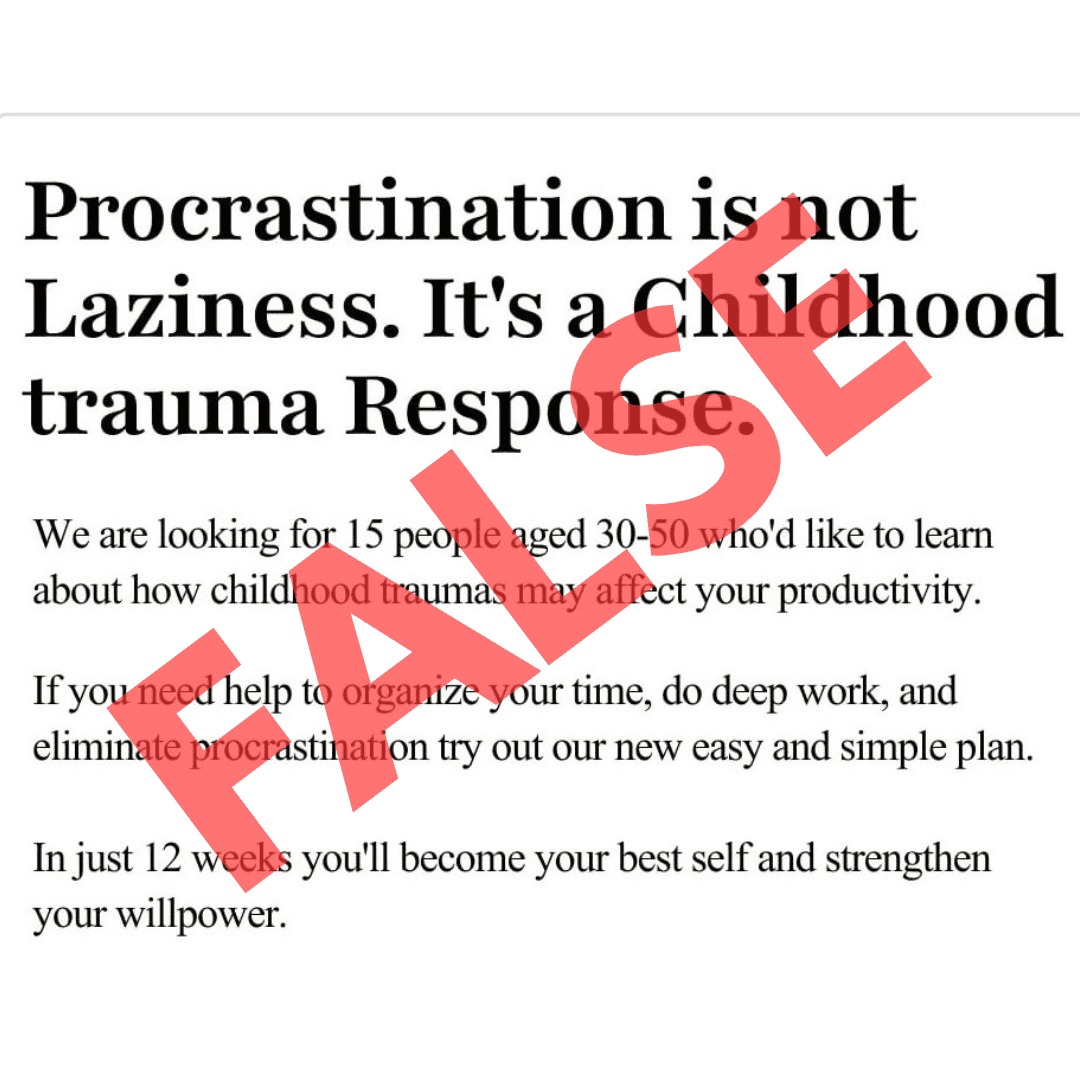
    Procrastination is not a mental illness

    For the sake of your sanity, do not buy into this extremely flawed way of thinking.

    If you were to believe the mainstream tripe about mental health, you’d be running back to your childhood for everything and blaming your parents for all your failures in life.

    The irony of this claim about procrastination and laziness is that they both have a very simple, yet easy to overcome root cause.

    You either believe in the value of what you’re doing, or you don’t.

    If you don’t, the only reason you will do it is because there will be unpleasant consequences if you don’t do it. That’s why we leave things until we have no choice but to do it when we approach it as if it’s a punishment for living.

    It’s this same reason that inspires us to look forward to our day, or to drag ourselves out of bed, regardless of how much sleep we got the night before.

    The reasons for struggling to see the value in doing something requires self awareness and mindfulness.

    But given that both are lost when we blame our past for our present failings, we further sabotage our efforts to connect with life in a more meaningful way.

    Please, for the love of sanity and common sense, stop buying into the mindless crap presented as research about mental health.

    Give yourself a fighting chance by simply understanding why you have good reason in your own mind to be averse to doing things that you know will be beneficial for you.

    We’ve overcomplicated life and then reframed that complexity to be mental health.

    We need to reclaim our humanness and the very real human experiences that give us reason to feel emotional duress from time to time.

    It’s all part of being human.

  • Mental health myth – Social contracts

    Mental health myth – Social contracts

    People will have no reason to remind you about what they’ve done for you if they felt appreciated by you.

    This popular meme encourages a selfish view of life and convinces us that we’re victims of manipulation rather than giving us reason to question if/how we may have wronged someone, or taken them for granted.

    If this meme were true, then every parent who sacrifices their own joys and advancement in life for the benefit of their children will have no right to feel betrayed if they’re neglected by their children later in life.

    It’s become fashionable to write people off just because we’re not getting what we need or want from them.

    The fact that we feel entitled regardless of what they’re going through is often ignored.

    But the circle of life is such that what we judge others about today, will meet us as a test under very different circumstances tomorrow.

    When you write people off because of what they complain about regarding feeling hurt or betrayed by your actions towards them, you will remember them when someone you are convinced will always have your back turns around and walks away from you because they want something from life that they can’t get from you.

    When someone says ‘after all I’ve done…’, step back, dismount your high horse, and consider why they may be feeling betrayed or used instead of getting defensive and assuming that they’re toxic.

    How you respond to someone in their moment of duress is a reflection of who you are, and what you need from them.

    That’s why abandoning family ties, cutting off parents, demanding divorce, and breaking social bonds has grown to define our self-care routine.

    When we stop needing others, they become optional while we think it’s our right to live our best life regardless of their contribution towards getting us through our worst times when they could have been living their best life.

    Be careful what advice you take from the Internet.

    You could end up living your best life, alone.


  • Beware the ego of prayer

    Beware the ego of prayer

    Worship, if contemplated against that which we subscribe to, is bound to feed our ego.

    Worship is not worship because of its rituals.

    Nor is worship submission if performed as a transaction.

    That transaction could be an expectation of reward or blessing from the divine, or an alleviation of the struggles of one’s material state.

    Such transactions are prayers, and prayer is not worship.

    Prayer is a need expressed towards the One whom you worship.

    But to worship, you must recognise the divine within the mundane.

    You must connect with peace in the middle of chaos, because chaos is ever present if only you are present.

    Worship is finding solace in the divine despite your reality.

    Worship is a surrender to the realisation that even your most competent exercising of your agency is only effective because of the chaos kept at bay through His mercy.

    Worship is a trust placed in the divine while knowing that His mercy and benevolence is what creates the joy, the peace, the wholesomeness, the fulfilment, or even the sweetness of a moment of beauty that we live.

    Worship is not ritual.

    Worship is submission to the truth that cannot be denied.

    That truth is that we are never in control, nor are we masters of our destiny.

    We are only ever in charge of the very present moment in which we choose to act, or to surrender.

    The wisdom of what is needed in that moment is derived from our understanding of the divine design.

    Reflection is therefore the only teacher, and expectation is the enemy of education.

    Apply your mind purposefully in the present moment, and the future will unfurl as it was designed to unfurl subject to your act in the present moment.

    This, when understood with conviction and reason, enables worship beyond the ritual, beyond the prayer, beyond the praise.

    And with it comes peace in knowing that our actions, informed by our reflections, when purposeful rather than desperate or deliberate, will result in a final destination that will negate every ounce of worry or struggle in this ephemeral life.

    Subhanallah.


  • Respect is not earned

    Respect is not earned

    The old saying of ‘respect is earned’ robs you of self respect and replaces it with entitlement.

    How we treat others is a reflection of who we are, not who they are.

    Our ability to self regulate our offering of respect to those who may treat us badly is a reflection of how much we need them to treat us well before we feel good about who we are.

    In other words, the less grounded we are in who we are, the more likely it is that others will impact our moods, our temper, and our overall emotional wellbeing.

    Trust, on the other hand, is earned through consistency of effort about what’s important.

    Trust cannot be negotiated or contracted.

    If we have reason to doubt someone showing up for us, we won’t trust that they will.

    That reason is sometimes because of them being unreliable, but is also often because of how someone else in the past may have disappointed us or betrayed our trust when we needed a similar thing from them. Like comfort, support, or just being there for us.

    If we go through life trusting recklessly while withholding respect to those who, in our eyes, don’t deserve it, we will find ourselves reeling from betrayal long after it has passed while disrespecting those who don’t understand our pain.

    Problem is, even we won’t understand our pain, so we’ll never be able to communicate it in ways that will allow those close to us to understand why we’re raging.

    It all starts with self respect and self worth.

    Without that, you will need others to treat you well before you treat yourself well.

    Own your life.