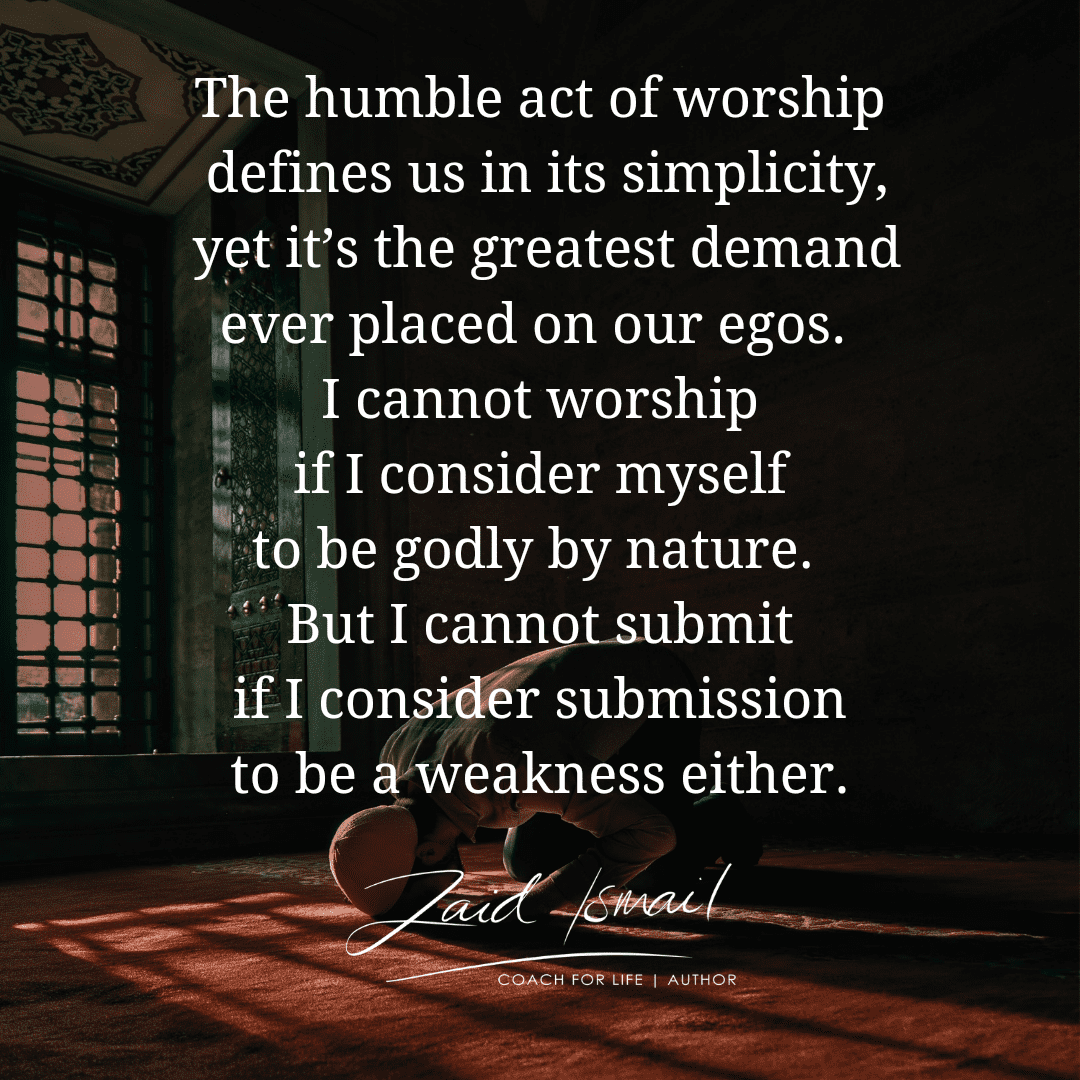
Worship, if contemplated against that which we subscribe to, is bound to feed our ego.
Worship is not worship because of its rituals.
Nor is worship submission if performed as a transaction.
That transaction could be an expectation of reward or blessing from the divine, or an alleviation of the struggles of one’s material state.
Such transactions are prayers, and prayer is not worship.
Prayer is a need expressed towards the One whom you worship.
But to worship, you must recognise the divine within the mundane.
You must connect with peace in the middle of chaos, because chaos is ever present if only you are present.
Worship is finding solace in the divine despite your reality.
Worship is a surrender to the realisation that even your most competent exercising of your agency is only effective because of the chaos kept at bay through His mercy.
Worship is a trust placed in the divine while knowing that His mercy and benevolence is what creates the joy, the peace, the wholesomeness, the fulfilment, or even the sweetness of a moment of beauty that we live.
Worship is not ritual.
Worship is submission to the truth that cannot be denied.
That truth is that we are never in control, nor are we masters of our destiny.
We are only ever in charge of the very present moment in which we choose to act, or to surrender.
The wisdom of what is needed in that moment is derived from our understanding of the divine design.
Reflection is therefore the only teacher, and expectation is the enemy of education.
Apply your mind purposefully in the present moment, and the future will unfurl as it was designed to unfurl subject to your act in the present moment.
This, when understood with conviction and reason, enables worship beyond the ritual, beyond the prayer, beyond the praise.
And with it comes peace in knowing that our actions, informed by our reflections, when purposeful rather than desperate or deliberate, will result in a final destination that will negate every ounce of worry or struggle in this ephemeral life.
Subhanallah.
#worship #praise #begging #divinity #religion
#sectarianism #ownyourlife #theegosystem #lifecoaching #zaidismail
Tag: religion
-
Beware the ego of prayer
-

Where is your humanity?
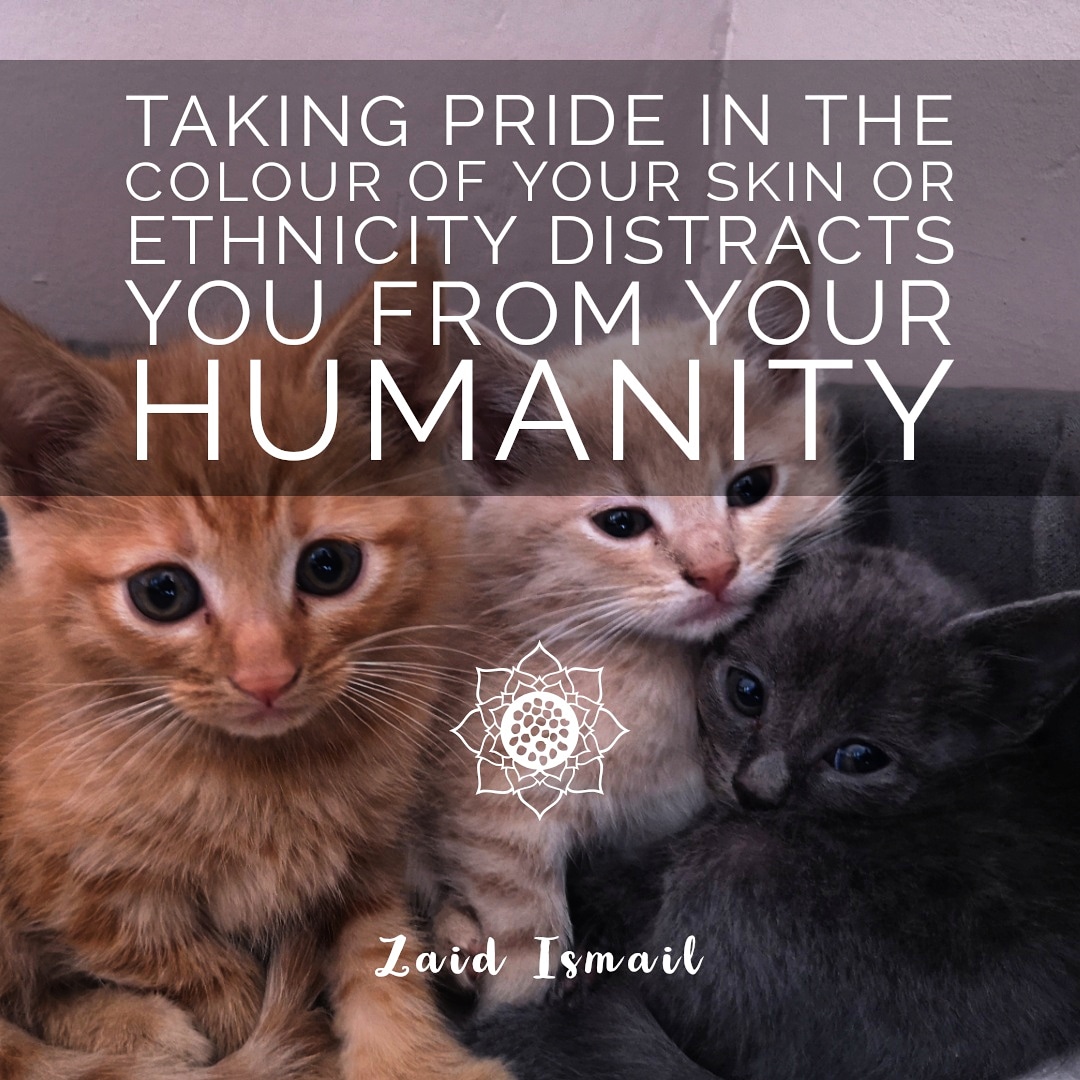
Taking pride in the colour of your skin or ethnicity distracts you from your humanity.
Our humanness, our gentleness, our inclination towards kindness – these are all part of our natural state.
We lose it when our need to be associated with significance or superiority distracts us from this, and replaces it with the fear of being inadequate.
When we lose sight of the fear of inadequacy, responding from a place of fear becomes our new normal.
Everything that threatens the source of our significance – that is, our skin colour, religion, cultural roots, etc. – then feels like a threat to our sense of self.
Thus, we feel the anger, resentment, or blind rage that rises when we are judged by the colour of our skin, our religion, our ethnicity, or any other association that makes us feel significant.
But, we grow convinced that we’re standing up for a good cause by protecting what we value, even though the way in which we protect it undermines the very essence of what we claim to stand for.
That’s when it becomes clear that we only stand for what we do because it offers us a place in this world through being associated with the cause.
It offers us significance and protects us from irrelevance.
That’s when we’ve traded who we are, for who we want to be perceived as, because we’re convinced that we are not enough.
Own Your Life.
It always starts with you.
#racism #colourism #religion #culture #prejudice #bigotry #socialacceptance #herdmentality #ownyourshit #ownyourlife #theegosystem #mentalhealth #mentalhealthawareness #mentalhealthrecovery #selfworth #selflove #selfawareness #selfrespect #mindfulness #inspiration #zaidismail -
Willingly obliged
This is most true for religious subscription and cultural heritage, but applies to every relationship in our life.
Choice inspires willingness because a choice is driven by our belief in the benefit of our contribution towards others.
Obligation inspires contempt because it is most often associated with the threat of a negative repercussion.
What drives our choices and our sense of obligation therefore must be considered when we find ourselves growing angry at the thought of non-compliance from others, or the expectation of compliance from ourselves by others.
It is quite possible to choose consciously to serve an obligation. But that choice must be done willingly and not under duress. Duress turns a choice into an unwilling obligation.
Fear has a limited life span. Therefore, the moment we establish compliance with a lifestyle or behaviour through fear, we must prepare ourselves for the inevitable backlash.
Live consciously. Love deliberately. And serve without obligation.
Perhaps, beloved, in that lies the secret to experiencing peace in this lifetime.
#hope #expectation #sincerity #optimism #zaidismail #peace #mybeloved #obligation #culture #tradition #religion #mentalhealth #mentalhealthawareness #mentalhealthrecovery #selfworth #selflove #selfawareness #selfrespect #mindfulness #inspiration #ownyourshit #ownyourlife #theegosystem #embracingME -
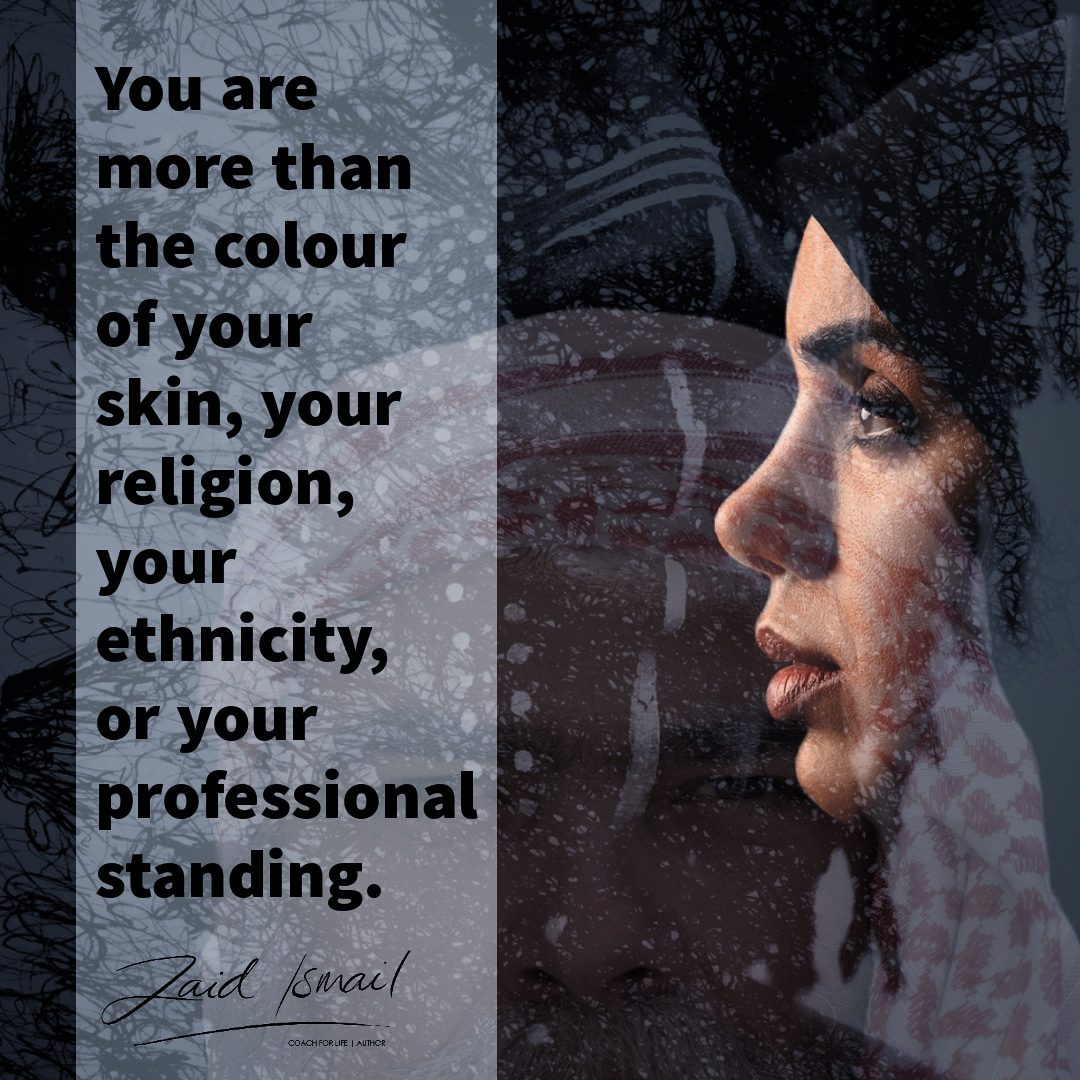
You are more than how you look
Taking pride in the colour of your skin or ethnicity distracts you from your humanity.
Our humanness, our gentleness, our inclination towards kindness – these are all part of our natural state.
It’s our need to be associated with significance or superiority that distracts us from this, and replaces it with the fear of being inadequate.
When we lose sight of the fear, responding from a place of fear becomes our new normal.
Everything that threatens the source of our significance – that is, our skin colour, religion, cultural roots, etc. – then feels like a threat to our sense of self.
Thus, we feel the anger, resentment, or blind rage that rises when we feel undermined because of the colour of our skin, or any other association that makes us feel significant.
In the absence of an awareness of who we are, it is inevitable that our external attributes will be all that feeds our self worth.
#racism #colourism #religion #culture #prejudice #bigotry #socialacceptance #herdmentality #ownyourshit #ownyourlife #theegosystem #mentalhealth #mentalhealthawareness #mentalhealthrecovery #selfworth #selflove #selfawareness #selfrespect #mindfulness #inspiration #zaidismail -
The value of values
One of the paths to insanity is to try to reason around someone else’s actions or behaviour by assuming that their value system is the same as yours.
This includes people who come from the same culture, tradition, ethnicity, and even family as you do.
Our value system may be informed by a common framework or point of reference.
But, unless everyone complies 100% with that framework, each interpretation or implementation of those values becomes a unique value system, as unique as each individual.
When we don’t recognise these differences, we insist on compliance rather than understanding in the way each person adopts these values in their lives.
That’s the root of misunderstanding: The assumption that because we have shared values on some key issues, we have shared values on all issues.
Thus, relationships and homes are broken because of our expectations of compliance rather than our efforts towards understanding.
#values #counselling #culture #traditions #familytime #familyvalues #religion #relationshipgoals #mentalhealth #mentalhealthawareness #mentalhealthrecovery #theegosystem #ownyourlife #ownyourshit #embracingME #motivation #zaidismail #authenticity #leadershipcoach -
Worship me
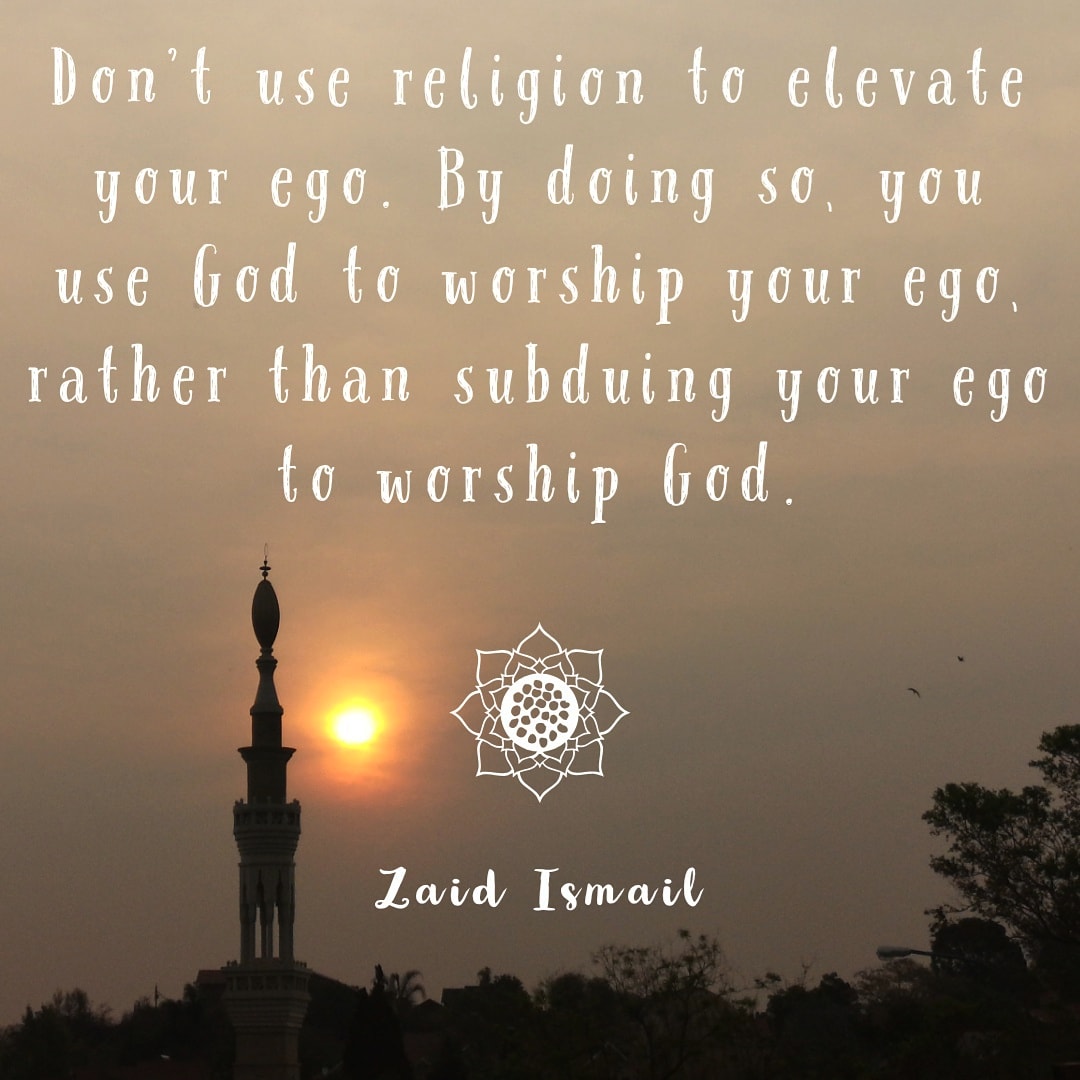
Don’t use religion to elevate your ego.
By doing so, you use God to worship your ego, rather than subduing your ego to worship God.
The appearance of religiosity in others misleads many to assume that they possess piety.
Piety cannot be measured through outward appearance, only through experiencing a sincerity of action.
Sincerity, if shown due respect, makes an outward show of religiosity for the purpose of earning respect impossible to display.
-
Delusions of Godliness
The delusion of godliness diminishes our capacity to connect with the divine. When we assume ourselves to be above those that behave worse than us, or we assume that we hold within us the capacity and means to punish others, or withhold their reward, be it in this world, or the hereafter, we assume to hold divinity within us. This is even more detrimental when we impose punishment or apportion reward to ourselves. Understanding is grounded in compassion, and there is nothing closer to divinity than compassion and mercy. Consider this the next time you view yourself or others with harshness.
-
A Contaminated Ego
I’ve grown to accept that I am not acceptable by most. I have never been black enough, Indian enough, or Muslim enough, and dare I say pliable enough. I speak my mind without permission because there is none to grant me permission. I don’t intend to give a voice to the voiceless, or a platform to the oppressed. Both are in the state that they are in because of inaction either on their part or the part of the collective to which they actively subscribe.
While I may not be able to resist the physical oppression that overwhelms any physical means of resistance I have at my disposal, it has never been a reason for me to remain oppressed in my mind. Far too many see the shackles on their wrists and assume that to be a denial of their freedom to think and to choose. I may not be able to choose my freedom of movement or association at all times, but I can always choose how much of that oppression defines me or what I am capable of contributing towards its dismantling.
I choose not to be oppressed by the self-serving leaders that I see around me. From government to community to religious structures. The contaminated ego has pervaded all such structures resulting in the stench of moral and ethical decay that I see. Tribal, cultural, and fraternal allegiances define the principles and values by which we live, rather than the common subscription to such principles and values that should supersede such allegiances being the glue that bonds us. As a result, I see leaders serving each other before they serve their subjects, and subjects aspiring to such stations of promise and praise because they wish for such self-serving worship as well. Service to their community rarely factors into that equation.
Everyone wants to believe that they’re the chosen ones. Some claim this through divine appointment, others claim it through association with the divine, but none appear to claim it through serving the divinity that they worship. Instead, they seek to be worshipped for the divinity that they believe resides within them. Their man-made titles convince them that they are morally, academically, and religiously superior while they fail to recognise the irony of using man to proclaim their divinity.
The contaminated ego has convinced many that they are superior by way of association and subscription rather than through action. I claim none of this. As I’m often reminded by the saying of a long forgotten scholar, if you knew me as I know myself, you’d throw sand in my face. A desert of sand. Each time I flirted with the idea that I was better than another I realised that such comparison confirmed that I was worse. The need to compare, even if inspired by a noble endeavour, is arrogance. I either aspire to adopt the ways of those I admire, or I choose to avoid the ways of those that I don’t. Better or worse must never feature because that will be a self-serving notion, not unlike the contamination I see in the leadership that prevails.
Leadership itself is misleading. To aspire to leadership is to court with worship. To have leadership thrust upon you through no effort of your own is a burden imposed by the divine. A burden is never a burden if deliberately chosen. A burden deliberately chosen is a need for validation or acceptance. The true burden is the choice to accept such validation through a rejection of the self. Any subsequent burden is merely a progression of that rejection.
The struggles I have chosen for myself only appeared as struggles when I lost sight of the convictions that I chose to serve. Any hardship or difficulty that resulted was often a result of misplaced expectations or self-pity, both of which faded from view the moment I reconnected with the convictions I held dear. Reconnecting with those convictions was never possible while surrounded by admirers but was only ever realised in the quiet moments where I found myself with no means to placate my failures or shortcomings. It is only through an accepting embrace of the same that I was ever able to rise above it. Denial always only tethered me to that which I hoped to ignore.
The ego itself is neutral. Like the body, it thrives with opportunity and benevolence when sustained with that which humbles it, and it crumbles under the weight of expectations and entitlement when fed with that which makes it gluttonous. Abdication for our choice of spiritual diet leads to the latter and quickly manifests in the unpleasant disposition and appearance that we develop on the outside.
Spirituality and physical wellbeing are not mutually exclusive. The one who professes to be spiritually enlightened will not be physically distorted from their natural proportions, and the one who exerts themselves in being physically attractive are most certainly not spiritually enlightened. It is the consequential balance of the two that reflects the true state of our ego, and not the contemplation of one or the other independently.
[This is an incomplete train of thought]