Fear sets in when we take our past experiences and project it on our future.
That means that we have more trust in the outcomes of the past, than we do about our ability to shape our future.
It also means that when we find it difficult to establish or maintain trust in a relationship, it’s because one or both of the people involved are afraid of making themselves vulnerable to what they’ve experienced before.
That’s why so many hold on to the past.
It gives us a sense of certainty or safety, while seemingly protecting us from experiencing the same pain in the future.
But, that assumes that who we were back then, is still who we are now. That assumption is incorrect.
Every experience changes us, whether willingly or unwillingly, consciously or subconsciously. Change is unavoidable.
What does faith have to do with it all?
The irony is that faith is there all along.
Faith is never blind.
What we see as the probable outcomes of the future is in fact faith. Faith is always based on evidence that we gather from the past.
The question is, are we gathering evidence about how often we failed, or are we gathering evidence of how often we persevered beyond those failures?
When you connect with that realisation, you’ll be able to consciously shift your investment of faith from assuming the worst about the future, to realising that you have it within you to influence how that future shapes up.
Own your life.
#hope #expectation #sincerity #selfworth #selfawareness #mentalhealth #mentalhealthawareness #mentalhealthrecovery #theegosystem #ownyourlife #lifecoaching #zaidismail #loveyourself #lifegoals #motivation #optimism
Tag: lifegoals
-

Where is your faith?
-

Who makes you feel old?
Does being childish mean you’re immature?
Does being mature mean that you must give up your youthful playfulness?
Does being responsible mean that you can’t be lighthearted about serious issues?
The labels and expectations that we adopt for ourselves are more about how we want to be seen, rather than what others expect of us.
When we lose sight of these choices that we’ve made, we blame society for the weight of our lives.
Our perception of who we are is the root of the joy or torment that we experience in our lives.
It is also the root of whether we grow old before our time, or do we remain young until the day we die.
Sometimes we lose ourselves to duty and servitude because we feel so intensely responsible for doing our part, or because we believe that we must take up the slack that others leave behind while they’re enjoying their life.
How we feel about doing it is more important than whether that is true, because if we feel burdened, we’ll experience the heaviness of responsibility.
But if we connect with the value that we want to create through our service of others, we’ll feel the joy of fulfilment in connecting with that value, rather than focusing on whether we’re appreciated or not.
That is the beginning of learning to appreciate ourselves before we expect others to make us feel worthy.
#hope #expectation #sincerity #selfworth #selfawareness #mentalhealth #mentalhealthawareness #mentalhealthrecovery #theegosystem #ownyourlife #lifecoaching #zaidismail #loveyourself #lifegoals #motivation #optimism -
Your impact is greater than your actions
When we transact with life, we expect to get back what we give.
We also expect to receive, in a very specific shape and form, the good that we need from others in exchange for the good that we did for them.
When we expect things to come back to us in a specific way, all the good that doesn’t match our expectations will be ignored, taken for granted, or even rejected without us realising that we’re destroying the very good that we’re praying for.
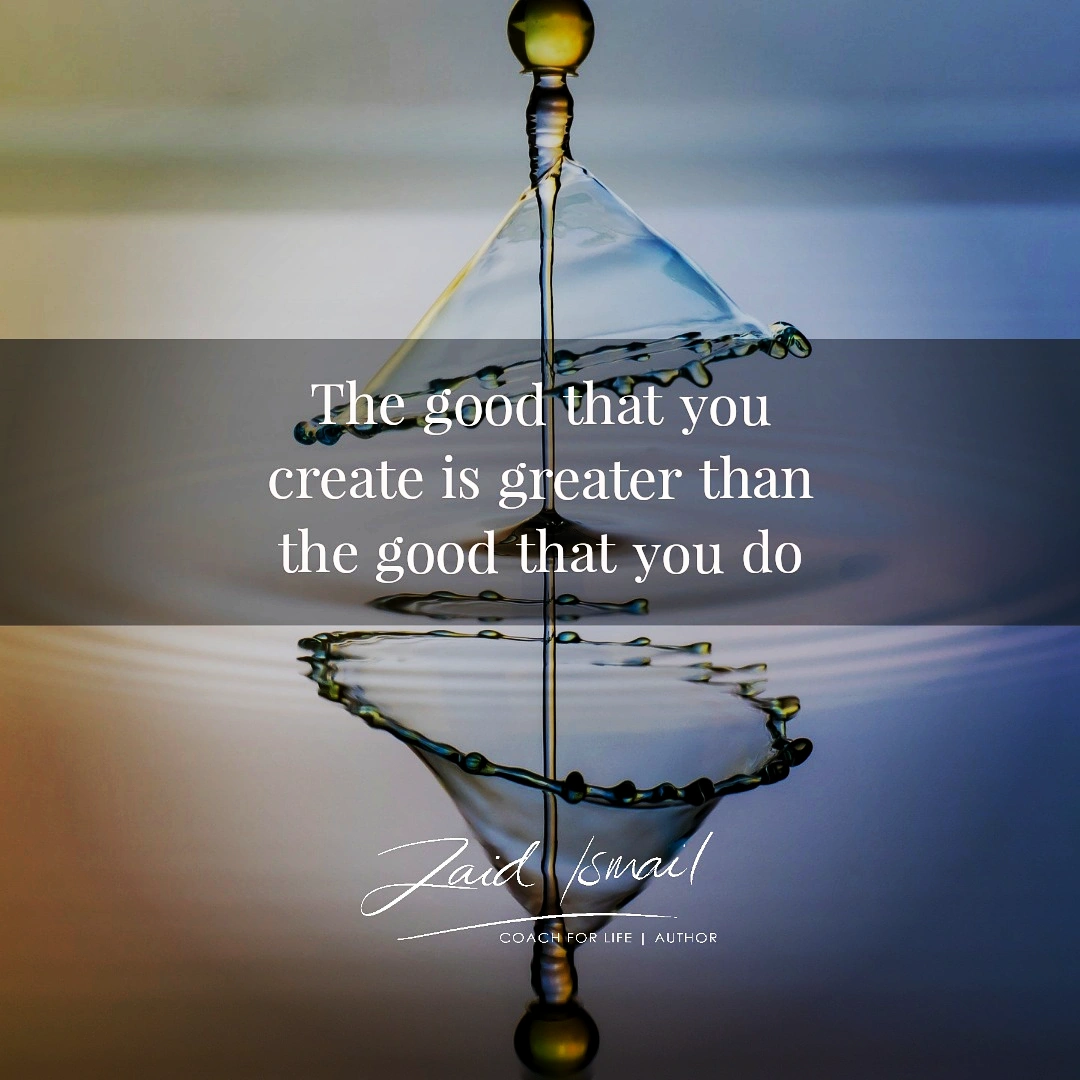
Like a drop of water that causes a ripple that meets other ripples along its way and gains momentum.
The drop of water had no idea that what it started could turn into a wave. It did not set out to start a wave, nor did it plan to meet other ripples along the way to form the wave that changed the shoreline.
It was just true to its nature, and it’s that nature that inspired or spawned an impact greater than it ever thought possible.
We’re drops of water in the ocean of humanity.
When we own our contribution towards creating good in our lives, its impact is felt for generations to come, and by every life touched by every generation that is spawned from our lineage.
Sadly, the same is true for the harm that we cause. Until someone steps up and decides to start that ripple of positive change.
Own your life. Don’t transact with it. Don’t hold back because you’re waiting for the perfect moment, or the perfect partner.
Be true to yourself, and create space for others to be true to themselves.
Break the cycle that weighs you down. Humanity will be all the better for it.
#hope #expectation #sincerity #selfworth #selfawareness #mentalhealth #mentalhealthawareness #mentalhealthrecovery #theegosystem #ownyourlife #lifecoaching #zaidismail #loveyourself #lifegoals #motivation #optimism -
Never lose hope
There are three expectations that I’ve found to ravage the soul. They are :
1. The expectation of respect from those whom you respect
2. The expectation of appreciation from those for whom you sacrifice and serve
3. The expectation of honesty from those whom you trust
If not for these three expectations, much of this world’s bitterness would be eliminated.Contrary to meme wisdom, it is impossible to live without expectations from others.
Not only is it impossible, but without expectations, much of life’s sweetness is lost.
Trusting our partners or significant others to fulfill the expectations that we have of them cements the bond of trust in our relationship with them, and vice versa.
Failed expectations feel like betrayal because expectations, by definition, carry with them a sense of entitlement to being treated a certain way by those closest to us.
When we become distracted by that feeling of betrayal, we become defensive or aggressive in demanding what we need, rather than seeking to understand why we’re not getting it.
When we focus on what we have a right to expect from others, we become defined by how they honour those expectations. That’s how we risk losing ourselves to such relationships.
When expectations fail, focus on hope instead.
Hope is what creates opportunities for us to be the best that we can be, while creating space for others to discover how to be their best as well.
Never lose hope. And always be mindful of the expectations that you have.
It will save your sanity, if not your soul.
#hope #expectation #sincerity #selfworth #selfawareness #mentalhealth #mentalhealthawareness #mentalhealthrecovery #theegosystem #ownyourlife #lifecoaching #zaidismail #loveyourself #lifegoals #motivation #optimism -
Why judge yourself?
“By those who consider the whole of me, I may be judged fairly. But by those who remain invested in only a single moment of time from a distant memory, they will only be able to judge an abstract moment of what I’ve lived.” (Excerpt from my essay A Long Drive With Me)
On the face of it, this is an obvious and common truth that we all experience at some point.
It’s easy to recognise when someone is judging us based on a single moment, or a single mistake from a long time ago.
Their reason for holding on to such experiences is most often more about them wanting to protect themselves from going through it again, than it is about assuming that we’re incapable of being better.
But, there’s a more sinister side to this.
How many of us judge ourselves harshly because of that one mistake that we made a long time ago?
Do you still see yourself through your teenage eyes?
Or maybe you see yourself through the eyes of the one who first betrayed your love?
Perhaps you even still see yourself through the eyes of the family or the community that rejected you?
Whichever is true, when you hold on to being defined by a moment from your past, not only do you convince yourself that you are incapable of being better than that, but you also actively prevent yourself from growing from the experience.
There is no shortage of people who would see fit to judge us, and the ultimate judgement of our lives will come in due course.
Why put your life on hold over thinking either one, instead of living your best life?
#selfworth #selfawareness #ownyourlife #selfmastery #mindfulness #personalpower #mentalhealth #mentalhealthawareness #mentalhealthrecovery #theegosystem #lifecoaching #zaidismail #loveyourself #lifegoals #motivation #optimism -
How to abandon your dreams
Failure only threatens is if we feel defined by the outcome of our efforts in trying to achieve our goals.
Sometimes those goals are small things that influence the daily quality of our lives, and sometimes it’s big things that shape our future.
The source of fearing failure is in our need to be respected by those around us.
The only time we will be disrespected or diminished when we fail at something is when we surround ourselves with those who themselves are defined by how others see them.
In such environments, mediocrity and tradition will be sacred. Playing it safe will be considered responsible. And being risk averse will be considered maturity.
If the life that you seek is one without failure, without change, and without discovering who you truly are, then such environments are perfect for you.
But, as humans, we are restless in spirit, and adventurous in nature. We are driven by knowing that we left our mark and we improved the state of the world in the short time that we were here.
Mediocrity, conformance, and restraint therefore goes against our nature.
When we fight our nature from fear of exclusion or rejection, it’s only a matter of time before our health suffers, and our spirits will be dulled.
That’s how dreams are lost and hope is abandoned.
You owe it to yourself, and the next generation, to be true to the value that you are capable of creating in this world beyond just maintaining the status quo.
Live inspired.
#hope #expectation #sincerity #selfworth #selfawareness #mentalhealth #mentalhealthawareness #mentalhealthrecovery #selfrespect #mindfulness #inspiration #motivation #optimism #ownyourshit #ownyourlife #theegosystem #lifecoaching #zaidismail #lifegoals -
Do you know why?
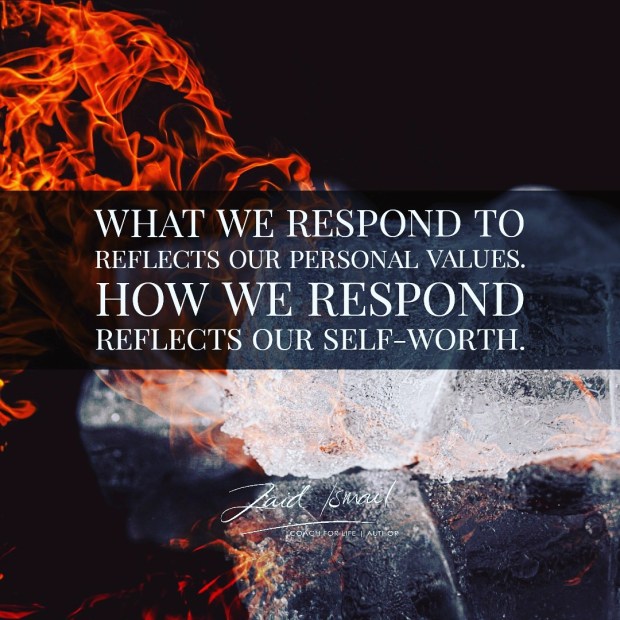
What we choose to respond to is a reflection of what is important to us.
The more important it is, the more intense or passionate our response.
Hence anger that bubbles over, or heartfelt pleas and messages to connect with someone about something.
The tone and demeanour of how we respond is a reflection of our self-worth.
The more aggressive or abrasive we are, the lower our self-worth in that moment and about that setting. And vice versa.
If we’re not mindful about our emotional needs from a given interaction, we’re likely to be distracted by the technical or practical aspects of what we’re dealing with, rather than understanding why it provokes such a strong response from us, or our partner.
Situational mindfulness is the easy part. That’s being aware of WHAT is going on around you so that you can respond appropriately.
Emotional mindfulness is more elusive, because it means that we need to be consciously aware of our emotional bias in that moment, or else we’ll lose sight of our bias when interpreting the actions or words of others. In other words, the WHY of our response.
Understanding your Egosystem that drives you is therefore critical towards improving the quality of your relationships, and your life.
If you’re struggling to understand why you can’t let go of something that appears hopeless, or why you feel so intensely about something that isn’t that important in the bigger picture, get your copy of The Egosystem now, and begin your journey of reconnecting with you, after having been distracted by the struggles of life.
#hope #expectation #sincerity #selfworth #selfawareness #mentalhealth #mentalhealthawareness #mentalhealthrecovery #theegosystem #ownyourlife #lifecoaching #coaching #zaidismail #lifegoals #loveyourself -
Don’t wish away life
Perspective is what makes the difference between feeling trialed, versus experiencing growth.
The narrative that keeps reminding us that it’s a cruel world and that we must struggle to survive, distracts us from our contribution towards that cruel world.
When things don’t go our way, we must remember the times when we were faced with unexpected difficulties and how we overcame them.
But don’t focus on the amount of times you were faced with difficulties and wish that it would stop.
Focus on the fact that despite your unpreparedness, you were able to overcome the difficulties.
We cannot control what life throws at us. We can only do our best to either overcome it and move on, or find opportunity in it to create something beautiful or valuable.
Recognising your abilities and appreciating the resources that you have access to will help you to remain focused on being purposeful rather than feeling burdened.
Life is a passion that must be lived. And passion is never appreciated if it isn’t accompanied by some pain. Otherwise we take it for granted, and it ceases to be a passion of ours.
That’s what wishing away trials and realities do for us. It robs us of our passion, and turns us into meek victims waiting for life to treat us kinder.
Rise above it. Live passionately. Love deeply. And don’t waste life away worrying about could’ve and should’ve.
Make every moment count.
#hope #expectation #sincerity #selfworth #selfawareness #mentalhealth #mentalhealthawareness #mentalhealthrecovery #optimism #lifegoals #ownyourshit #ownyourlife #lifecoaching #zaidismail