If fear is what shapes your view of what lies ahead, you’re focused on everything that could go wrong because of what went wrong before.
That may seem like a natural response to protect ourselves from being hurt or betrayed again, but it also means that we’re focusing on everything that appears as a risk.
The problem with that is that we only find what we’re looking for.
If we’re looking for risks, we’ll find it. But that means that we’ll miss all the opportunities to get things right, or to create a better outcome than before.
While there may be practical reasons to protect ourselves from physical threats, it’s very different when we protect ourselves from perceived emotional threats.
It’s like putting a bird in a cage to protect it from getting killed by a predator.
You may protect it from that possible fate, but you also prevent it from learning how to fly away from such dangers.
That bird then becomes dependent on you for its protection.
The same is true about emotional threats.
Only, with emotional threats, we become dependent on holding onto that past hurt or betrayal, or failure, to ensure that we remain alert to any circumstances in which the possibility exists of repeating such an experience.
When you release yourself from that emotional cage that trapped you, remember to give yourself enough time to learn to fly before you go in search for new opportunities to create the life that you want.
If you don’t, you’ll look to the future with fear, and convince yourself that hope failed you each time.
It wasn’t hope that failed, it was a lack of awareness of what we were getting ourselves into.
Solve the right problem. Don’t give up hope, invest in yourself so that you’re equipped to create the life that you want.
It always starts with you.
#hope #expectation #sincerity #selfworth #selfawareness #mentalhealth #mentalhealthawareness #lifecoaching #zaidismail #theegosystem #ownyourlife #relationshipgoals #anincompletelovestory
Tag: sincerity
-

Afraid to hope
-

Faithfully hopeful
Abandoning hope in something good means that we are investing hope in the relief of not trying any longer.
It means that we hope for ease after having struggled through the anguish and pain of trying to achieve something important, but failed.
Sometimes we hope that abandoning hope might give others reason to care or to notice, or perhaps even to appreciate what we abandoned when we felt like our efforts towards them was being taken for granted.
Perhaps it will give them reason to appreciate or care about what we’ve tried in vain to convince them is important.
That’s why, when we lose hope in achieving something, we experience a double blow when we realise that no one cared anyway. Or that they didn’t even notice.
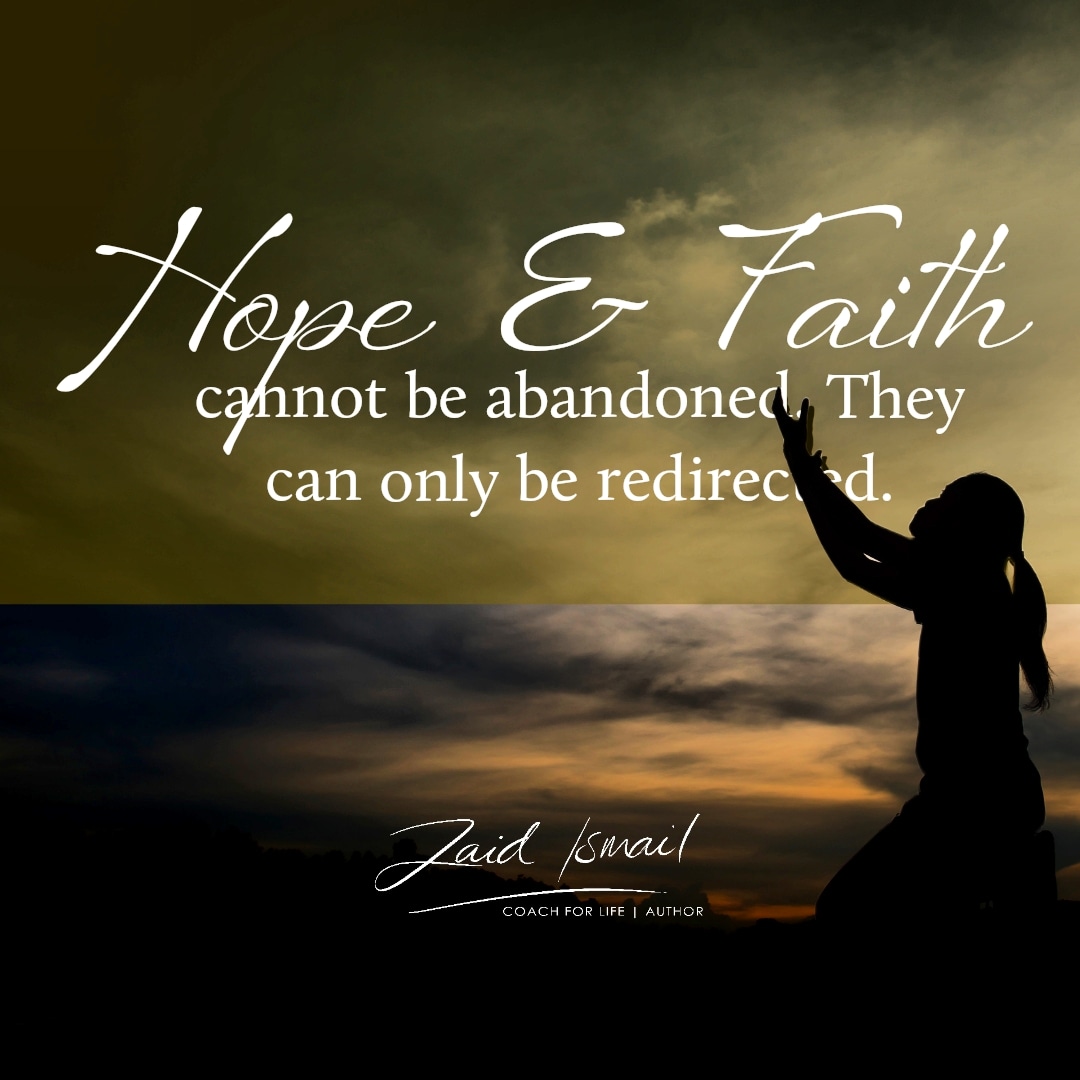
Faith and hope are inseparable.
Where we focus our hope, we focus our faith.
Faith is what inspires us to want to change the world, while hope is grounded in our belief in our ability to change it.
Our faith is shaken and our hopes are dashed when our expectation of what we wish to influence exceeds our ability to influence it.
Being torn between having faith that things can be amazing, while feeling powerless to make it happen, is at the heart of all anguish in life.
Perhaps it’s best demonstrated by the act of planting a tree in your old age, having full faith in the comfort and benefit it will offer those who are alive to experience its growth, despite knowing that you won’t live long enough to share it with them.
Your conviction in what is good will ensure that you never lose hope in creating good for others.
And your faith in the good that results from your efforts in life will offer you peace despite not always being able to witness the value of your contribution.
Be mindful of where you’re investing your faith, and hope will follow faithfully.
#hope #expectation #sincerity #selfworth #selfawareness #mentalhealth #mentalhealthawareness #lifecoaching #zaidismail #theegosystem #ownyourlife -
Let’s exchange needs
Men complain about lack of intimacy and women complain about emotional unavailability.
Sometimes, the roles are reversed, but generally, these are the two most common issues that couples face in a relationship.
Problem is, neither is the problem that needs to be solved.
We’re naturally more emotionally available in spaces where we feel seen or appreciated.
Having no reason to doubt our significance to our significant other is all the reason we need to drop our guard.
As for intimacy? We’ve largely forgotten what that even looks like.
Similar to love, we’ve forgotten how to be intimate.
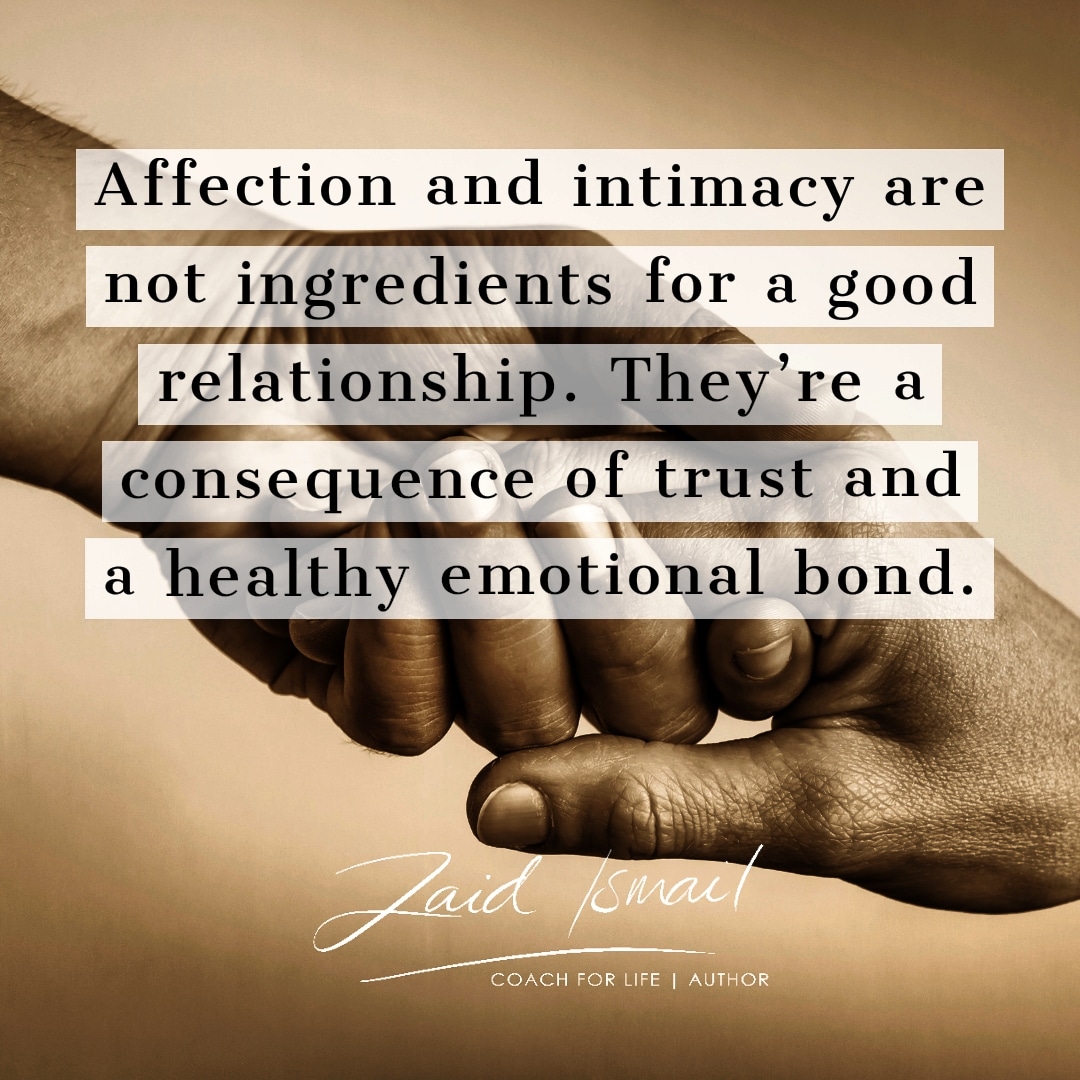
Intimacy is not sexual acts or raunchy nights.
Intimacy is about sharing something much deeper than that.
But we’ve turned these elements of a relationship into commodities and rights.
It’s therefore unsurprising to find that most couples, even the ones without major relationship problems, are essentially complacent or unfulfilled about their relationship, rather than inspired to live life passionately because of it.
If you find yourself discussing your rights and your needs with your partner, understand that you’re distracted from why such a discussion is needed at all.
This may sound naively idealistic, but perhaps our lack of idealism is what has killed the romance in our lives.
Perhaps it’s our focus on occasions, and functions, and events, and allocated dates to acknowledge or celebrate each other that denies us the spontaneity needed to feel alive.
Perhaps that’s why we’ve become so transactional in how we live, how we love, and how we seek fulfilment.
It’s time to question whether you’ve been trying to solve the right problems in your life or have you simply been changing the dressing on a festering wound.
#hope #expectation #sincerity #selfworth #selfawareness #mentalhealth #mentalhealthawareness #lifecoaching #zaidismail #theegosystem #ownyourlife #relationshipgoals #anincompletelovestory -
Gratitude is not appreciation
Gratitude speaks more to our soul than any gift or trinket, or whispers of endearment.
Gratitude is impossible without respect,
and respect is impossible without honesty,
and honesty is impossible without sincerity,
and sincerity is impossible without self-respect,
and self-respect is impossible without conviction,
and conviction is impossible without self-worth…
And so it continues until we realise that expecting gratitude or appreciation from someone that lacks any of these fundamental traits in their character is an exercise in futility.
We cannot give what we don’t have.
Therefore, if we’re falling short in any of the attributes that lead to gratitude, the most we’ll be capable of is appreciation.
And appreciation is not the same as gratitude.
Appreciation is simply the acknowledgment of a blessing or benefit.
Gratitude is reflected in what you do with that blessing or benefit that you claim to appreciate.
It’s like appreciating the fact that you have a job, but putting in only as much effort as is needed to meet your boss’s expectations so that you don’t get fired.
Or appreciating that you have a car, but not maintaining it or using it in a way that reflects gratitude for the value that it creates in your life.
You can have the world to be grateful for, but no one can insert gratitude into your heart.
Gratitude is therefore not what we journal about, or what we praise or acknowledge.
Gratitude is showing up in a way that does justice to the ability we have to show up.
Gratitude is about not living life in half measures, or compromising what we stand for from fear of exclusion or rejection.
Gratitude, if nothing else, is at the heart of peace and contentment, because it connects us purposefully with who we are and what we are capable of, regardless of what others see or don’t see in us.
We can therefore not be grateful of others if we lack gratitude for ourselves.
It always starts with you.
#gratitude #appreciation #happiness #hope #sincerity #honesty #integrity #authenticity #selfworth #selfawareness #mentalhealth #mentalhealthawareness #lifecoaching #zaidismail #ownyourlife #theegosystem -
Who’s responsible for your joy?
Do you enjoy being held responsible for how someone else feels about themselves?
When they feel good and attribute that to us, we feel good.
But does it feel good when they blame us for their self-loathing, or their misery?
People who willingly accept responsibility for how you feel about yourself prevent you from owning your self-worth.
As long as you have reason to blame someone else about how you feel about yourself, you have no reason to grow beyond that state that you’re in.
You’ll place your life on hold, and you’ll grow bitter waiting for them to prove to you that you’re worth it, or that your efforts towards them means something to them.
It’s not wrong to look for that gratitude, or even reciprocation, from those you hold dear or invest your time and effort into uplifting.
However, when they don’t return the favour, or even acknowledge your contribution and support, how you feel about yourself remains how you feel about yourself!
It’s when our efforts towards others go unnoticed or unappreciated that our self-worth counts the most.
Disappointment, or even betrayal, is never good reason for self-deprecation.
Self-deprecation, or putting yourself down because of how others treat you, reflects your ingratitude for who you are.
When you do that, you become part of the very way of life that left you feeling like you’re not worth it.
Worse still, when we lose ourselves to what others think of us, we also lose sight of those who may look up to us, or who have rights over us.
That’s how self-loathing feeds the very cycle that weighs us down.
If you still see yourself through everyone else’s eyes, peace will forever be elusive, and life well forever feel burdened.
How you feel about yourself is your responsibility, no matter who steps in to make you feel better about yourself.
The question is, is your opinion of yourself more informed than the opinions that others have of you?
It always starts with you.
#hope #expectation #sincerity #selfworth #selfawareness #mentalhealth #mentalhealthawareness #lifecoaching #zaidismail #loveyourself #lifegoals #theegosystem #ownyourlife -
Expect to expect more
There’s a fallacy out there that it’s possible to live without expectation.
Yeah, it’s a fallacy, cos it’s impossible.
When you try to live without expectation, you’re defending yourself against being hurt.
When you defend yourself preemptively, it means that you believe that you’re weak enough not to be able to deal with disappointment.
More than this, it means that you’re judging others because of their human failings, and you’re convinced that you’re incapable of failing others.
Just because you may not be aware of it doesn’t mean that you haven’t hurt or betrayed someone by not living up to their expectations.
We all do it.
When we judge others for being human, we lose the right to ask for understanding or empathy when we fall short because of our humanness.
Rather than not expecting, we should focus on whether our expectations were based on what we thought we deserved, or what the other person was capable of.
Before you look at capability from the perspective of what they’re physically capable of, remind yourself that your expectations are based on your emotional needs, not your physical needs.
So when you consider what someone is emotionally capable of rather than what they are physically capable of, you’ll find understanding about why them letting you down is not because of who you are, it’s because of what they’re struggling with within themselves.
You can’t wish that away.
You can either create space for them to grow, or exit their space because what you represent is what they’re grappling with.
When you believe someone is capable of something but they don’t believe it themselves, change your expectations to hope that they will see what you see, rather than writing them off because they disappointed or betrayed you.
It always starts with you.
#hope #expectation #sincerity #selfworth #selfawareness #mentalhealth #mentalhealthawareness #lifecoaching #zaidismail #theegosystem #ownyourlife -
The right to demand your rights…
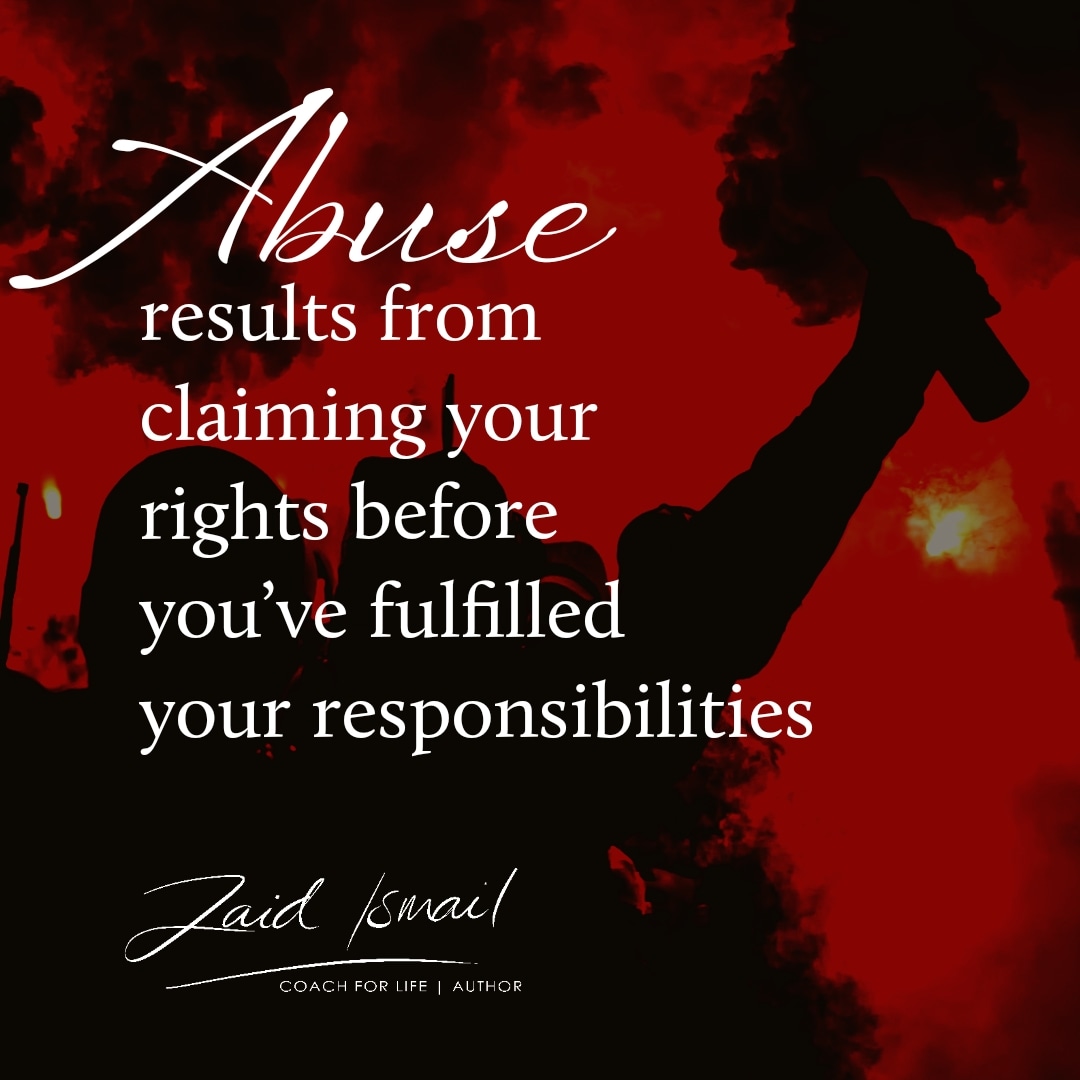
The more we emphasise our rights, the less time we spend understanding our responsibilities.
The rights that others have over us is the responsibilities that we have towards them, and vice versa.
The moment we focus on only one side of that equation, we become oppressors.
If we focus on our rights but neglect our responsibilities, we oppress others.
When we focus on our responsibilities without calling to account those who do not fulfil our rights, we not only oppress ourselves, but we enable the oppression against us.
The moment we remain silent to keep the peace, we destroy the peace for the next generation.
Understanding the boundaries of supporting each other in fulfilling our rights and responsibilities is an important step in ensuring that you don’t lose yourself and your peace to your fight for justice with someone who is not invested in justice.
How we conduct ourselves will benefit or harm our bodies, which in turn enables oppression by ourselves against ourselves.
Therefore, the balance to be struck is not only in what we do or what we demand from others, it is most critically in how we establish balance within ourselves.
Approaching rights and responsibilities from a social justice perspective only, or from a perspective of what you should be able to demand from your partner is not about rights at all.
It’s about demanding significance when you feel insignificant.
That’s how our opinion of ourselves results either in our fair and kind treatment of others, or it results in oppression and abuse while we blame them for how we feel about ourselves.
Focus on what you need to do, and most importantly, on who you want to be.
As long as that is your focus, establishing healthy boundaries will come naturally because you’ll be mindful about what is within your control or influence to change, versus what is beyond your ability to change.
It always starts with you.
#hope #expectation #sincerity #selfworth #selfawareness #mentalhealth #mentalhealthawareness #lifecoaching #zaidismail #theegosystem #ownyourlife -
Telling yourself sweet little lies?
You lie to yourself most when you tell someone, “You make me feel…”
No one can make you feel anything without your permission.
You give your permission when you’re more focused on what you need from them to feel whole, rather than what you value about yourself.
The moment you hand over the custody of your emotions to another, you deny yourself the opportunity to own your life.
When you don’t own your life, you hold others responsible for the state in which you find yourself, which becomes your distraction from doing something to improve your own state.
When we demand such priority from others, we need to be absolutely certain that we’re offering them as much priority in return, but not the way that we want to prioritise them, but the way that they need it.
If we need them to create space for us the way we need, we must be willing to do the same in return.
Unfortunately, when you don’t own your life, you only focus on what you need from others, and rarely is there any focus on what others need from you.
That’s how the score-keeping starts, or the tit-for-tat, or the guilt tripping when you don’t get what you need or want.
Self-worth is literally the worth that we place on ourselves, and has nothing to do with the value that others see in us.
The more you need others to make you feel good about yourself, the more likely you are to drive them away.
The ones who are drawn to you because you need them to feel good are lacking in self-worth themselves, creating a co-dependence that suppresses your growth potential, rather than enhancing it.
That’s how ‘toxic’ relationships are formed.
When one person grows from feeling supported and the other doesn’t, it creates reason for the one who stagnated to feel as if they’re being betrayed because their needs are no longer such a priority for their partner.
And so the vicious cycle spirals out of control.
Own Your Life.
It always starts with you.
#hope #expectation #sincerity #selfworth #selfawareness #mentalhealth #mentalhealthawareness #lifecoaching #zaidismail #theegosystem #ownyourlife