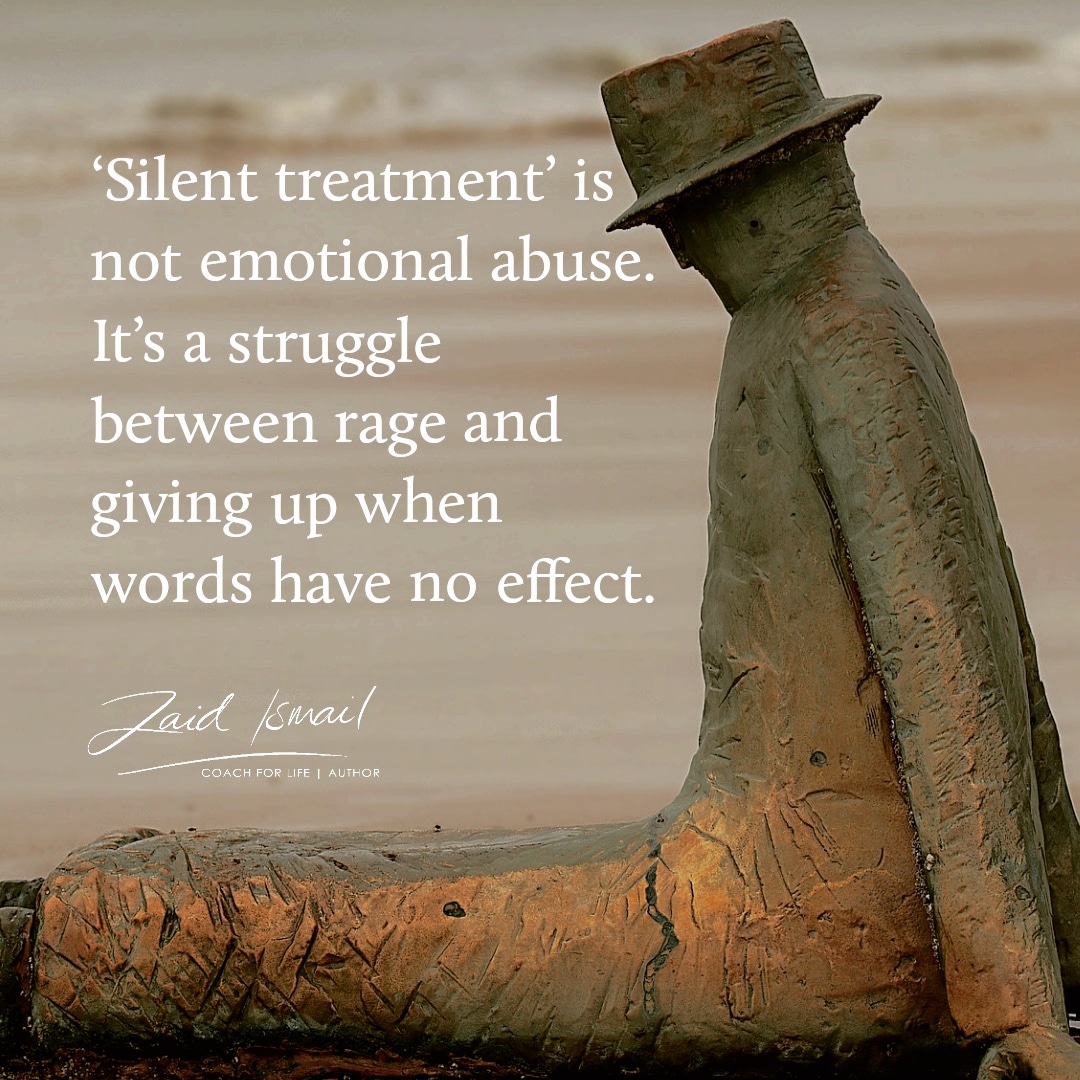
I’ve often seen claims that receiving the silent treatment from someone is the equivalent of emotional abuse – if not abusive itself – and I wondered how it is that doing nothing to someone can be considered abusive?
I once read that what disturbs us is not the disturbance around us, but rather our inability to deal with that disturbance.
The same is true for silence when what we desire are words or communication.
The assumption that we make about the silence from others is that they have reason to believe that their words will have effect, or that it will bring about the understanding that they need or are trying to create.
We also assume that they are capable of articulating what they feel and must therefore be as capable as we are in communicating what they are feeling.
Worst of all, we judge them for being inadequate in their silence because they’re ‘supposed to be an adult’.
Silence only becomes necessary when we have no hope of getting our point across, but do not want to walk away either.
The silence creates space for understanding. But that space will not be used for understanding if the other person is persisting in demanding that they be communicated to in the manner, and at the time that they need to be communicated to.
The real question that we must reflect on is, “Why are we so impacted by the silence from others that we feel rage instead of seeking to understand instead?”
Rage is our defence against being insignificant.
That’s why silent treatment feels like abuse because it provokes our own feelings of inadequacy or insignificance, and not because the silence itself is abusive.
The assumptions that we make about the motives behind someone else’s behaviour is most often based on what we would be motivated by if we were in their shoes.
Think about that the next time you are inclined towards judging someone harshly before having explored opportunities to create understanding.
#hope #expectation #sincerity #selfworth #selfawareness #mentalhealth #mentalhealthawareness #lifecoaching #zaidismail #loveyourself #lifegoals #motivation #optimism #emotionalabuse #silenttreatment
Tag: emotionalabuse
-
Silent trauma, or peace?
-

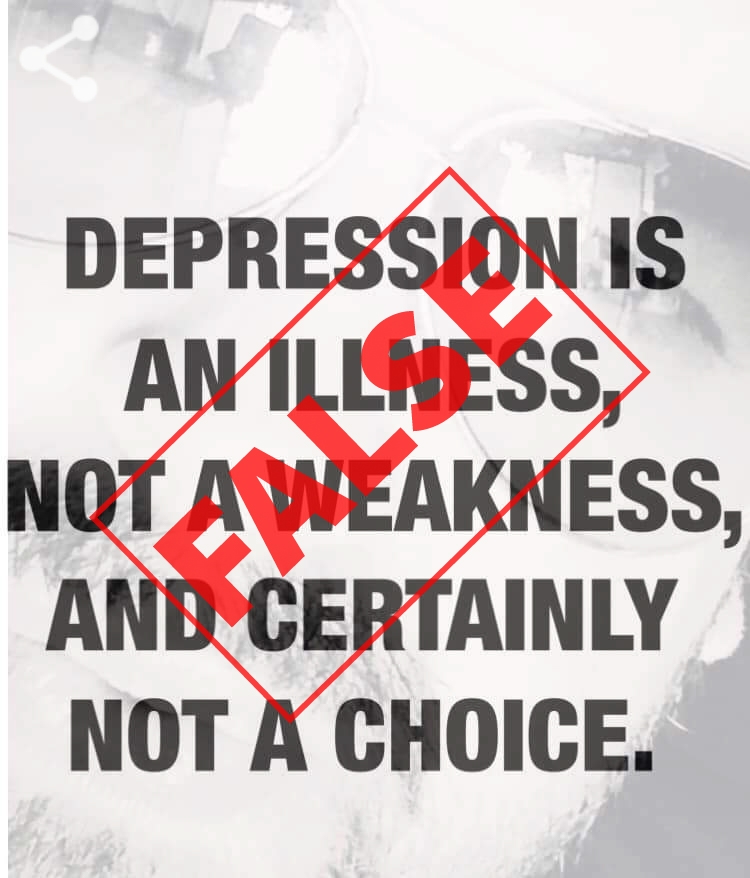
Depression is not an illness
I realise that this is a highly contentious point. But we must recognise the elephant in the room before we are able to deal with it.
The myth that depression is an illness causes more harm than the good it’s intended to achieve.
Depression is the absence of hope. Preceding that is the saturation of failed expectations from those we consider significant in our lives.
Like happiness, depression is not a choice. But, also like happiness, depression is an outcome of the collective choices that we make.
The more aware we are of those choices, and importantly the consequences of those choices, the more consciously we are able to make decisions to break the cycles that result from those choices.
The moment we label a human experience as an illness or a disorder, we create victims rather than masters of our emotional experience, thereby disempowering us in our efforts to rise above the unpleasant experiences of our lives.
Depression is not an illness. It is a legitimate human experience in response to bad experiences in life.
When we begin to recognise this, it becomes possible to reconnect with our humanity, rather than to surrender to an imagined illness.
#depression #narcissism #narcissisticabuse #emotionalabuse #mentalhealth #mentalhealthawareness #mentalhealthrecovery #selfworth #selflove #selfawareness #selfrespect #mindfulness #inspiration #ownyourshit #ownyourlife #theegosystem #embracingME #pursuitofhappiness #zaidismail