Tag: betrayal

  • A brain dump

    A brain dump

    I need to return to my self. When the feeling of being adrift and the mental fog merge, the road ahead appears as a romantic setting filled with intrigue and adventure, but little answers. In seeking such answers, I may find new paths and new passions, but such a journey cannot be undertaken when chained to the present.

    The yokes must first be dismantled before the anchors lifted. The past is of no consequence except for its gifts that continue to colour the present moment. Wishing it away has never resulted in anything more than regret or escapism. Embracing it, despite most often being a cold and uncomfortable embrace, has always offered the opportunity to warm up to it, before moving beyond it.

    There appears to be wisdom in learning to love the challenges I face, rather than spurning their roots. I lost myself many times in the distractions that result from a fixation on its roots, often questioning the value of my contribution towards countering the anticipated outcomes that now weigh on my shoulders as yokes of past decisions. Those contributions, when focused on with regret, grew larger than my strength to prevail beyond it, turning it into a living monument that slowly defined my sense of self. Thus I lost myself to moments long gone, and in investments long since diminished in value.

    In returning to my self, I must embrace the beauty of my being that afforded me the conviction to contribute towards that which held no promise beyond that moment, but whose hope carried me to see dreams beyond the impossible that I faced. Despite not having achieved those dreams, its descendents have spawned new paths that otherwise would have remained concealed, but importantly, have eliminated any reason to question myself later had I held back in my contribution towards what I hoped to achieve.

    Speaking cryptically is a game that tests my resolve between unbridled rage at the world, and quiet contemplation of my right to rage. Rage is only needed when I refuse to embrace the naivety and convictions that encouraged my contribution towards that which I knew carried the promise of betrayal as much as it carried the hope of joy. Denying my contribution to justify my rage would therefore be as hypocritical as the ones who betrayed my efforts because they saw their vulnerability as a weakness to be condemned, and therefore preemptively judged me to be what they expected of me, rather than what I offered in truth.

    There’s a harshness that creeps in when we see our tenderness as weakness, rather than seeing it as a proclamation of our ability to remain human in a calloused world. It’s that same harshness that defines the tone with which we receive the tenderness in others. When we assume their tenderness to be a drain on our strength, we lose the benefit of seeing in them the gentleness that we must harbour in us to avoid inviting the harshness of the world into the cavities of our souls. Those cavities, when seen as failings or as evidence of inadequacy, become sources of shame, rather than opportunities to create the joy and the beauty that they await.

    Joy and beauty would have remained elusive to my dysfunctional being had I restrained myself when common sense dictated such restraint. It was through abandoning common sense that I departed from the trajectory that honoured the emotionless heritage that had defined my world up to that point. It has always been my ability to dream of being more than I ever had a right to claim that I found myself among beauty and fulfilment that would otherwise have remained foreign to my experience of this world.

    It is in my rejection of what others believed to be true about me that I found myself. It was in that rejection that I revealed their rejection of themselves in favour of their need to belong to their soured legacies. It is in that rejection that I found the most beautiful of souls with whom to share sacred moments and even bigger dreams. Without that rejection, I would have been as dejected as many of the vapid ones who spend their lives courting the validation of those who invalidated them to begin with. Seeing the hollowness in their eyes, it was my rejection of such a hollow existence for myself that I created space for kindred souls to create in me what the legacy of my lineage would never have been able to endow.

    Thus, it was rejection that guided me to me. It was choosing what I did not want for myself, without waiting for the arrival of common sense, that allowed me to create space for what I hoped to experience, and who I hoped to embrace. And the embrace that I found through such rejection outweighs the accumulated benefit of all the validations that I could have courted instead.

    Life has a way of meandering towards that which we desire most, but through paths that often defy logic while priming us for the state we must achieve if we hope to have the capacity to embrace what it is that we want. By respecting the fears that define the efforts of those around us, we limit ourselves to achieving only a shadow of their achievements, because we would never discover the potential that we hold within. Sometimes it’s more important to focus on what we need to reject, than applying ourselves towards that which we hope to achieve. It demands a trust in the harmony of life that exceeds any balance that we may be able to consciously extract from such a flow. Fighting the rapids is often the least effective way to navigate through tough times. Perhaps in that is the wisdom that I need to secure my way beyond this torrential period of my life.

    Regardless of which way it goes, I am clear about the path that I choose to pursue through the foggy road that lies ahead. And the companion to accompany me on that journey will reveal themselves when the space I create meets the path that they’re on. Until then, the journey holds the promise of many beautiful revelations, akin to the revelations that revealed the possibility of being more than I ever thought possible for a man whose heritage denied anything beyond mediocrity or common sense.

    Legacies are only to be honoured if they honour the truth of who we are. Discovering that truth is therefore only possible when we see in ourselves the possibility of the future, rather than remaining loyal to the inheritance of the past.

  • A walk…and a bit

    A walk…and a bit

    I stepped on the treadmill today. It’s not my favourite pastime, but I did it anyway. At first, I recalled the time, many years ago, when I first attempted it and found myself winded in less than 3 minutes. I was still working in corporate. Life was lifeless, and purpose was found in servitude.

    I travelled a lot since then. Mostly business travel. Staring down at the footplate of the treadmill, I found myself walking those streets again. The back roads of Nice, a short throw from the plush touristy area, the plaster was flaking off the walls of the apartment buildings, and the empty plots were unkempt and overgrown with weeds.

    Then the cramped sidewalks of London, with its scarcity of smiles and less warmth to offer than its weather. I walked quietly through the neighbourhoods, distant from the bustling centre of wealth, and saw hints of warm homes and affectionately adorned window sills. The cold mist reminded me of my estranged nature in such scenes.

    The quiet, unnatural streets of Jubail crept into view next, with fallen, premature dates melted and smeared into the sidewalk, and the mocking smiles from the police officers revealing their revolting oral hygiene. The thick air, laden with humidity and a scorching breeze choking me up as the treadmill continued its whine as I journeyed my way to the next city.

    Tunis, with a touch of warmth, an uncanny sense of safety, and humility in large doses, prompted a hint of a smile as I recalled strange encounters with strange people. The trip on the metro passing Mandela’s stop, and the beautiful voices of the children singing their songs in Arabic each morning as I waited for the train to arrive. Probably the only wistful recollection of my time there.

    The walk to China Town in Singapore, or to the Indian quarters, clinically clean and oddly cold. Buddhist temples and expensive shopping malls crowding all the open spaces, and cliques of old folks line dancing in the parks without a hint of interest in the rhythm to which they danced. Everything so detached and robotic, as if celebrating the privilege but disconnected from the experience.

    And of course, traipsing the steps and the hills and tunnels of Monaco. Walking the length and course of the grand prix circuit, delighting myself like a little child as I recognised the bends and the straights from my hours on the PlayStation. But just as soon, the delight would fade to a subdued smile, and then nothing. Just a sigh.

    You’re never lonely if you like the one you’re alone with, or so they say. So they say. An hour later, still barely exhausted from the spirited walk through my daydreams, duty interrupted my moments in foreign cities, each echoing the solitary nature of my life, and the isolation of my spirit. The photos and stories shared with others later on never compensated for the absence of one to share it with.

    But, peace comes slowly and silently when we learn to embrace the inevitability of our lives, rather than yearning for what never was despite our best efforts. The sweat pouring down my face stung my eyes a little more than the subdued tears, as I realised the futility of tears that are left to dry on their own.

    It was a long walk on that treadmill today. But there are still many streets to explore in stillness and isolation. Wanderlust has departed, and in its place it left a quiet composure of knowing that nothing more should be expected of what lies ahead. The weariness is finding its home in the same alcoves that were just recently filled with more. But it is an alcove and not a treasure chest. What visited briefly never intended to stay.

    Thus, expectations are recalibrated, and life…life remains a stranger that prefers the company of others. Exhale.

  • Silent Protest

    Silent Protest


    A protest that cannot be articulated, is a protest spawned by futility, to feed futility.


    My contempt for what I am presented with is rarely expressed plainly. My reservations to express at all is grounded in years of ridicule and dismissal around issues I have held with great conviction. Experience is a bitter pill, whether swallowed or not. Each cycle of decay results in a shortening of the fuse that prompts us into action. I believe that our response at break point is chosen long before we reach that point. It’s not something that happens instinctively. Instead, it has been internalised for so long that when we do reach that tipping point, no contemplation or deliberation is needed. The response is not intended to be measured. It is intended to finally release the silent protest that we chose not to express outwardly for reasons that suddenly fade from significance.

    Silent protests are born when our pleas for sanity or reason go unanswered in a setting that we feel compelled to embrace. It’s a cry for recognition of who we are and what we need that has fallen on inattentive ears, or calloused hearts, leaving us bound to the commitments we once made, while resisting the urge to respond in kind lest we be reduced to the same stature of that which we have grown to despise. But the contempt is not easily expressed. The contempt is reined in to ensure that the commitment remains the priority. After all, in the absence of the commitment, no such claim of aloofness would be credible.

    So the silent protest plays out, often for years, and assumes a sub-conscious frame of reference that we rarely realise exists. The weightiness sets in, the lethargy overwhelms, the fatigue smothers, and the passion withers. Life ceases to be life at this point. Instead, it steps aside to allow existence to take over. Existence, then, becomes the final protest. It protests the onset of death, denies the potential of life, and secretly yearns for both.

    Breathe. Exhale. Remind yourself why the silent protest started, if indeed you are able to remember, and decide if it is still worth the commitment you are trying to honour. If you can’t remember, then remind yourself about where your passion once flared, and use that as a point to return to in order to retrace your steps to the point where you lost your voice.

  • A bitter trade

    A bitter trade

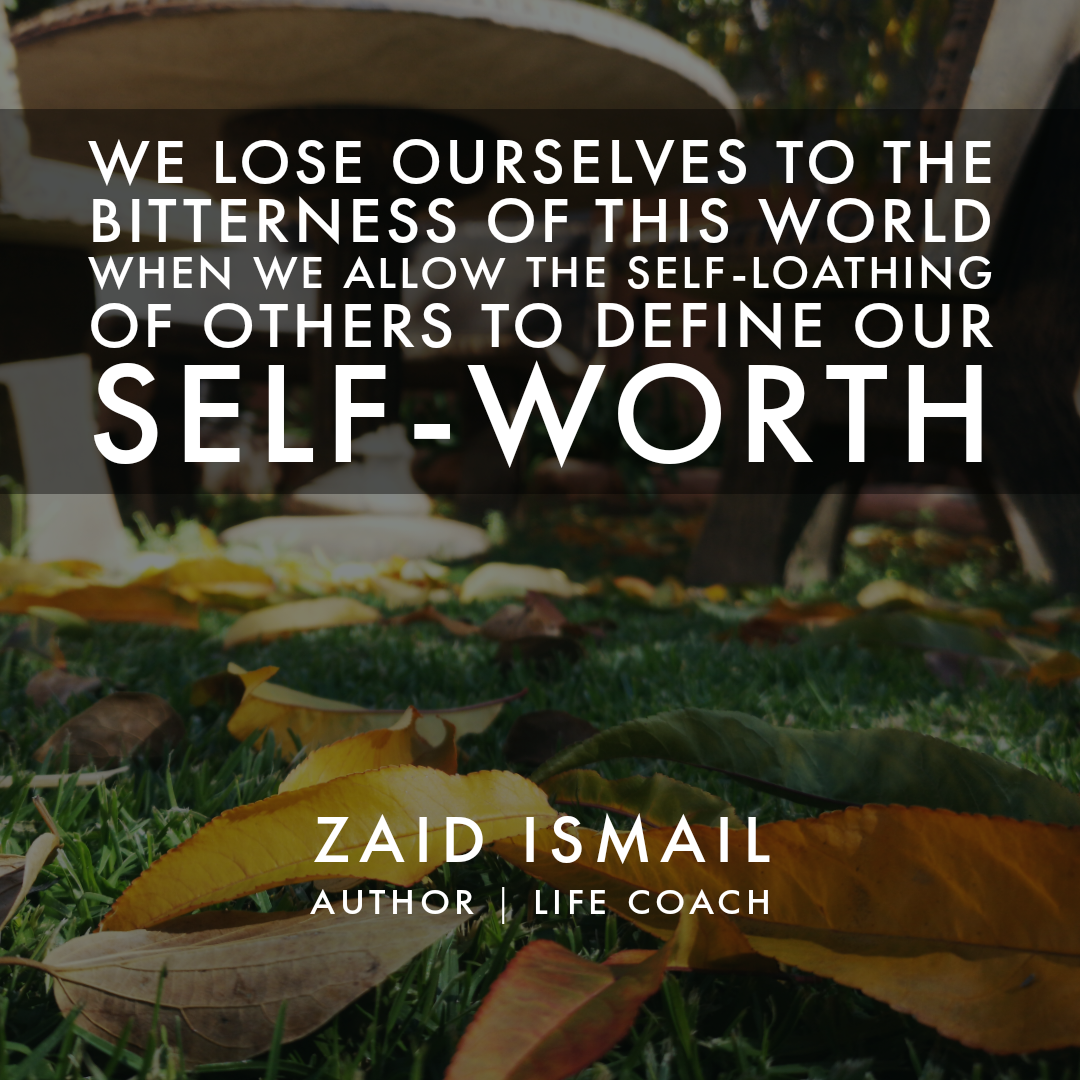
    We lose ourselves to the bitterness of this world when we allow the self-loathing of others to define our self-worth.

    In our desire to be understood, we willingly adopt labels that limit our expression of who we truly are.

    It is a betrayal of the contract of kindness that we have with our soul.

    The contract that compels us to treat with gentleness that which we cherish, and to handle with care those who cherish us.

    When we allow the self-loathing that drives the bad behaviour of others to define how we feel about ourselves, we replace our gentleness with their harshness, and our care with their contempt.

    The labels we use to convince ourselves that this bitter trade is warranted include convincing ourselves that we’re alone, that were powerless victims, or that we’re worthless unless our betrayer tastes the cruelty with which they treated us.

    We hope to find significance in karma, believing that if we’re not avenged, then our experience was of no consequence.

    To be of consequence, even to the most despicable, fills that void of self-worth that we created when we betrayed the contract of kindness with our soul.

    Exhale. Release the toxins of a toxic past, so that you may fill your chest with the blessings that await.

  • The beauty of perfection

    The beauty of perfection

    The beauty of perfection escapes the bitter heart.

    Bitterness is the toxin that we hold on to after we experience a betrayal of our trust in another.

    Sometimes that trust is so dear, that we hold on to the poison of its mishandling to protect ourselves from ever being vulnerable to such hurt again.

    Sadly, in doing so, we also deny ourselves the opportunity to experience the beauty that may be the remedy to heal the wound of that unkind betrayal.

    Thus, we anchor ourself in the same past that we wish we could forget, or undo.

    Inevitably, the ones who offer the beauty that we need to breathe fully again are the ones who receive the caustic treatment intended to protect us from such future pain.

    Without realising it, we pay the pain forward, and become part of the cycle that stole our innocence by destroying the innocence of another.

    Break the cycle, beautiful soul. Break the cycle. It will raise your station above the toxic one so that you won’t find yourself looking at the world from their vantage point any longer.

  • Allow healing to begin

    Allow healing to begin

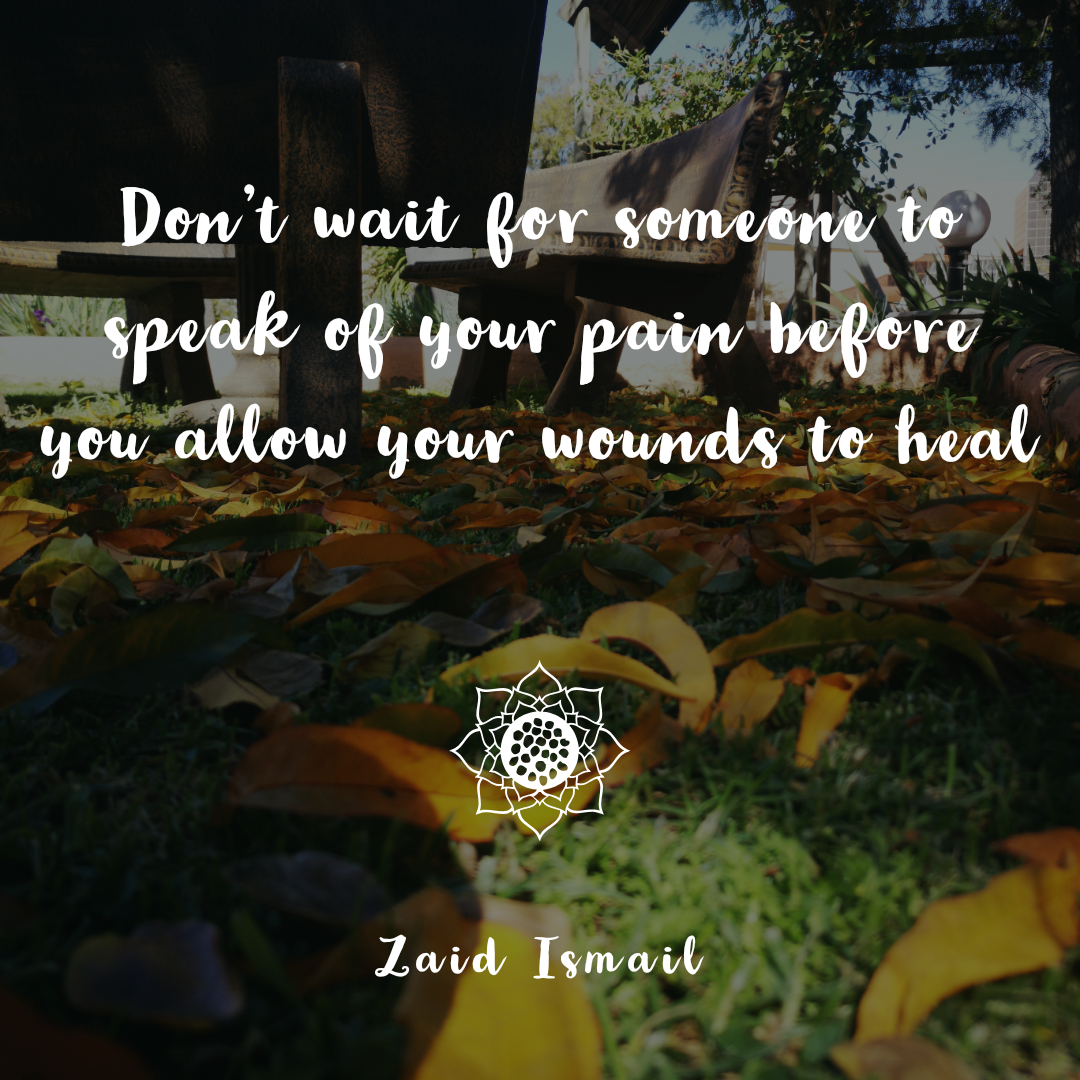
    Don’t wait for someone to speak of your pain before you allow your wounds to heal.

    Your wounds will fester and taint everything around you as you look for reason to feel appreciated for the struggle that you have endured, or may still be enduring.

    You may even convince yourself that your struggle is important enough to be noticed by those important enough to you.

    But, while waiting for them to notice your pain, you suffer.

    You stop noticing what is being tainted by your festering wound.

    And each time you glare at them, looking for evidence of understanding, and only sometimes finding sympathy instead, you look within and notice that sympathy is only ever a dressing to cover the wound, but never to heal it.

    Sympathy only provides a comfortable space in which to nurture the wound, but doesn’t cure it.

    A wound caused by betrayal can only be healed through an accepting embrace.

    An embrace of everything you were before being wounded, and an embrace that loves everything you are capable of being despite your wound.

    An embrace that sees you beyond your wounds, and reconnects you with every innocent belief that you held true, deep within, before that unkind cut gouged your soul.

    There is beauty and peace beyond that wound. But only if you allow its healing to be administered by a heart other than the ones who betrayed you.

  • The nuance of a good life

    The nuance of a good life

    It’s not the blatant acts of disrespect or rejection that hurt us the most, it’s the subtle gestures that leave room for doubt or interpretation that leave deep scars.

    Nuance thrives in those subtle gestures because nuance is what allows us to avoid conflict, or resist commitment. It allows us a graceful exit for just-in-case so that we can claim that we didn’t mean it that way, or that they misunderstood.

    Nuance is the art of saying more than you’re willing to say without actually saying it. Like the subtle brush of your hand against your partner in company when a full-blown embrace or heavy patting may be frowned upon. Or perhaps when you smile a half smile and don’t return the kiss to avoid an argument.

    Nuance allows us to test boundaries, and to test our significance in someone else’s life. We throw subtle hints about what we want, but won’t speak out openly about it because we don’t want to create reason for doubt within ourselves about whether they responded out of obligation, or because they sincerely wanted to make us happy.

    Nuance allows us to see if someone is ready to accept what we want to offer, without actually offering it, so that we protect ourselves from a hurtful rejection.

    There are parts of who we are that we’ve embraced so fiercely that no amount of ridicule will ever shame us about it. But there are parts of ourselves that we hide because we want to only give that one special person the power to handle it. It defines the sanctity of who we are, and solemnises the trust that we wish to place in them.

    It’s a vulnerability that we embrace and cherish because in its handling lies the essence of the bond that we wish to share with that special one.

    It’s the expectation willingly courted that holds the joy of fulfilment if fulfilled, or destroys hope if left hopelessly ignored.

    Once spoken, doubt is subdued and expectation justified.

    The unspoken word has destroyed more hope and created more angst than any revelation of love, or its denial.

    If left unspoken, it remains a torture within, without any claim to relief from the one in whose hands your joy rests, waiting to be roused into being.

    Perhaps it is in our efforts to protect ourselves or others through withholding what we don’t wish to impose on them that we destroy the very joy that we hope they will find without us, or us without them.

  • The silent lie

    The silent lie

    Dishonesty isn’t always a lie. It’s often an unspoken truth. In fact, unspoken truths are probably the source of more dishonesty than outright lies.

    We remain silent when we feel threatened by the revelation of the truth.

    That threat is not always about exposure of who we are. Sometimes, it’s because we don’t want to bear the responsibility of meeting the expectations that are raised if we spoke out.

    Like speaking out in defence of the truth, or vouching for someone’s character, or giving due credit. It all demands that we follow through with sincerity and consistency.

    This is most often the reason why we choose to be dishonest and remain silent, instead of speaking out and accepting the responsibility of the consequences.