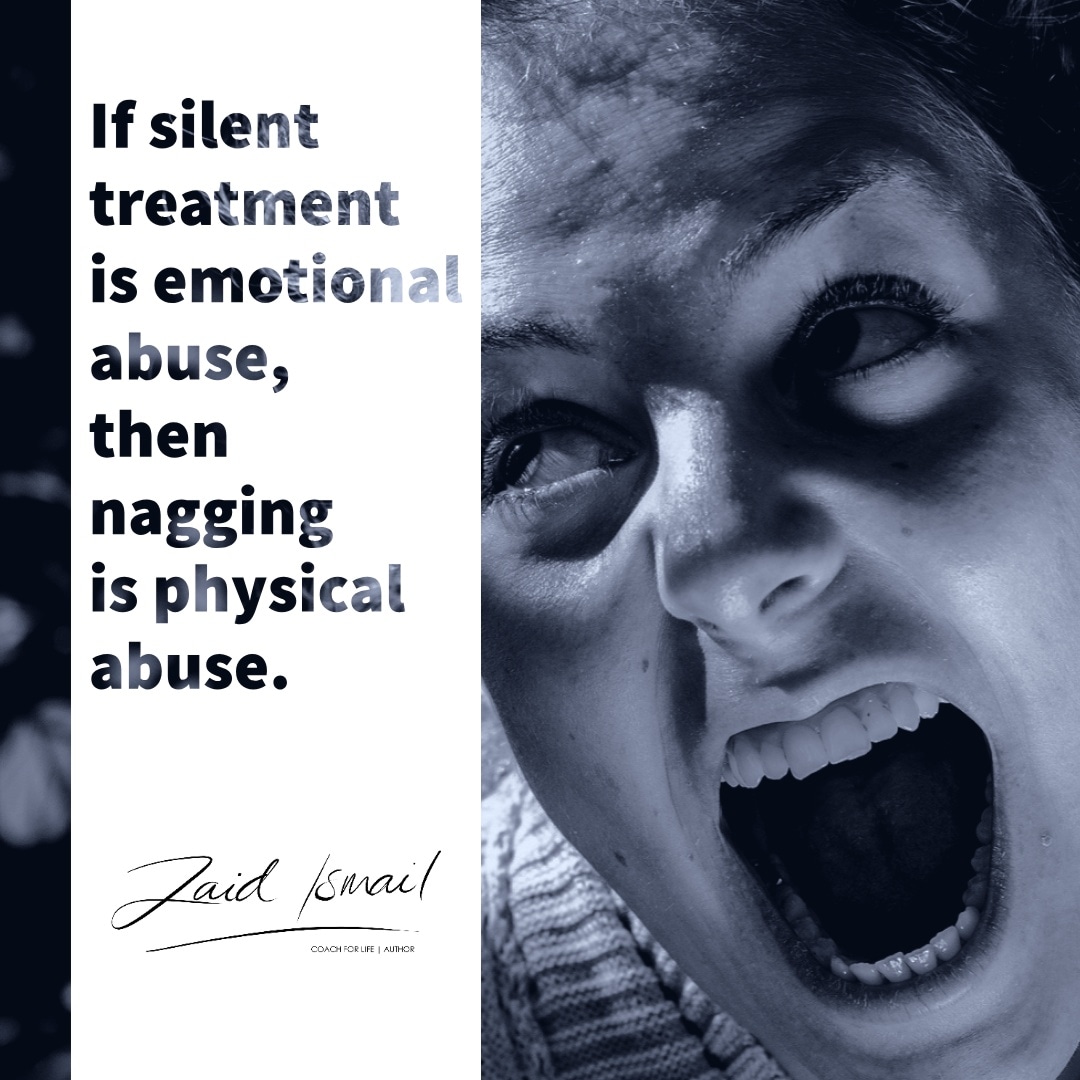
If the widespread belief that silent treatment is emotional abuse is to be accepted, then we must also consider the form of abuse that its counter behaviour imposes.
Silent treatment is not an assault on the senses and it doesn’t demand a response. The impact on the recipient of silent treatment is therefore dependent on what the recipient needs to feel validated or visible in that relationship.
It also means that the reason for the dysfunctional communication has to be considered beyond just the withholding of communication from one of the parties.
However, with nagging, it is an assault on the senses and has an inherent demand for a response.
Nagging is based on the assumption of insensitivity or unwillingness on the part of our partner, rather than trying to understand why the first or second request for something was not or could not have been agreed to, or why they see no point in repeatedly acknowledging the same point.
The important point is therefore not about whether it is or is not abuse, but rather why the communication has broken down to the point of such behaviours being the only means to express dissatisfaction with our partners.
Claims of abuse are counter-productive unless either party is physically prevented from walking away from such forms of ‘abuse’ .
The focus should therefore be on creating understanding about why communication has broken down, rather than supporting one partner against the other.
No one nags or remains silent if they believe that their reasonable voice will be appreciated.
#mentalhealth #mentalhealthawareness #lifecoaching #zaidismail #marriagecounselling #relationshipgoals #communication #empathy #ownyourlife #narcissiticabuse #narcissism
Tag: marriagecounselling
-
But is it abuse?
-

Navigating relationships – 1 of 5
When faced with a serious disagreement in their relationship, couples often turn to their own families or friends for advice or support.
This can be helpful if the people providing such support or advice are mature and objective, rather than loyal above all else.
Most often, family and friends will support us in our complaints against our partners, hoping to protect us from being taken for granted, or treated badly.
This is especially true if we come from a family that has very traditional roles that focus on duty and obligation, rather than mutual contribution towards making a home.
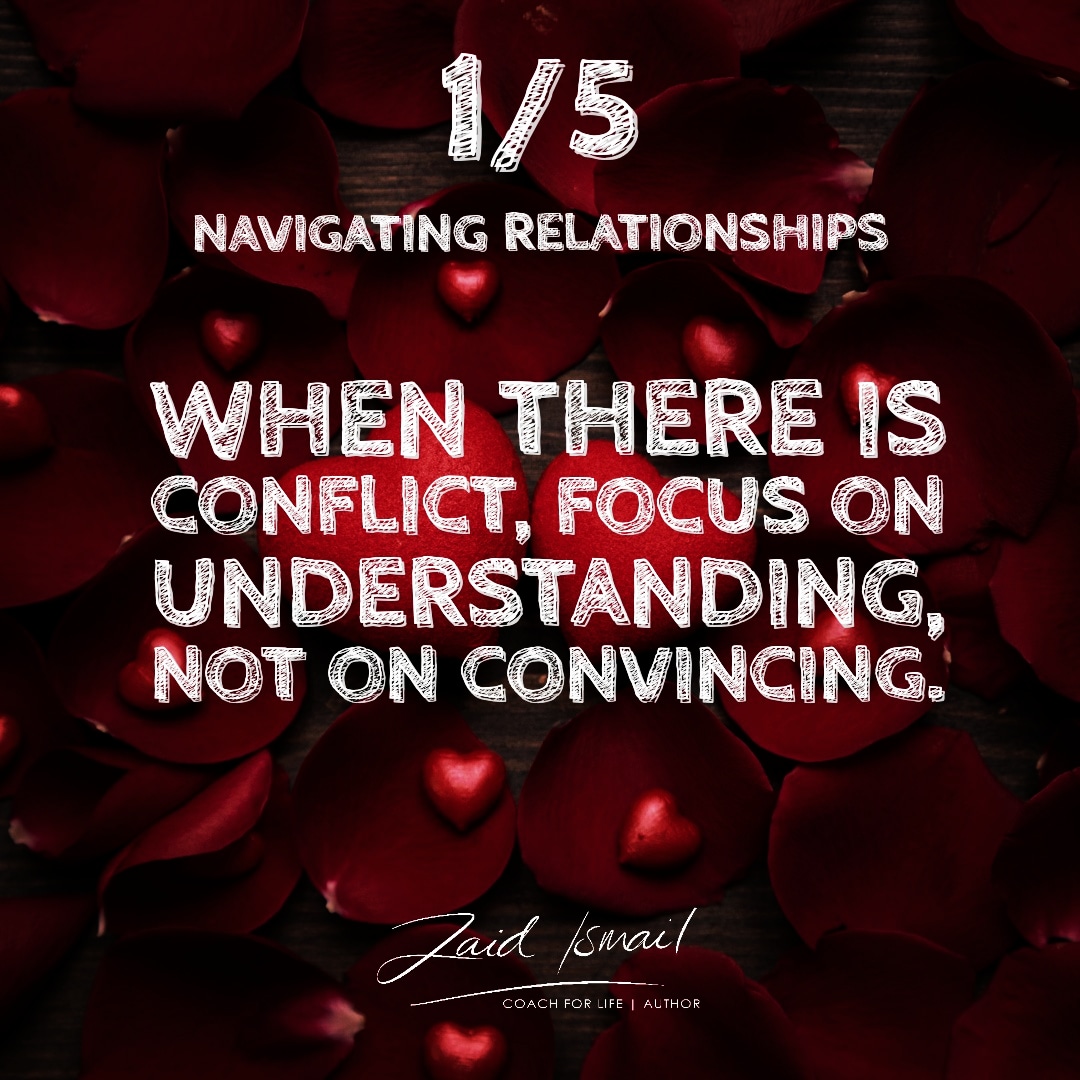
When we are troubled by something that our partner is doing, we must seek to understand why they’re doing that, rather than judging them and rallying support for our position against them.
If you don’t have such maturity and wisdom in your relationships or your support structures, it’s best to identify up front in the relationship who will be your go-to in such situations.
Even if it’s a counsellor, coach, or therapist, be sure to find someone that you both trust when times are good, because it’s very difficult to agree on something like this when times are bad.
If you focus on understanding, being understood will be easier to achieve.
That’s why we should develop a good understanding with our partner’s support structure so that we can trust them to be objective when we need to figure out such issues in the relationship, rather than slipping into victim mode and presenting ourselves as the neglected or abused one to our own support structures, which often contributes to the break down of the relationship, rather than making it stronger.
Choose your advisors carefully.
#relationshipgoals #marriageadvice #mentalhealth #mentalhealthawareness #lifecoaching #zaidismail #silenttreatment #companionship #soulfood #marriagecounselling #conflictmanagement