Tag: mindfulness

  • The Art of Deconstruction

    The Art of Deconstruction

    I’ve watched silently, often with annoyance, how it is that so many are considered to be intellectuals for their ability to tear apart someone else’s argument or contribution. The more effective they are at breaking down an opinion that they disagree with, the more revered they are in some circles. That’s the part that I watch silently. The part that fills me with annoyance is when I see that after all that effort, they have nothing of meaning or substance of their own to contribute.

    The rest that follow such antics applaud the efforts of those vain ones that love the sound of their own voices as they spew their anger disguised as eloquently articulated arguments filled with nothing more than criticism without purpose. The anger is what fascinates me. Always has. Its origins are so deeply protected that most convince themselves that their anger is a justified response to an oppression or an injustice. But they stop there. They don’t consider why that specific injustice or oppression angers them, nor do they consider why anger is their chosen response to it. Instead, their anger defines their contribution and they garner the respect and admiration from those that are equally angry, or are passively aggressively angry. I suspect the latter group is more despicable than the former because they even lack the conviction to be true to their anger.

    Nonetheless, these cycles play out all the time. Often in a public setting, but quietly in a private setting too. It is the private setting that intrigues me most. I find it intriguing because it is where we experience either our power, or our cowardice. When we experience our cowardice, it becomes a priority to judge or criticise the efforts of others to distract attention away from our meekness, hence the deconstruction of the efforts of others to make something of their lives. When we experience our power, our belief in being able to contribute towards the quality of life of others drives us towards contributing towards their efforts to improve their chances of success, because we realise that their success doesn’t threaten our own. But most don’t experience this. Most only see what they think should be done better but rarely (if ever) make an effort to actually do it themselves.

    Pointing out what is wrong with the world is easy. I look at the rhetoric and criticism against those that step up and fight the good fight, and most often that rhetoric or criticism finds its roots in a belief that the quoting of divine scriptures elevates the rank of the critic above that of the rank of the activist. This is yet another ploy to appear pious or spiritually awakened while conveniently ignoring the demand of such spirituality to lead by example.

    When we have a bone of contention with another, it is not our words in fiery criticism against them that is going to convince them to behave differently. It is our act of sincere and meaningful engagement that will hold any sway over their efforts. Either we will convince them of the benefit of our views, or they will convince us of what we may not have considered about their reality. But without this experiential journey, this side-by-side engagement, the reality of the basis on which we disagree will always remain theoretical and food for the ego, rather than genuine contribution or upliftment of the soul.

    Deconstruction is the art of debate, and the art of debate is firmly established in the need to be correct. Debate has never resulted in a sincere pursuit of the truth. That is left to the domain of discussion and contribution. But contribution demands that we offer of ourselves that which we seek to criticise in others. When our opinions define our self-worth, such contribution is far too daunting. Hence the safer path of deconstruction to earn significance from those that are equally frail in their conviction to meaningfully contribute, while the few that appear foolish enough to sacrifice their composure in favour of benefiting others remain a soft target for the whimsical leaders of debate groups.

    I have no respect for the argument that points out what is wrong with someone else’s approach, or philosophy, if it isn’t accompanied by a sincere effort to offer guidance and assistance as well. Having an opinion is easy. It means that you don’t have to do anything except blurt out the thoughts that occur to you as you vegetate in front of your keyboard. Having an informed opinion goes one step further because that vegetation was accompanied by some effort towards fact checking or research. However, even that is inexcusable if not accompanied by actual participation in the process of changing the reality, and not just the perception of an issue that weighs others down.

    Without willing and sincere engagement, an opinion is simply a fart pretending to be thunder. And global warming has ensured that there is no shortage of hot air to go around.
  • Own Your Sh!t Released!

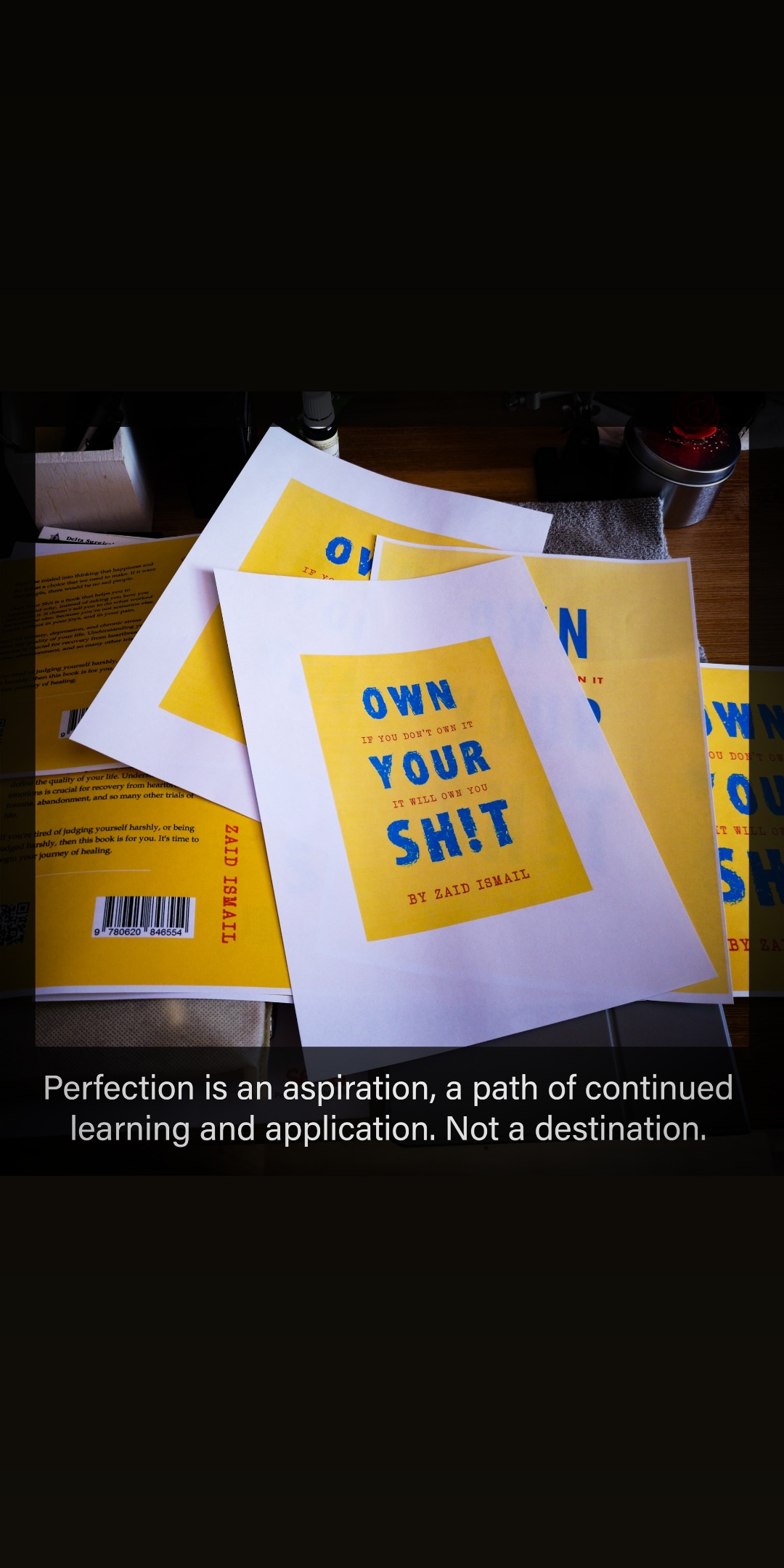
    Own Your Sh!t Released!

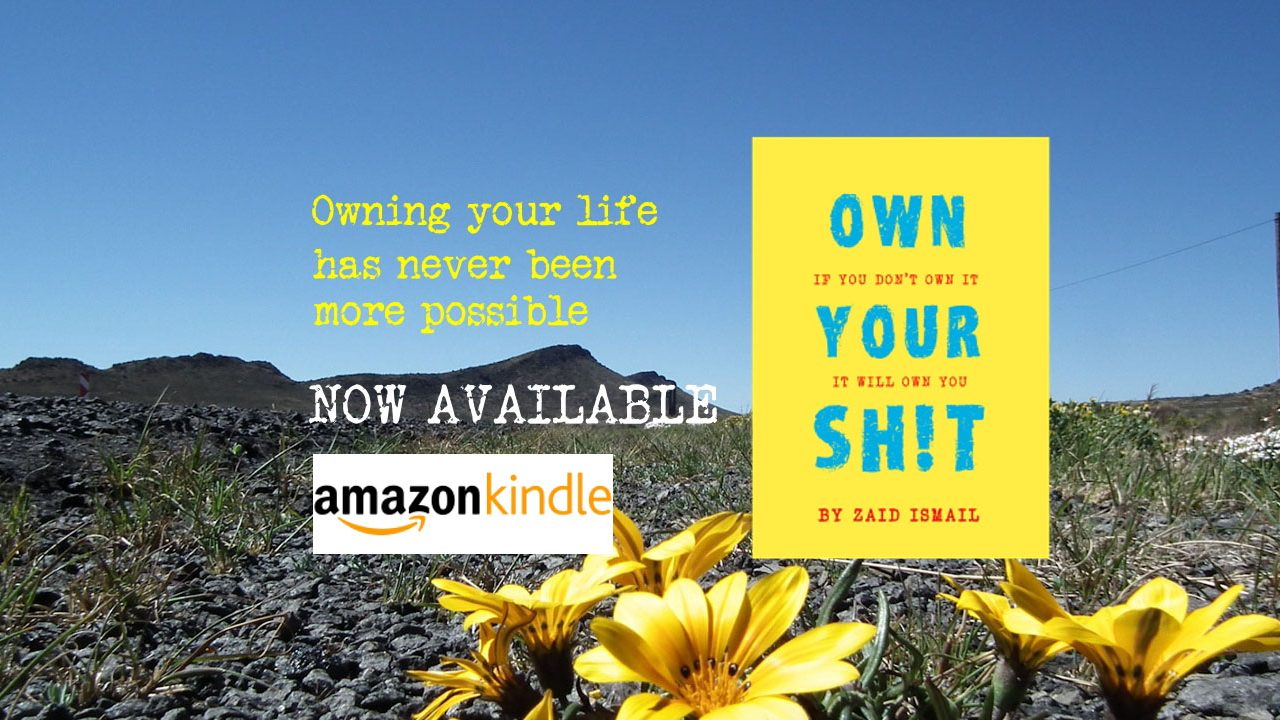
    Just be happy. It could be worse. Don’t take life so seriously. Are you tired of hearing this? Well-meaning friends and colleagues tell us to stay positive, but it often has the opposite effect.

    Don’t be misled into thinking that happiness is just a choice. If it were, there would be no sad people. Getting a grip on your emotions is crucial for recovery from heartbreak, trauma, abandonment, and many other trials. Break the cycle of feeling overwhelmed by what happens to you.

    Own Your Sh!t is a book that helps you to understand why you feel sad, depressed or angry about life. It doesn’t tell you to overcome it by asking you to do what worked for someone else, because you’re not someone else.

    So, stop judging yourself so harshly, or allowing others to do the same. Let this book guide you out of that toxic space and into a better version of you. It’s time to own your sh!t.

    The book is available on Kindle, and Kindle Unlimited, and will soon be released on Amazon for paperback orders. Readers in South Africa can order directly from me at a special launch price of R149 which includes free shipping to any major city in the country.

    Watch my blog for snippets from the book in the coming days and weeks.

  • Imminent Release of Own Your Sh!t

    Imminent Release of Own Your Sh!t

    Perfection is an aspiration, a path of continued learning and application. Not a destination. Almost at the finish line, for getting it to market, at least. Then the real work starts with getting it out there. My little dent in the universe of overbearing emotions… Watch this space for Amazon listing info soon.

  • The Value of Sanity

    The Value of Sanity

    One of the paths to insanity is to try to reason around someone else’s actions or behaviour by assuming that their value system is the same as yours. When you find it difficult to get through to someone, step back and consider two things. Are they genuinely interested in hearing you? Do they respect the same value system that you do? If the answer to both questions is Yes, consider a different approach. If No, walk away.

  • Optimism versus Reality

    Optimism versus Reality

    Positivity is about focusing on opportunities, not about wishing away reality.

    Wishing it’s a sunny day when it’s raining is not going to make the sun come out. So leaving your umbrella behind is an act of foolishness, not optimism. A positive mindset can often lead us into delusional states. When our overbearing sense of deliberate positivity doesn’t produce results, it crushes our spirit even more than before we started because the little hope we were holding onto becomes more difficult to believe in.

    Keep it real.

  • Smashing Writer’s Block

    Smashing Writer’s Block

    I always advised others to get over writer’s block by writing about it. This morning seems to demand that I take some of my own advice. Fair warning then that this post may appear incoherent and nonsensical, but only to you. To me, it will probably be a perfect reflection of the madness that stirs within. We all have such madness, but I think the surrounding of friends or family, or just familiar recognition of who we appear to be subdues the madness because when we feel recognised, we have less reason to demand recognition of what stirs beneath the surface. Most of us hide it, some over-emphasise it, and some of us, the odd few, try to leverage it to feed our passion without appearing totally insane.

    I’m not quite sure which category I fit into this morning. Writing this novel that is inspired by true events from my life makes for some interesting introspection. Regrets threaten to surface as I find myself looking with fresh eyes at incidents from many years ago that I always assumed to have played out differently. Catharsis has nothing to do with it, nor does an indulgence of the ego. It’s the stark realisations or a gentleness of judgement that is possible now but felt unreasonable or unjustified then. Trying to understand the most disruptive influences in my life often leads to realising that they were also the most constructive. Not because they meant to be, but because of what about me was forced to grow because of who they were .

    We leave things behind because we find them unpleasant, not because we find them endearing or cherish-able. The same is true for relationships. Perhaps this is why it is more difficult to recall the good times when you focused on the bad times for so long. Idealism can taint judgement and spawn good intentions that are disastrous at times. Good intentions don’t always result in wholesome outcomes. Sometimes it causes more destruction than any bad intention ever could.

    Speaking of idealism, I am reminded about my own quote recently that claimed that there are no bad intentions, only poorly informed decisions. This is more true and real for me this morning than it was when I wrote that a few weeks ago. Even when we go about deliberately wanting to cause harm or pain, the motivation to do so is grounded in a need to avenge a wrong, or to teach a lesson, both of which are inherently good intentions. Understanding and compassion will probably improve the method we use when setting out to teach someone a lesson, but understanding and compassion are seldom traits that we court during moments of despair or disappointment. Reclaiming our significance is all that seems to matter, which is why regrets only follow after destroying the significance that we fought so hard to claim.

    Being an anomaly of society has its romantic connotations but only until the moment that human connection is needed, or desired. It’s impossible to connect with normal when you’re an anomaly. Normal appears boring and shallow, or distracted at best, and being anomalous feels dysfunctional in a society that is normalised by tradition, culture, or social standing. Each time I thought I found a place for myself in this world, I discovered that I was simply a placeholder for someone else instead. I hate tokens and trinkets because they rarely have any inherent value other than the sentiment that we endow on them. Being anomalous feels like that on most days.

    Self-pity is pitiful, and it also assumes that there is something worthy of pity. Therefore, true self-pity can’t exist, and any appearance of self-pity must therefore be a desperation for attention or affection, or both, rather than any sense of remorse or regret. No one truly believes that they are pitiful, or useless. Any professions of the same is nothing more than a desire to find someone to disagree with them.

    Writer’s block is for writers. But we’re all writers of our own story, with some of us having the requisite level of narcissism to believe that our story is worth sharing. Narcissism itself is not a bad thing. We all have it in us. It starts out with believing that we’re worthy, and gets out of hand when we believe that we’re more worthy than others. Believing in your worth is a healthy form of narcissism, because anything less would be self-deprecation which is a sign of ingratitude. Therefore, it suggests that a narcissist is potentially more grateful than one who appears humble. Now there’s something to ponder on cold nights and warm hearths.

    My reasons for writing and sharing what I write sways between wanting to contribute towards improving the world we live in, and wanting to point out the obvious to the oblivious so that I can see the a-ha moments on their faces as I feel significant in knowing that I caused it. The truth is probably somewhere between those two ideals. I’d rather continue rambling than facing that novel again right now. It feels like much ado about nothing, personified.

    Similar to the first book that I wrote. Great feedback from those that found the tenacity to read it to the end, but dismissive remarks of its complexity from those that lack the conviction to look closer, at themselves more than at me. Perhaps the greatest lesson that I’ve learnt from my journey towards becoming a writer in my own right is that unless you come from a family with a strong tradition in a similar field, you will be the odd one out that no one else gets. Chances are therefore also good that writers are most often middle-children or an only child because those with familiar or kindred spirits have less reason to articulate their soul’s desires or aspirations in their search for peace.

    The madness must abate. Alas, I have deadlines and bills to pay. The cynic in me must rest so that the demands of a practically boring and slavish existence can prevail in order to maintain the semblance of sanity that society pretends to hold.

  • Return to Me

    Return to Me

    I stumbled upon a collection of some of my writing from many years ago. I had so much more clarity back then. To reconnect with that will require stripping away a lot of the clutter accumulated from my encounters with troubled souls in recent years. At some point, I stopped thinking aloud and started speaking to an audience. I need to forget the audience and return to my state of introspection. In my efforts to be understood, I distorted who I am in favour of inviting others in. Even now, in my contemplation of what is needed, I am addressing this to other than me.

    I need to return to me. My thoughts, my reflections, my promptings, all intended to reground my soul in my space, without any need to solicit the accepting glances, or the affirming smiles from those around me. I departed from the familiarity of who I am when I sacrificed my voice for a voice that was more palatable. Am I still within reach?

    The cacophony of murmurs from abandoned souls drown out the clarity that once tugged at my collar to remind me that I am. Not wanting to be, but am. Not looking for familiarity or warmth, but knowing with certainty that both resided within me. Comfortably, and harmoniously. Every sacrifice of me has proven futile for garnering the elusive embrace. It was always only enough to invite them in, but once they arrived, their needs overpowered my own, and my own self was subdued for their release.

    Release from the self is liberating only if redefining the self appears within reach. Too many shrug at the opportunity of reinvention, but torture their souls into a deafening silence as they find themselves caught between hating the present, lamenting the past, and pleading for the future, but refusing to give up an inch of familiarity because to be familiar even with demons is more comforting than being unfamiliar with strangers.

    To be known, I must return to knowing me. I must rediscover the voice of my soul, and relinquish the voice of my beast. The vessel of expression must once again succumb to the seat of intelligence, or else intelligence will be lost, and the basest of desires will forever remain unfulfilled. The ramblings of this madman must be exhumed from the grave of compliance and conformity and set upon this world of mediocrity without expectation of ever being recognised, but knowing that the cesspit, if it remains unchanged, did not remain so for the lacking efforts of a whimpering spirit.

    Success is yet to be defined, since all that had definition was defined from a need that abandoned the purpose that feeds the soul. Such definition distracts and destroys, but never prevails. Such definition is a contamination of the purity of purpose of the soul, and reflects nothing more than the needs of the broken. I am not done. Even if this world is done with me. There is still breath left in me, and it must be expended in nothing less than sincere contribution, or no contribution at all.

    I must return to me…

  • Fleeting Thoughts (IX)

    Fleeting Thoughts (IX)

    Sometimes the deepest breaths leave you gasping for air rather than filling you with hope.

    Is it significance you feel when you are needed for material contribution, or is significance felt when the essence of you is known and appreciated?

    Questioning life and finding its answers in love is only therapeutic if that love can be embraced and not just admired.

    Admiration starts with being happy for others, and ends with growing tired of not finding that happiness for yourself.

    Exhaustion sets in not when the challenge is too tough, but when the number of challenges far outweigh the joys.

    Joy is fleeting if experienced in solitude.

    Solitude holds a promise of peace only for as long as the need for companionship can be subdued.

    Companionship is easier to take than it is to give.

    A giving spirit may not always be a generous one; often it is just a needy one.

    Neediness is as human as cruelty.

    Cruelty is the absence of patience.

    Patience is faith’s companion.

    Faith prevails in science more than it does in religion.

    Religion thrives on peer pressure, while faith remains grounded in conviction.

    Conviction demands belief in the value of the outcome, and the outcome is meaningless without purpose.

    Purpose is driven by a desire to give more than we take, but holds no attraction to the one not willing to give.

    Giving of the self is only possible if there is respect for what the self holds.

    Self respect is rare, making cruelty common.

    Aspiring to be common holds the promise of acceptance.

    Acceptance offers more comfort than principles.

    Principles become the way points for your journey; hence the principled rarely being remembered when you reach your destination.

    Destinations are often mirages when driven by whims and fancies.

    Whims are not always fickle; they’re sometimes inspirational.

    Inspiration dwindles without passion.

    Passion is nurtured by the promise of significance.

    Without significance, the will to live is dwarfed by the need to recede from the expectation of life.