Tag: muslim

  • To those who follow/read Gossip Muslimah

    pearlsfromthepath:

    Gossip Muslimah first appeared a few months ago and introduced itself as a gossip source for Muslims …on Muslims. Everyone was invited to submit – anonymously or not – anything they knew about other Tumblrers. According to the unnamed people behind Gossip Muslimah, a little more than 500 people followed them within a few days. However, after an outcry the blog was deactivated.

    Ironically enough it was relaunched today, right in the middle of Ramadan – a month of fasting with the senses and mind. Considering the massive number of people online on their site, I suppose they would have never taken the risk to come back if there wasn’t an audience to expect. 

    Regardless, there are bigger problems at hand here. Back-biting, gossip, and lies among many other acts clearly are forbidden so allow me to pass over reminders on the gravity of evil deeds. If you followed Gossip Muslimah in the past, or if you were looking forward to reading their posts, you were equally at fault. That is why the Prophet ﷺ said: “The backbiter and his listener are co-partners in sin.” So here’s a friendly tip: don’t break your fast on human flesh.

    I’m trying to figure out what’s worse. The fact that idiots would have the arrogance to create such a portal for Muslims, or the fact that Muslims would be stupid enough to follow and/or contribute to it. 

  • Questions from a Non-Muslim

    cynicallyjaded:

    wolfy18:

    I have a few questions I’d like to put out to the Muslims & Christians on here.

    Some questions might appeal to one religion more so than the other and the questions are sort of related to eachother, but whatever.

    1.  If God is all seeing, all knowing, and the great planner of everything, does this mean he plans evil?

    2.  Can you have mercy without sin?  If not, does this mean we have to become a sinner before we can “find God”?

    3.  If our lives are planned, does this contradict our free will?

    By the way I’m asking out of intrigue, not trying to sound like a condescending twat.  I genuinely want answers.

    Hi, these questions are asked often by both Muslims and non-Muslims alike. Here’s my perspective on what I think it means:

    1. Evil is not a ‘commodity’ like good in the same way that dark is not a ‘commodity’ like light. The one exists in the absence of the other. This ties in with the concept of fate and free will, which also relates to your third question, so I hope to deal with it more comprehensively in that answer. Essentially what I’m saying is that God doesn’t plan good or evil. He simply makes available the choices to us with predetermined outcomes, and what we choose is what determines whether good or evil results from our actions.
    2. Assuming that mercy is only required when we sin overlooks the fact that mercy is also needed to continue giving without reason or recompense. What I mean is that we often only think of asking for mercy if we realise that we’ve done something wrong. However, as Muslims, we consider every good that we receive, and every comfort that we enjoy as a mercy from Allah. So we believe that we’re indebted to Allah for all the mercy that He shows us even though we are often not complying with what we believe to be His will or instructions for the way we should be living our lives. 
    3. Free will and destiny are often very misunderstood. As Muslims, we believe we have a limited free will, and not an absolute free will. What I mean is that I can choose how I respond to a situation, or how I want to act, but I cannot control what situations or experiences are presented to me. This world is a perfect system in that every action has a predetermined reaction. These are the natural laws and order of things that we believe was created by Allah. Therefore, whatever we do, the outcome is known to Allah because He created the ‘rules’ that govern existence and how everything interacts. But in this system, there are variables, and these variables allow us to exercise our limited free will. So by exercising our gift of reason and logic, and our ability to act on it, we choose either to encourage good, or evil. How we choose, and how we comply with the laws and guidelines set out for us is what determines our standing in Allah’s court, and subsequently will determine our final fate when we’re called to account on the day of judgement.

    I’ve contemplated the issue of fate and free will previously, so if you’d like to read more about my thoughts on the subject, you can see some of my previous posts under the tag of fate.

    I look forward to hearing your views on this. 

  • The Real Definition of Bid’ah

    partytilfajr:

    This video, with English subtitles, explains a term Muslims (today) love to throw around like candy: Bid’ah. Unfortunately, we do not understand how serious this term is, and so, take a seat and listen to the Grand Mufti of Egypt Ali Gomaa.

    Some really important points raised in this video which re-emphasise the issue of understanding the principles of Islam rather than just learning the rituals and implementing those dogmatically without consideration for the flexibility that Islam allows.

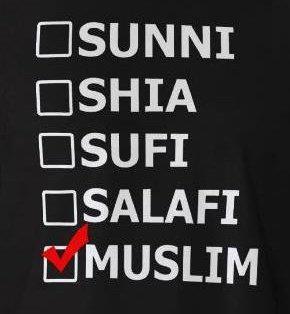
  • What Kind of Muslim Are You?

    verse2verse:

    Everytime this comes on my Dashboard, I WILL REBLOG!!! 🙂

  • The conversation between Allah SWT and a muslim when reciting Al-Fatihah

    Muslim: Praise be to Allah, The Lord of the Worlds.

    Allah SWT: My servant has praised Me.

    Muslim: The Most Gracious, The Most Merciful.

    Allah SWT: My servant has extolled Me. (praised enthusiastically)

    Muslim: The Master of the Day of Judgement.

    Allah SWT: My servant has glorified Me – and submitted to My Power.

    Muslim: You alone we worship and from You alone we seek help.

    Allah SWT: This is between Me and My servant, and My servant shall have what he asked for.

    Muslim: Guide us to the straight path, the path of those whom you have favoured, not of those upon whom is your anger, nor of those who are astray.

    Allah SWT: This is for My servant, and My servant shall have what he asked for.

  • roxygen:

    I have quite a difficult time sifting through the judgmental tendencies of people though most people are guilty of that sometimes (I’ve done it), but I often think that the speed, anonymity and false sense of ‘space’ online makes it easier for some people to attack one another. 

    Its so easy to say that stuff to another Muslim online but would you do it in the more tangible community that includes your family, friends and colleagues right to his or her face?  

    Do you honestly care as to whether or not they will be affected by your “advice” or are you blowing off some steam? Its not going to make you feel much better. At the end of the day, no matter how much time you waste here, these exercises are futile. The most they can do is hurt you.

    These sort of webs that we create for ourselves and ensnare one another in are not often the most accurate representations of reality, let alone sources of pertinent and nuanced information that we can actually apply to our own contexts and practical affairs.

    Lots of truth in that. I’ve often pondered much on the same issue. People that are so proud and arrogant in their proclamation of who is or is not deviants, which scholars are misguided, and who’s kafir would barely say a word if they came face to face with the people they so easily accused of all these things online. The anonymity of the url has bolstered some people’s egos to the point where they believe that if their url is known, and they’re not deliberately anonymous, then it makes them sincere. 

    What a delusion. Sincerity can only ever be truly tested face to face, if then also. The manners and etiquette that many display online would land them in fist fights and well-deserved beatings in real life if they displayed such gall or callousness to their adversary’s face. Tumblr, if nothing else, is a good litmus test of your iman. Act with impunity under the guise of standing up for what is right without due consideration for the feelings of a fellow Muslim, and it will be a very real reflection of the void in your soul that should have been filled with the love for Allah and what He loves. 

    We delude ourselves all the time, while Shaytaan sits behind us giggling his butt off watching us plot and plan his next move because he has so successfully made us believe that our arrogance is in fact rooted in piety. What a disappointing joke.

  • Belittling Others

    pearlsfromislam:

    I ask you to not belittle nor attack any of your brothers and sisters because of what they preach. I ask you to avoid swearing. I ask you to control your anger. I ask you to approach people in a peaceful manner. I ask you to not discredit the intellect of any of your brothers and sisters because God only knows what is in the hearts of His servants. I ask you to leave aside what does not concern you. Finally, I ask you to pay attention to every single words in the following verse:

    But as for those who strive hard in Our cause – We shall most certainly guide them onto paths that lead unto Us: for, behold, God is indeed with the doers of good. (29:69)

    There is no unique way to reach Islam and I want you to respect that. If someone found Islam through a speaker who preached peace but whose speech demonstrated an affiliation with a specific party then leave him alone; his personal experience will ultimately shape his understanding of the religion. Also, do not dictate lessons from what you have lived for everyone is fighting different battles. Thank you.

    I couldn’t agree with this more. People that find it easy to be disparaging towards others have a selective memory. Recently I’ve often been reminded of how I behaved earlier in life. I recall some of the grave errors of judgement on my part, and I recall indulging in actions that make me cringe with shame at the thought of it. Reading this, and again watching the usual drivel on Tumblr about whose sect is more correct and whose sheikhs are more authentic, it reminds me that such sentiments are indicative of arrogance and elitism and has nothing to do with sincere advice.

    Sincere advice cannot be based on insults, dismissiveness, or condescension. The only exception I would make to this rule would be the use of arrogance against one who is arrogant. And then also, assuming that a measured and humble approach didn’t work in the first place.

    The point is simple, if you believe you’re sinless, and if you believe that your iman and your knowledge is pristinely pure, then go ahead and treat others as if you’re superior. But if you’re true to yourself, and sincere in your interactions, you’ll quickly realise that taking such a harsh and abrupt tone with anyone under the self-deception of hating for the sake of Allah is in fact making a mockery of what Allah has commanded of us, let alone making a mockery of the Sunnah that we profess to be upholding.

    The internet is certainly not a place I turn to for Islamic inspiration blindly…there are very few blogs that have a deliberate Islamic focus that I would consider as a reasonable source for obtaining some advice or comfort about my journey as a Muslim. The vast majority are unfortunately disappointing examples of bad da’wah.