Tag: sects

  • Ever see a non-aligned extremist?

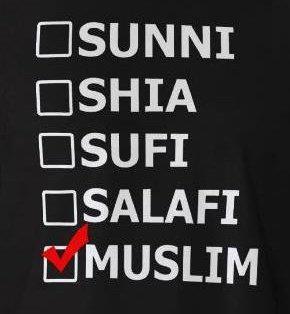
    Just a thought…ever see a Muslim ‘extremist’ that didn’t belong to a specific sect? That’s the thing with sects, or aligning with specific sub-groups of Islam, or giving your iman a label. It’s the same with nationalism, or pledging allegiance to any specific sub-group of a broader movement. You’re automatically inclined to defend the specific view points of that sect rather than remaining objective and neutral in your application and compliance with the rulings and principles of the movement itself.

    The same is true for the raging debates between different sects and different schools of thought. You’ll be hard pressed to find someone that sincerely debates to arrive at the truth, rather than debating to defend their allegiance and adopted perspectives from the sect that they’re a part of.

    I can’t see anything other than three specific states of iman. We’re either guided Muslims, misguided Muslims, or non-Muslims. All the nuances and differing opinions around issues that do not take one out of the fold of Islam are simply whisperings of Shaytaan that successfully sow discord amongst Muslims by instilling a sense of pride or superiority in us about our alignment with what is considered by some to be a superior manner of practising Islam, not realising that our pride and haughtiness, no matter how we disguise it, could easily negate all our efforts in the process. 

  • The Arrogance of Religiosity

    My pet peeve on Tumblr, and in general regarding the way we address each other, is still the haughtiness that is displayed by people that pretend to be sincere in their use of the term ‘Oh so-and-so…’. Then there are those that use words like ‘Indeed’ and ‘Verily’ in their posts disguised as advice as if they are such authorities that such a pompous use of language is warranted.

    I say this about both the layman and the scholar alike. This use of language is taken from the style that is evident in the translations of the Qur’an, which is obviously fitting for Allah to use when addressing His creation. But to use it when talking to people or addressing people on Tumblr? Really? We think we’re so accomplished and aloof that we can address others as ‘O Muslims’ or ‘O Believers’ or use condescending terms like ‘Ahlul Bid’aa’ or the ‘Awwaam’ and the like?

    The annoyance I have with many people that assume a position of authority after studying Islam in some form or another is that more often than not they cease to engage meaningfully with others, and instead start assuming a level of superiority that is rarely, if ever, warranted. We’re so steeped in arrogance that the moment we study Islam formally, we assume that it’s our responsibility to start preaching before we even start practising.

    These are generalisations, I admit. And like all generalisations, there are exceptions. But look around you and I am quite certain you’ll agree that the number of sincere and humble scholars of the present day are few and far between. Most people that ascend the pulpit these days assume that by putting in the general disclaimers about what supposedly refers to them before it refers to anyone else is sufficient to disguise the arrogance and condescension with which they engage with those that don’t formally study Islam.

    It’s the same old thing. We forget what it’s like to be Muslims, because we’re so indulgent in wanting to tell everyone how they’re supposed to be Muslims. I’m often reminded of the stories of the Sahaba when they used to travel to foreign lands. They didn’t first need to learn the language and the culture and make big bayaans and write extensive treatises in their efforts to spread the word of Islam. They convinced others about the superiority of Islam over any other way of life simply through the way they conducted themselves. By contrast, these days we’re told that we are not qualified to engage in debate or discussion with anyone about Islam unless we hold a man-made title that signifies our level of proficiency in Islamic studies.

    We’ve turned Islam into an academic pursuit, embellished with sects and madhabs and pretentious scholars, while forgetting how to simply be Muslims. May Allah save us from ourselves.

  • Know Your Enemy

    arabarabarab:

    “When they took away my children in 1995, they also killed me – in the most brutal manner. This is not life …. I had my family and in just one day I’m left without them, without knowing why. And every morning I ask myself why, but there is no answer. My children were only guilty of having the names they had and their names were different from their killers. It was not only my children killed on July 11, 1995; thousands of other innocent children were murdered in the bloody genocide in Srebrenica …. I no longer have anything to lose; the criminals killed all I had, except for my pride.”
        –Hatidza Mehmedovic

    In July 1995, an estimated 8,000 Muslim men and boys – sons, husbands and brothers – were dragged away never to be seen again.
    The Srebrenica massacre marks a particularly inhumane and brutal act within the tragedy and bloodshed of the 1992 to 1995 Bosnian War.

    these clips are from Al-Jazeera documentary called Women who refused to die

    Consider what your pettiness about madhab and scholarly debates matters to these Muslims that could not, and will not enjoy the security of having an Ummah unite in their defense.

    I am close to convulsing at the thought of people still suggesting that there is merit in the ridiculous debates about the merits of the house of Saud, the Sunni/Shia contention, and the Salafi/Hanafi/Shafi rhetoric.

    I remember a story (forgive my lack of details and sources) regarding a Muslim ruler that threatened war against the disbelievers when one of them lifted the dress of a Muslim woman to humiliate her. Then I look at this incident and I wonder how that compares to the blatant massacre of 8000 Muslims for no reason other than the fact that they were Muslim! Not Shia, not Sunni, not Salafi, not Hanafi, or any of those other despicable labels we love to subscribe to.

    The disbelievers don’t give a damn which madhab or scholar or sect you follow. If you intend to be a practising and conscientious Muslim, you are automatically their enemy.

    O you who have believed, do not take as intimates those other than yourselves, for they will not spare you [any] ruin. They wish you would have hardship. Hatred has already appeared from their mouths, and what their breasts conceal is greater. We have certainly made clear to you the signs, if you will use reason.
    ~ Qur’an 3:118 (Sahih International)
  • Engage, Not Just Condemn

    partytilfajr:

    It is great to identify problems, but the issue I have is that, especially in the West, we have fallen into a “culture of condemnation,” in which in order to be exempt from criticism, we simply must condemn “Issue X” or “Issue Y,” and therefore, we have shown, through mere words, that we are “acceptable” or “good” through our condemnation.

    I am sorry, I think that is terrible and lazy; it is easy to condemn something, it is far more difficult to change something. Great, you identify a problem, but the larger question is: are you prepared to take the necessary steps to change it?

    This is also true for the behaviour by many Muslims that profess to be on a rightly guided path compared to everyone else, then promptly go about condemning others because that’s easier than engaging meaningfully around the specific issue at hand.

    It’s also easier to dismiss everything a recognised scholar says just because of where he comes from, or who he may be affiliated with, than it is to understand that scholar’s perspectives and focus on unwrapping that.

    The easiest of all is to assume that your level of piety, your level of understanding, or your level of sincerity in practice is greater than anyone else that does not subscribe to your exact school of thought or interpretations, while emphasising the advice about hating for the sake of Allah, and completing neglecting the advice of good manners in speech and moderation. 

    When faced with the arrogance, condescension, and inconsideration of the majority of Muslims I see these days, both on Tumblr and in real life, my heart sinks, not only because of how steeped we are in our individual piety without any consideration for our collective responsibility, but also because I see more effort applied towards forming divisions and intolerance rather than establishing understanding and unity amongst all who profess the Shahadah. 

  • What Kind of Muslim Are You?

    verse2verse:

    Everytime this comes on my Dashboard, I WILL REBLOG!!! 🙂

  • Knowledge vs. Action

    So aspire, O Muslim, to know your Islaam from your Lord’s Book and your Prophet’s Sunnah. And don’t say, ‘So and so said.’ For verily, the Truth is not known by the men–nay, know the Truth, you will recognise the men.’

    Shaykh Albanee (rahimahullah), As-Saheehah, 5/350. (via understandislam)

    This very clearly and concisely describes my view about those that insist on choosing a label for their iman versus choosing to recognise the merit of individual actions. If we focus on understanding the truth and the true method of the Sunnah according to the way of the salaf, we will be able to recognise such good in any Muslim, regardless of madhab, sect, or other grouping that we have created. Being able to recognise this good without the unfortunate bias of negativity associated with sectarian elitism is the only chance that this Ummah has for uniting against a common enemy.  

  • Choosing a sect

    The argument that just ‘professing to be Muslim is insufficient these days’ is patently flawed. Far too often the issue of following the way of the salaf versus being a salafi gets raised with the proponents suggesting that too many deviant sects or misguided schools of thought also profess to be Muslim.

    So here’s the issue for me. By worrying about what others will think of you based on the label you ascribe to yourself, you’re focusing your actions to be based on the acceptance of others, rather than concerning yourself with your standing in Allah’s eyes. Worse still, by insisting on creating a label for your flavour of Islam different from that of simply being a Muslim is simply creating another sect. 

    Consider this. Of the 73 sects that are mentioned in the hadith, 72 will be astray. Now let’s assume we create the ‘salafi’ sect as the 73rd sect. However, by creating it as a sect, it becomes bound by dogma, stigma, perceptions and interpretations. And as is the case with over zealous followers of such sects, when those over zealous ones acquire a senior status in the ranks of such sects, they often yield enough influence to contaminate the true teachings with their personal opinions, sometimes deliberately, and other times unintentionally simply because their words are misconstrued by those same over zealous followers. 

    At that point, all 73 sects would be astray and would therefore nullify the hadith referred to above. For this simple reason, I believe that being a Muslim and nothing else will always be enough. Learning and practising Islam according to the way of the salaf is the default disposition of any true Muslim. When questioned about the basis for our practises, we’re at liberty to quote authentic sources from the salaf, and in doing so, it would make us practising Muslims. So the 73rd sect is in fact everyone that practises Islam according to the salaf, and whether they choose to be labelled salafis or not is irrelevant. 

    Through simple laziness we succumb to needing to compartmentalise people so that it makes it easier to judge their worth without having to determine the merit of their actions. In so doing, we negate all their good the moment a single attribute of theirs identifies them with some group of misguided individuals. It is entirely possible for someone to be practising 90% of their deen based on the ways of the salaf, yet because something they do may be construed as sufi or shia, even though it is not shirk, they’re deemed deviants by those that indulge in the excesses of labelling Muslims. 

    I am a Believer, a Mu’min. And that, I know for a fact, is enough for Allah. So why would I want to contaminate my Imaan by labelling my rituals in my effort to get closer to Allah? Principles versus rituals. Insha-Allah we’ll understand the difference soon before it’s too late. 

  • May Allah guide us and make us of those on the straight path, who also don’t rush to wrongly accuse others of deviance without proper investigation.

    leenabaleena:

    by Shaykh Muhammad Ibn Saalih Ibn ‘Uthaymeen
    Source: Lecture “Alaykum Bissunnah”*

    From his [the Prophet] sallallaahu ‘alayhi wa sallam’s statement,

    “Whoever lives amongst you will see much differing, so adhere to my Sunnah”,

    It can be learnt that if parties (ahzaab) within the ummah emerge in increasing numbers then one should not affiliate himself to a party (hizb). In the past, many groups have appeared; Khwaarij, Mu’tazilah, Jahmiyyah, Shee’ah, even Raafidah. Then there appeared, later on Ikhwanis, Salafis, Tablighis, and all those like them. Put all of them to one side and take [the path] ahead. Which is what the Prophet sallallaahu ‘alayhi wa sallaam guided to, “Adhere to my Sunnah and the Sunnah of the rightly guided caliphs.” No doubt, it is obligatory for all Muslims to adopt the way of the salaf as their madhhab, not affiliation to a specific party (hizb) named, “The Salafis”. It is obligatory for the Islamic Ummah to adopt the way of the salaf as-salih as their madhhab, not bigotry to those called “the salafis”. Pay attention to the difference: There is the way of the salaf, and there is a party (hizb) called “the salafis”.

    What is the objective? Following the Salaf. Why? The salafi brothers are the closest sect to that which is right, no doubt, but their problem is the same as others, that some of these sects declare others as being misguided, they declare them to be innovators and as being sinners. We don’t censure this, if they deserve it, but we censure handling this bid’ah in this way. It is obligatory for the leaders of these sects to get together and say, “Between us is the book of Allah, and the Sunnah of His messenger, so lets us judge by them and not according to desires, opinions and not according to personalities. Everyone makes mistakes and achieves correctness no matter what he has reached with regards to knowledge and worship. Infallibility is [only] in the religion of Islam.

    In this hadeeth the Prophet sallallaahu ‘alayhi wa sallaam guided to the way in which a person secures himself. He doesn’t affiliate him to any sect, only the way of the salaf as-salih, to the Sunnah of our Prophet sallallaahu ‘alayhi wa sallaam and the rightly guided caliphs. 


    Footnotes:

    *The tape is part of his Sharh of An-Nawawi’s 40 hadeeth, in the sharh of the hadeeth of Irbaad ibn Saariyah (no.28).

    I couldn’t agree more.