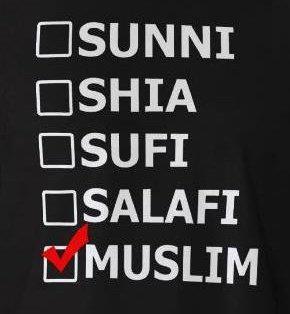
Tag: shia

  • Still The Distracted Ummah

    The sad reality of this Ummah is that it is prone to being divisive while crying for unity. We find it so simple to speak disparagingly about the personal perspectives that some adopt, and choose to openly mock them in their absence, thinking that not mentioning names is sufficient to free us of the hypocrisy of that action.

    We find it easier to highlight the shortcomings of every sect, every community, every sub-culture, or any person, but find it extremely difficult to celebrate the common ground, to build on the positive aspects that we share, or to jointly pursue beneficial programs that will contribute towards the unity of the Ummah rather than constantly hammering down on that wedge that sectarianism has created.

    A strong and united Ummah doesn’t happen on its own, nor does it miraculously form through dua. Dua unaccompanied by action is fruitless, hence the very plain instruction that guides us to tie our camel AND trust in Allah, not just trust in Allah blindly without any action.

    A united Ummah is a result of a united society. A united society is not possible without united communities. United communities will never be established if we have internal bickering and political agendas that make the American government look saintly. Unsurprisingly, united communities require united families to establish its foundations. A united family is not possible without committed individuals striving for harmony and understanding within the family unit. Finding the required common ground on which to build this entire structure that we all so achingly yearn for requires individuals committed to these holistic goals before they find reason to commit to selfish objectives that undermine these goals.

    The simple truth is that it starts with us as individuals before it becomes a global problem. Every global problem is a result of a critical mass of idiots that contribute towards the universality of the issues that result in said problem. We need to stop pacifying ourselves against the shortcomings of others. We need to stop being creative in introducing western concepts and western agendas into Islam under the guise of progressiveness, liberation, feminism, or similar such euphemisms that belie the true nature of the courses being pursued.

    Political correctness has no place in this Ummah. It has no place in Islam either. Political correctness breeds insincerity, and insincerity is at the heart of hypocrisy and disunity. If we’re forever prone towards counting our troubles and taking for granted our blessings, it’s hardly likely that our generation will see the Ummah progressing towards the noble status that we inherited from Rasulullah (SAW) and subsequently destroyed because of nothing more than infighting and selfish pursuits.

    Talking about the need for a reawakening is only a distraction from actually doing it. The time to talk about the strategies is long gone. We have strategists and intellectuals crawling out of the woodwork in droves, but very few who are willing to put into practice the knowledge that they so fervently seek to acquire.

    I’m often reminded of the prophecy that says that a time will come when the Ulama will be despised, and I realise that the basic assumption is that this will be so because people will despise the religious teachings that the Ulama try to establish. However, it is also entirely possible that the Ulama will be despised in the same way that unprincipled leaders are despised by their subjects. We have factories churning out Ulama by the dozens, online universities making the acquisition of Islamic knowledge easy and convenient, western institutions offering degrees in Islamic studies, and of course we have access to entire collections of ahadith and Qur’anic commentary through mediums that allow a layman to develop a critical and informed opinion on almost any aspect of Islam without leaving their favourite arm chair. Despite this massive and unfettered access to information, including students and scholars alike that have years of studies applied to acquiring this knowledge, the Ummah is in a state so despicable that we are impotent in the face of blatant persecution and abuse throughout the world, not least of which includes the so-called Muslim lands.

    Yet we still have time to point out the errors of our brothers and sisters, and we also still have the presence of mind to judge who is deviant, who is kafir, and who is damned to hell, while Muslims are starving themselves to death to get us to notice that there is a bigger issue that the Ummah needs to deal with beyond the pettiness of liberalist agendas and personal preferences. May Allah have mercy on us for our distracted state, and may He guide us towards a path of conviction in the beauty that we all profess to hold in our hearts. That is the beauty of Imaan. Ameen.

  • Ever see a non-aligned extremist?

    Just a thought…ever see a Muslim ‘extremist’ that didn’t belong to a specific sect? That’s the thing with sects, or aligning with specific sub-groups of Islam, or giving your iman a label. It’s the same with nationalism, or pledging allegiance to any specific sub-group of a broader movement. You’re automatically inclined to defend the specific view points of that sect rather than remaining objective and neutral in your application and compliance with the rulings and principles of the movement itself.

    The same is true for the raging debates between different sects and different schools of thought. You’ll be hard pressed to find someone that sincerely debates to arrive at the truth, rather than debating to defend their allegiance and adopted perspectives from the sect that they’re a part of.

    I can’t see anything other than three specific states of iman. We’re either guided Muslims, misguided Muslims, or non-Muslims. All the nuances and differing opinions around issues that do not take one out of the fold of Islam are simply whisperings of Shaytaan that successfully sow discord amongst Muslims by instilling a sense of pride or superiority in us about our alignment with what is considered by some to be a superior manner of practising Islam, not realising that our pride and haughtiness, no matter how we disguise it, could easily negate all our efforts in the process. 

  • Know Your Enemy

    arabarabarab:

    “When they took away my children in 1995, they also killed me – in the most brutal manner. This is not life …. I had my family and in just one day I’m left without them, without knowing why. And every morning I ask myself why, but there is no answer. My children were only guilty of having the names they had and their names were different from their killers. It was not only my children killed on July 11, 1995; thousands of other innocent children were murdered in the bloody genocide in Srebrenica …. I no longer have anything to lose; the criminals killed all I had, except for my pride.”
        –Hatidza Mehmedovic

    In July 1995, an estimated 8,000 Muslim men and boys – sons, husbands and brothers – were dragged away never to be seen again.
    The Srebrenica massacre marks a particularly inhumane and brutal act within the tragedy and bloodshed of the 1992 to 1995 Bosnian War.

    these clips are from Al-Jazeera documentary called Women who refused to die

    Consider what your pettiness about madhab and scholarly debates matters to these Muslims that could not, and will not enjoy the security of having an Ummah unite in their defense.

    I am close to convulsing at the thought of people still suggesting that there is merit in the ridiculous debates about the merits of the house of Saud, the Sunni/Shia contention, and the Salafi/Hanafi/Shafi rhetoric.

    I remember a story (forgive my lack of details and sources) regarding a Muslim ruler that threatened war against the disbelievers when one of them lifted the dress of a Muslim woman to humiliate her. Then I look at this incident and I wonder how that compares to the blatant massacre of 8000 Muslims for no reason other than the fact that they were Muslim! Not Shia, not Sunni, not Salafi, not Hanafi, or any of those other despicable labels we love to subscribe to.

    The disbelievers don’t give a damn which madhab or scholar or sect you follow. If you intend to be a practising and conscientious Muslim, you are automatically their enemy.

    O you who have believed, do not take as intimates those other than yourselves, for they will not spare you [any] ruin. They wish you would have hardship. Hatred has already appeared from their mouths, and what their breasts conceal is greater. We have certainly made clear to you the signs, if you will use reason.
    ~ Qur’an 3:118 (Sahih International)
  • What Kind of Muslim Are You?

    verse2verse:

    Everytime this comes on my Dashboard, I WILL REBLOG!!! 🙂

  • Debate About Sunnis and Shias Hating Each Other

    Beautiful Struggle: Anonymous asked: do you pretty much hate all sunnis?

    <a href=”http://remorsecode.tumblr.com/post/17044553106/beautiful-struggle-anonymous-asked-do-you-pretty-much”>remorsecode</a>:<blockquote><a href=”http://the72sects.tumblr.com/post/17042519292/beautiful-struggle-anonymous-asked-do-you-pretty-much”>the72sects</a>:<blockquote><a href=”http://remorsecode.tumblr.com/post/17039769889/do-you-pretty-much-hate-all-sunnis”>remorsecode</a>:<blockquote>Okay I might as well talk about this more in depth since I’m worried people might get a misconception that the Shia somehow hate all Sunni people. This is not true whatsoever. As the saying goes, hate the sin, not the sinner. This is all just my personal beliefs. I don’t have…</blockquote>

    The number of generalisations in this post is in stark contrast to the very same intellectual pursuits that the original poster talks about. But set aside all the generalisations and whether there is or isn’t truth to the aspersions against Sunni’s, or whether it even cements the argument that Shia’s are supposedly on the right path, or not. The lingering thought I have in my head, the same way I think about every other ridiculous post about these Sunni/Shia differences is simply this…how does any of the facts contained in the post actually strengthen your Imaan? If Imaan is purely about your sincerity of belief in the oneness of Allah, and not ascribing any partners to Him, and accepting His decree, then what does it matter what historical facts have been perfectly preserved or horribly twisted?

    If we weren’t there to witness it, and the available knowledge has contradictions, then let it be. It has no impact on who we are as Muslims right now, because in Islam right and wrong is clear. Anything that causes doubt in between should be avoided. Simple. Why complicate  beautiful way of life with these annoying attempts to convince everyone about whose history is more accurate?

    </blockquote>I truly don’t like participating in “debate” however you’ve asked questions and I feel like I should answer them, despite the fact I sense a lot of rhetoric and sarcasm contained within them.<strong>“how does any of the facts contained in the post actually strengthen your Imaan?”</strong>Because I am of the belief that knowledge is what leads to certainty and through gaining knowledge, my Imaan increases. History is also a branch of knowledge I am fond of.<strong>“If Imaan is purely about your sincerity of belief in the oneness of Allah, and not ascribing any partners to Him, and accepting His decree, then what does it matter what historical facts have been perfectly preserved or horribly twisted?”</strong>As I’ve implied many times throughout that post and on my blog in general, Imaan is gained through knowledge. I don’t understand why people hold this belief that somehow history is history and you should leave and let die.

    Do you know how many prophets are mentioned in the Qur’an? 25 and all of them with their relevant story and history. It’s a strange phenomenon that people imply history should just be left alone yet the very book we all turn to for guidance is for the vast majority, history. The lesson? History repeats itself and nothing is a greater teacher than the knowledge of the past. That’s why historical facts are necessary and required to be fully understood, weaved away from the falsehood.<strong>“It has no impact on who we are as Muslims right now, because in Islam right and wrong is clear.”</strong>I find no other word to describe what you are saying as other than completely ironic. The history of Islam has absolutely everything with who we are as Muslims today because history is what defines the current events.It is even more absurd that you claim “right and wrong is clear” yet your very own blog title is called “The 72 sects” ??? I’m sorry for my ignorance, maybe I just do not understand what you’re trying to say, but I see nothing but double standards in what you’re telling me.

    </blockquote>In light of your ‘rebuttal’, please allow me to clarify my views. Whilst there may have been a healthy dose of rhetoric in some of what I said, sarcasm was certainly not intended. I respectfully disagree with your view that the stories contained in the Qur’an are intended to hold historical value. Allah states several times that it is through parables that Allah guides us so that we may understand. A lot of the historical evidences in the Qur’an was intended to confirm what was revealed before, and not simply as a history lesson. Also, your assumption about my views on history ignores another statement of mine in the same post that said:<blockquote>If we weren’t there to witness it, <strong><em>and the available knowledge has contradictions, </em></strong>then let it be<strong><em>.</em></strong></blockquote>

    The Qur’an does not contain such inaccuracies or contradictions, and therefore cannot be used as an example to substantiate your objection to my statement. Again, with due respect, Imaan is not dependent on what our views are of historical events, or respected personalities. Imaan is about our belief and reliance on Allah alone. The only unforgivable sin is Shirk, and the belief in questionable historical facts has no bearing on this. Let’s assume for a second that your statement about history is correct relative to Imaan. Would you then please explain how the knowledge of A’isha (RA)’s age at the time of marriage strengthens your Imaan?

    As for my blog url, it relates to the hadith that reminds us of the 73 sects that will form amongst the Muslims of which only one will be rightly guided. So my url is a reminder to me about the fact that the vast majority of sectarians are misguided. I’m not sure how that is supposed to reflect irony or double standards. Like I said above, not just to you but to everyone that engages in these types of debates, how has it strengthened your Imaan? Has it established or encouraged unity in the Ummah? Has it brought you closer to Allah? Or has it simply filled a gap of knowledge that was being fed by curiosity, or dare I say ego?

    Edit: After a final exchange via ‘Ask’ with the OP, let’s just say we agreed to disagree. This debate was going nowhere fast, so it’s best to leave it at that, iA.