Tag: mental disorders

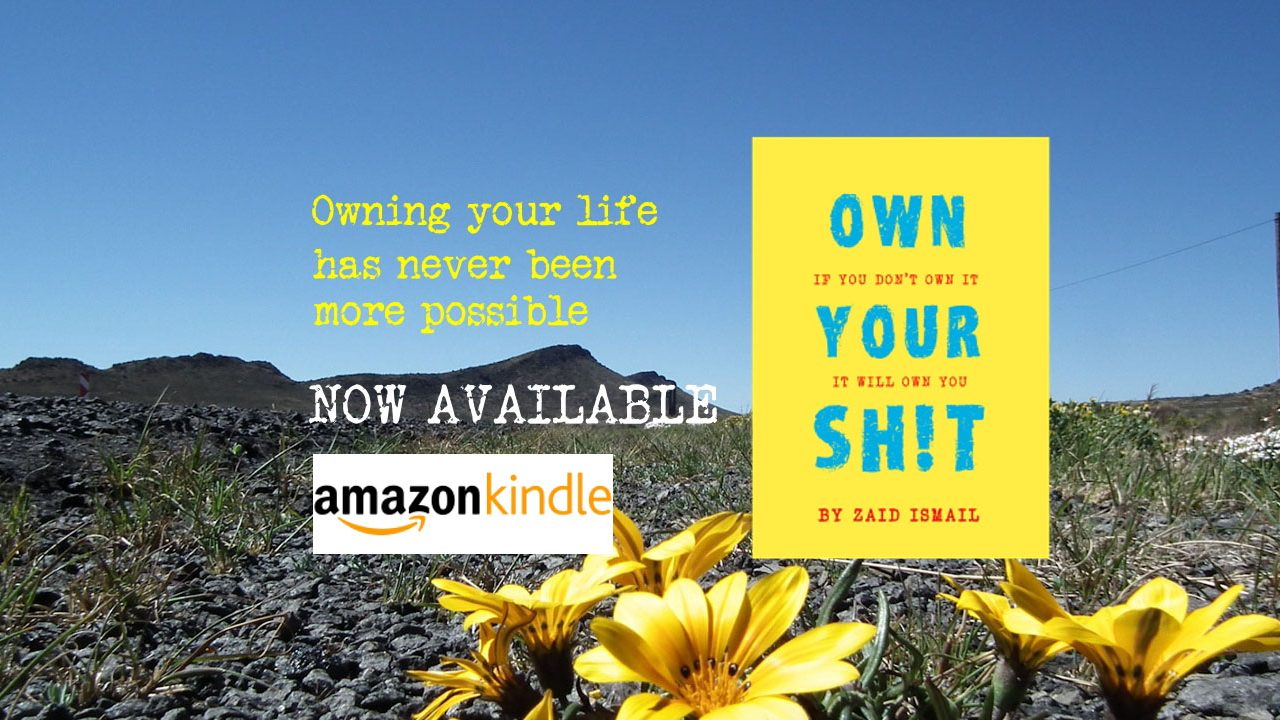
  • Own Your Sh!t Released!

    Own Your Sh!t Released!

    Just be happy. It could be worse. Don’t take life so seriously. Are you tired of hearing this? Well-meaning friends and colleagues tell us to stay positive, but it often has the opposite effect.

    Don’t be misled into thinking that happiness is just a choice. If it were, there would be no sad people. Getting a grip on your emotions is crucial for recovery from heartbreak, trauma, abandonment, and many other trials. Break the cycle of feeling overwhelmed by what happens to you.

    Own Your Sh!t is a book that helps you to understand why you feel sad, depressed or angry about life. It doesn’t tell you to overcome it by asking you to do what worked for someone else, because you’re not someone else.

    So, stop judging yourself so harshly, or allowing others to do the same. Let this book guide you out of that toxic space and into a better version of you. It’s time to own your sh!t.

    The book is available on Kindle, and Kindle Unlimited, and will soon be released on Amazon for paperback orders. Readers in South Africa can order directly from me at a special launch price of R149 which includes free shipping to any major city in the country.

    Watch my blog for snippets from the book in the coming days and weeks.

  • Licensed to Drive

    Most people can relate to an analogy about cars, so here’s one relating to mental health that I thought would be able to demonstrate my point about the main stream approach to dealing with depression and other so-called mental illnesses (hopefully you have the patience to read it to the end).

    Imagine that the accelerator pedal of the car is your ability to express positive emotions, and the brake pedal was negative emotions, and you are the driver. One day, while driving along minding your own business you get hit by another driver that wasn’t paying attention. The crash isn’t serious enough to write off your car, but it did cause problems with your accelerator and your brake system. More than this, there was some damage done to your car’s appearance.

    So off you went and replaced some of the damaged parts, did some repairs on those parts that couldn’t be replaced, and gave it a coat of spray that made it look just like new again. Only, it wasn’t new, because you knew how much went into getting the outside to look perfect again, while under the paint work, you knew how many wrinkles and scratches were covered up. But everyone told you how great the car looked again, so you ignored the defects and made a point of getting back into your car to get to all the places you wanted to go.

    However, you didn’t do such a good job of the accelerator and the brake pedal. At times, the brakes would feel spongy and unreliable, so whenever you needed to use it, you doubted, until eventually the doubt grew so strong that you started driving slower than ever to avoid using it at all. Then you realises that the accelerator doesn’t feel the way it used to either. It used to feel firm and responsive, almost as decisive as you were, and it used to cause the car to lunge forward when you needed to, and to just cruise when it felt good to do so as well. But now, the accelerator was also unpredictable. At times it would accelerate beautifully, but without warning, the car would slow down almost to a halt for no reason. No matter how much you wanted it to move, pressing your foot on that pedal just wouldn’t get it to go.

    So you eventually decided that maybe the damage was more than you were capable of fixing, so you decided to go out looking for a mechanic, especially since all your friends and family kept telling you how great they are. The mechanic looks at the symptoms and quite quickly lets you know that with some work, it can be back to what it was, and with your consent, he set about fixing and upgrading the brakes to perform even better than before. Then he looked at the accelerator and found the cable to be loose. So he tightened the nut, and adjusted the cable and once again, the car was able to accelerate without any problems. He also tuned the car with some new equipment that wasn’t previously available, which made the car lighter on fuel, and faster than before.

    However, having had too many close shaves with the brakes and accelerator being faulty, and still remembering the impact of the accident, you keep holding back, wanting to reduce the risk of getting into another accident. The memory of the dents and scratches hidden by the new coat of paint still fresh in your mind, you start driving more cautiously than you ever did before. You slow down for no reason other than just in case, and you don’t even drive at the speed limit any longer, even though the car is perfectly capable of handling it. In fact, the car is now capable of performing better than it did when it was brand new because of the new technology they put in, yet you still drive it slower than ever.

    The crash caused by the other driver is what happens in life. They’re the people around us that we trust, but they end up being mindless in their actions that results in damage in our lives that they’re most often oblivious to. They move on and focus on their own lives, while we wait for someone to come along an fix us. The mechanic is modern medicine. A necessary intervention strategy, but nothing more. Able to recover most physical aspects of our health, but failing to remedy the emotional ravages of what took place.

    The wrinkles and scratches beneath the bright shiny paint work is the memories that haunt us, while the paint work is the face we show to the world when we pretend that everything is perfect. The new technologies are the life lessons learnt, that allows us to deal with future encounters more effectively and maturely, but we refuse to use it because of the fear of getting hit by another reckless driver. So instead, we plod along at a fraction of our capability from before the traumatic incident so that we can reduce as much as possible any potential for another impact that could send us spiralling out of control.

    The psychiatrist that so many believe in blindly have tools to re-establish mental pathways, but they don’t have the tools to make you use it. Again, at times, a necessary intervention strategy, but not a long term solution.

    Then there is you, the driver. Focused on the impact that hit you from nowhere, and too afraid to even consider having to deal with such an impact again. All the while, the distraction of that memory causes you not to notice that with the lessons learnt, your ability to avoid such impacts in future was significantly improved (upgrade of brakes and accelerator, knowledge of how situations like that occur, and what choices could have been taken differently, or could have been more informed), but instead of leveraging that knowledge that you have acquired through the experience for improving the way you navigate your way through life in future, you choose to avoid it instead. Your avoidance of those life experiences, of people, of interactions, is what causes you to slip into a depression where you refuse to acknowledge the tools and abilities you have at your disposal because you suddenly don’t trust yourself due to you blaming yourself for the reckless behaviour of that others.

    The thought almost always comes before the chemical reaction. And in cases where the chemical reaction may have been preventing the thought patterns to occur, the intervention strategies that are available provides us with the ability to kick start that process. Once that process is kick started, we have to apply our minds actively rather than rely on the intervention strategy to sustain us. The problem that many face these days is that they’re being told that the intervention strategy is in fact a long term dependency that they have no choice in. When we give up the choice to take control, only then does the intervention become the mechanism for survival, or even just to cope.

    Our inability to believe in ourselves is the most profitable outcome for the pharmaceutical companies quite possibly in the history of modern medicine. But we have drugs to distract us from that sad reality, that’s why we don’t even have the presence of mind to realise what it is that we’re capable of.

    I once heard someone say that the only way to cheat old age is to continue learning. The more we learn, the greater our ability to acquire new knowledge. Therefore, it is easier for someone with more knowledge to appreciate and intelligently apply new concepts, than it is for someone that hasn’t applied their minds much towards the acquisition of knowledge. When we discard our life experiences as bad memories that we’d rather forget, we effectively throw away priceless knowledge that could never be acquired through any other means. Books and doctors can only give you facts and assumptions, but only you will ever know the truth about you. Don’t suppress that truth, embrace it, and use it to build yourself up from strength to strength, realising that you decide what your limits are, not society.

  • Labels and Life

    For everyone that thought my points about labels were uncalled for, take a look at this video if you haven’t seen it already. Positive affirmation is as powerful as negative affirmation. Continuously telling someone that they can’t do something or be a certain way eventually convinces them that it is true. I wish people would stop being so reckless with their lives. I wish people would stop believing that they always need fixing. I wish people would just learn to be real and stop pursuing the fake ideals that they gluttonously swallow from Hollywood, Bollywood, etc.

  • Wow, I seriously haven't felt this much rage toward a person since my ex raped me. Thanks for telling me that basically I'm the cause of my own depression because I'm "not positive" enough to think myself out of my situation. Surprise, douchebag. I'm an incredibly positive person and yet I still suffer from depression. Wanna explain to me how that works? Yeah, you're a fucking privileged idiot. Shut the fuck up.

    Ok, so here’s a few free pointers for you.

    Firstly, don’t bother using the Anon feature when it’s blatantly obvious who you are because that just confirms your troll behaviour that you really should give up.

    Secondly, try getting the full picture before you go mouthing off at someone so that you don’t make a total ass of yourself when you’re trying to tell them where to get off.

    Thirdly, you and your groupies should stop your pathetic victim mentality crap and stop assuming that every person that disagrees with you, or call you out on your illogical rubbish is actually white. So here’s a newsflash for you. I’m not white. Never was white. Don’t ever intend to be white. And don’t have any white blood in my ancestry either. But I still think you’ve got issues well beyond anything I stated in my post that you so passionately oppose, and that’s coming from a non-white, so can you imagine how bad your issues must be? 

    Lastly, for you and some of your followers that can’t rationalise the rage they feel, here’s a few free words of advice for you. Anger is caused by only three things ever. And this was told to me by a black American about 20 years ago, so pay attention now. By the way, I’m of Indian origin born and bred in South Africa, so don’t talk to me about privilege because I lived in a racially divided society without any option because it was the law of the state to keep us segregated in that way. You were born at least two generations after such racial segregation was outlawed in your country, so it seems you need to wake up and smell the coffee at some point.

    Back to the advice about anger, only three things cause it. If you can think of a fourth thing, you’re better than every psychologist, philosopher and sage that has lived for the last few centuries, if not longer. So here goes:

    1. Fear of being incompetent – when you feel like someone is challenging your competence, or suggesting that you’re incompetent, you get angry
    2. Fear of being disliked – when you feel like you’re losing points in the popularity stakes, you get angry because everyone wants to be liked/likeable/popular
    3. Fear of insignificance – when you feel as if your presence or personal needs don’t count in a situation or relationship, you get angry because you feel insignificant. 

    My guess is, you and some of your followers are most prone to the last option. Get a grip and get the full picture before you go mouthing off your vulgarities at people you know nothing about. I survived more abuse in my life than you would ever imagine, the details of which is absolutely none of your business. But if you’re going to take the time to troll me, at least have the presence of mind to do your homework before you feel like venting without thinking.

    As for all the uninformed reblogs your vulgarity attracted, I guess that is testament to the fact that most people are victims, hence the insanely high rate of violence in the world today. 

  • Question – Repeat after me:

    purplechansey:

    cynicallyjaded:

    dionthesocialist:

    • Mental disorders are medical conditions.
    • Mental disorders are not personality quirks.

    Repeat after me…

    • Labels will give you mental disorders
    • Labels will reinforce your submission to a condition 
    • Labels will destroy you
    • Labels will imprison you
    • Labels are just that…labels

    Now, let’s try again…

    • Stop labelling your state of mind, it’s the same as stereotyping someone and expecting them to act differently
    • The more we ‘recognise’ so-called mental disorders as valid medical conditions, the weaker society becomes in dealing holistically with social ills because every bad experience can suddenly be ‘fixed’ with a pill
    • Neuroplasticity is proof that mental ‘disorders’ are merely a state of mind that can be altered based on experience and introspection
    • Experience has confirmed that insecurity and fears of insignificance are the most common underlying causes of symptoms of a troubled mind (a.k.a. mental disorders) and not some chemical imbalance
    • Chemical reactions are triggered by thoughts and stimuli, not the other way around. Simple proof of this is a smile. It’s confirmed to release feel-good hormones regardless of your ‘mental disorder’

    Separate the symptoms from the root cause and never confuse the two. Far too often, especially in western medicine, symptoms are almost always the focus of treatment with a holistic view shunned as being a quack’s approach to good health. The mind and body work in tandem, and not independently. Abuse one, and you’ll automatically abuse the other. Treating a physical ailment without considering the psychological or emotional triggers that caused one to be predisposed to the ailment is like taking energy drinks when you know you’re not getting enough sleep. It really is that simple.

    Give yourself a chance. You deserve to believe in yourself, because people are strange like that. They rarely believe in you unless you believe in yourself first. Think about it, and give yourself a break.

    I definitely understand where you’re coming from, but there are a couple of points in which I take issue with.

    “Neuroplasticity is proof that mental ‘disorders’ are merely a state of mind that can be altered based on experience and introspection.”

    Not necessarily. Yes, neuroplasticity has shown that the brain changes through various stages of life (and through various personal experiences), but that does not necessarily imply that mental disorders are all of a sudden reduced to nothing but “bad thoughts that can altered.” There is no denying that some mental disorders (I will get to why I italicized mental disorders and some in a bit) are indeed a chemical imbalance in the brain. Hence, why some truly need medication, and why it works for them. Where I do agree with you (or at least agree with what I suppose you’re getting at) is that medications are far overused, over-perscribed, and that a lot of what we have going on as “mental disorders” aren’t really mental disorders.

    Yes, many of them should be treated by psychotherapy instead of just popping a pill. Unfortunately, that takes much longer in the doctor’s office, so they just write them off a prescription (or four) and call it a day. Also, I agree with what you have to say when it comes to labels. Some of what is labeled under mental disorders by the DSM IV I wouldn’t necessarily want to call a mental disorder. Labels do suck, and indeed, they hold you back. Thing is, chemical imbalances do exist. They are very much a possible cause in the cases of some mental disorders. Schizophrenia being a fine example of that. And while yes, some chemical reactions are triggered by certain thoughts, experiences, and stimuli, do not forget the many that are genetically predisposed or more prone to developing such disorders. 

    Thanks for sharing those views. I agree with you on most of what you say with just one qualifier. I mentioned in previous posts, under the link that I included previously, that medication is definitely warranted as an intervention strategy. I just get really concerned when I hear people saying that they’re predisposed to depression and have been told that they will have to take anti-depressants for the rest of their lives. 

    That’s the level of abuse that we’ve come to because of the labelling of life’s struggles by suggesting that they’re in fact illnesses. They’re not. Like everything in life, there are exceptions, but the current trend is that anything that goes against the utopian ideal of a balanced life is somehow not the individual’s faults because they probably have a chemical imbalance causing them to behave irrationally, aggressively, or otherwise. 

  • Question – Repeat after me:

    storyseldomtold replied to your post: Do you have a medical background or scientific references to prove that mental illnesses are just “a state of mind” with no effects in the brain?

    The biggest issue in your methodology of deriving conclusions is the use of first-hand experiences, which is by definition, subjective and biased. Alaos, babies and infants do have depression and deficits, in case you wanted to research that.

    I think you’re being selective in what you read in my response. I said that my views are based on multiple things, including extensive research, views held by holistic healing alternatives, as well as personal experience. You can read more about my views and experiences on this subject by clicking here.

    The argument about whether or not a baby has depression is as flawed as the approach to looking at the chemical make up to determine the state of mind of an adult or teenager. The problem with that approach is that it assumes that the premise that chemicals influence moods and not the other way around is in fact accurate. That is where I disagree with the approach to mental health according to modern interpretations of the supposed cause and effect.

    The fact that I can actively influence my physical state proves that my thought patterns and resolve to act are primarily responsible for my physical condition. Ask a suicidal person why they’re suicidal (suicide relating to cultural practices excluded) and chances are you’ll find that they refuse to hope for something positive due to a massive disappointment or betrayal in their past. Our destructive behavioural patterns are almost always rooted in wanting to protect ourselves from a situation that gave rise to pain previously. However, we’re prone, as proven by this discussion, to focus on the symptoms, that’s why we tend to forget why we set down that path of self destruction to begin with. 

    What makes it all seem more confusing is the fact that such negative pre-emptive action on our part is usually seen as inherently destructive rather than being seen as a means to prevent something from occurring. That ‘something’ is usually a situation that will bring us happiness or joy, and the reason we prevent ourselves from achieving such a state is because of the risk of betrayal or disappointment that could potentially result from such a situation based on past experiences. So instead of learning how to deal with the betrayal or abandonment more effectively, which usually requires a healthy self esteem, we focus on controlling what we can control, which is our ability to sabotage such situations so that the position of joy and happiness is never achieved. 

    Only once we overcome the deep seated doubts relating to a poor self esteem are we able to see positivity where a negative outcome is always a possibility. Hence my view that the greatest gift any parent can give to their child is that of a healthy self esteem before anything else. Ever see someone with a healthy self esteem turn to drugs, or violence, or worse? Neither have I. 

  • Do you have a medical background or scientific references to prove that mental illnesses are just "a state of mind" with no effects in the brain?

    I guess this question was bound to come up. I’m not sure how it’s intended or from what perspective you’re asking this. 

    The short answer is, no. I don’t have a medical background, but all the information I share on the subject is supported by numerous research efforts, holistic healing methods that challenge mainstream medicine, and also importantly, direct personal experiences with individuals that were diagnosed with numerous extremely severe cases of ‘mental disorders’ from bipolar, to schizophrenia, to borderline personality disorder, along with living through the various treatment regiments and real life dysfunction that went with it.

    So I guess all I can say is that I can assure you that my views are not reckless conjecture, nor are they theoretical. They’re based on real life first hand experience as well as many years of researching the issues surrounding this subject out of a need to be able to understand the circumstances that I was exposed to through other individuals around me that were extremely troubled.

    My normal tongue-in-cheek view about this is usually, show me a depressed baby and I’ll reconsider my views about the relationship between chemical balances and emotional states. However, on a relatively continuous basis, my views have been tested and proven to be true with many people that were formally and repeatedly diagnosed as having severe chemical imbalances that suggested that they would be bound to intense medical treatment for the rest of their lives. After discussing the issues with them using the same ‘logic’ that I suggested in my previous post, they emerged from their ‘mental disorder’ and acknowledged that the underlying causes were entirely based on insecurities that stemmed from intense betrayal that they experienced in some form or another earlier in life, often without them realising it. 

    I hope that answers your question.

    P.S. I am NOT giving anyone medical advice. I’m simply suggesting that a fresh perspective could bring massive relief to what could otherwise be a really traumatic life. 

  • Repeat after me:

    dionthesocialist:

    • Mental disorders are medical conditions.
    • Mental disorders are not personality quirks.

    Repeat after me…

    • Labels will give you mental disorders
    • Labels will reinforce your submission to a condition 
    • Labels will destroy you
    • Labels will imprison you
    • Labels are just that…labels

    Now, let’s try again…

    • Stop labelling your state of mind, it’s the same as stereotyping someone and expecting them to act differently
    • The more we ‘recognise’ so-called mental disorders as valid medical conditions, the weaker society becomes in dealing holistically with social ills because every bad experience can suddenly be ‘fixed’ with a pill
    • Neuroplasticity is proof that mental ‘disorders’ are merely a state of mind that can be altered based on experience and introspection
    • Experience has confirmed that insecurity and fears of insignificance are the most common underlying causes of symptoms of a troubled mind (a.k.a. mental disorders) and not some chemical imbalance
    • Chemical reactions are triggered by thoughts and stimuli, not the other way around. Simple proof of this is a smile. It’s confirmed to release feel-good hormones regardless of your ‘mental disorder’

    Separate the symptoms from the root cause and never confuse the two. Far too often, especially in western medicine, symptoms are almost always the focus of treatment with a holistic view shunned as being a quack’s approach to good health. The mind and body work in tandem, and not independently. Abuse one, and you’ll automatically abuse the other. Treating a physical ailment without considering the psychological or emotional triggers that caused one to be predisposed to the ailment is like taking energy drinks when you know you’re not getting enough sleep. It really is that simple.

    Give yourself a chance. You deserve to believe in yourself, because people are strange like that. They rarely believe in you unless you believe in yourself first. Think about it, and give yourself a break.