
Reminds me of someone I know, especially the paisley. 🙁
★ discovered on imgfave.com (social image bookmarking)
(Source: http://imgfave.com/view/1306912)

Reminds me of someone I know, especially the paisley. 🙁
★ discovered on imgfave.com (social image bookmarking)
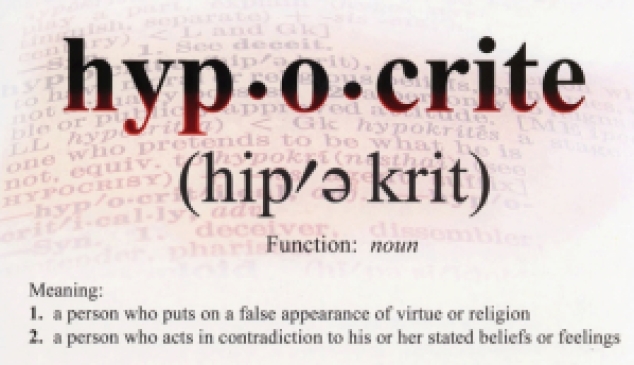 They say that the fear of ridicule breeds the most repugnant of cowards. So then the most repugnant of cowards must surely breed the most despicable of hypocrites. And hypocrites by definition cannot be happy or fulfilled people.
There’s a fine line between being selfish enough to sustain our own soul’s desires, and sacrificing enough to selflessly contribute to the life experiences of others. Being human lies somewhere between being a narcissist and a martyr. And hypocrisy has no part to play at all.
Betrayal never is an easy pill to swallow, no matter how jaded I might be. The worst of it is when I find myself compelled to question every moment of sincerity that I expended in affection, admiration and respect towards those that I held in such high esteem. People, including me, often suggest that no matter the outcome, the good memories of what has been can never be taken away. I know now that that is absolute rubbish!
Betrayal sours good memories. But worse than that, it creates doubts where there should be none, where we can’t afford to have any. Not only does it raise questions about the inherent integrity of the betrayer, but it also calls to question every instinctive judgement call I ever made. How can I trust myself to see good in others if time after time I have been proven wrong about my assumptions through the simply callous act of betrayal? How am I supposed to believe in others, see the good in them and give them the benefit of the doubt if every single time it appears that I completely missed their deceptive manipulations?
Being trusting is so easily, and seemingly justifiably misconstrued as being naive instead. I can’t live suspiciously while maintaining a facade of sincerity. At least I choose not to. And so it seems that if I persist in staying true to myself, I risk growing old alone and isolated, with my nearest and dearest only appreciating the veneer of me, whilst being totally oblivious to the emptiness that echoes inside, waiting desperately for the arrival of one that I can embrace completely. Perhaps that shows in some subliminal way which is what scares them off due to the overwhelming expectation of true commitment and trust.
But I can’t accept that I am alone in this want, in this desire to have a true companion. Surely every human being has a need to be understood, accepted and appreciated? If this be true, then why do others not seem to want it as much as I do? Are we all victims of our own betrayals? Too many questions, not enough answers, and certainly a scarcity of sincerity to make any responses even plausibly trustworthy.
Like I said before, integrity is dead. Self-preservation killed it.
I must learn to love the fool in me—the one who feels too much, talks too much, takes too many chances, wins sometimes and loses often, lacks self-control, loves and hates, hurts and gets hurt, promises and breaks promises, laughs and cries. It alone protects me against that utterly self-controlled, masterful tyrant whom I also harbor and who would rob me of human aliveness, humility, and dignity but for my fool.
Theodore I. Rubin, MD
To love at all is to be vulnerable. Love anything, and your heart will certainly be wrung and possibly broken. If you want to make sure of keeping it intact, you must give your heart to no one, not even to an animal. Wrap it carefully round with hobbies and little luxuries; avoid all entanglements; lock it up safe in the casket or coffin of your selfishness. But in that casket- safe, dark, motionless, airless—it will change. It will not be broken; it will become unbreakable, impenetrable, irredeemable.
Oneway
C.S. Lewis quotes (British Scholar and Novelist. 1898-1963)
It is not the critic who counts; not the man who points out how the strong man stumbles, or where the doer of deeds could have done them better. The credit belongs to the man who is actually in the arena, whose face is marred by dust and sweat and blood; who strives valiantly; who errs, who comes short again and again, because there is no effort without error and shortcoming; but who does actually strive to do the deeds; who knows great enthusiasms, the great devotions; who spends himself in a worthy cause; who at the best knows in the end the triumph of high achievement, and who at the worst, if he fails, at least fails while daring greatly, so that his place shall never be with those cold and timid souls who neither know victory nor defeat.
Theodore Roosevelt – The Man In The Arena (1910)
